Affiliate Marketing Platforms Comparison: Choosing the Right Network
Affiliate Marketing Platforms Comparison: Choosing the Right Network
Navigating the vast landscape of affiliate marketing platforms can be a critical juncture for both merchants and affiliates. These platforms, often referred to as affiliate networks, act as intermediaries, connecting product creators with marketers who can promote their offerings. The right platform can streamline operations, provide robust tracking, and offer access to a diverse range of products or a highly targeted audience. Conversely, a poor choice can lead to frustration, limited opportunities, and inefficient management.For affiliates, selecting a platform often comes down to the types of products available, commission rates, payment reliability, and ease of use. For merchants, it's about reach, affiliate quality, tracking capabilities, and support. Understanding the unique strengths and weaknesses of each major player is essential for optimizing your Affiliate Marketing Programs strategy, whether you're looking to join one or manage your own.
Key Affiliate Platform Statistics • Amazon Associates is the largest affiliate program globally, with millions of products. • Over 80% of brands use affiliate networks to manage their programs. • The average affiliate marketer is signed up for 3-5 different affiliate networks. • Affiliate networks facilitate billions of dollars in sales annually, highlighting their economic impact.
Understanding Different Types of Affiliate Platforms
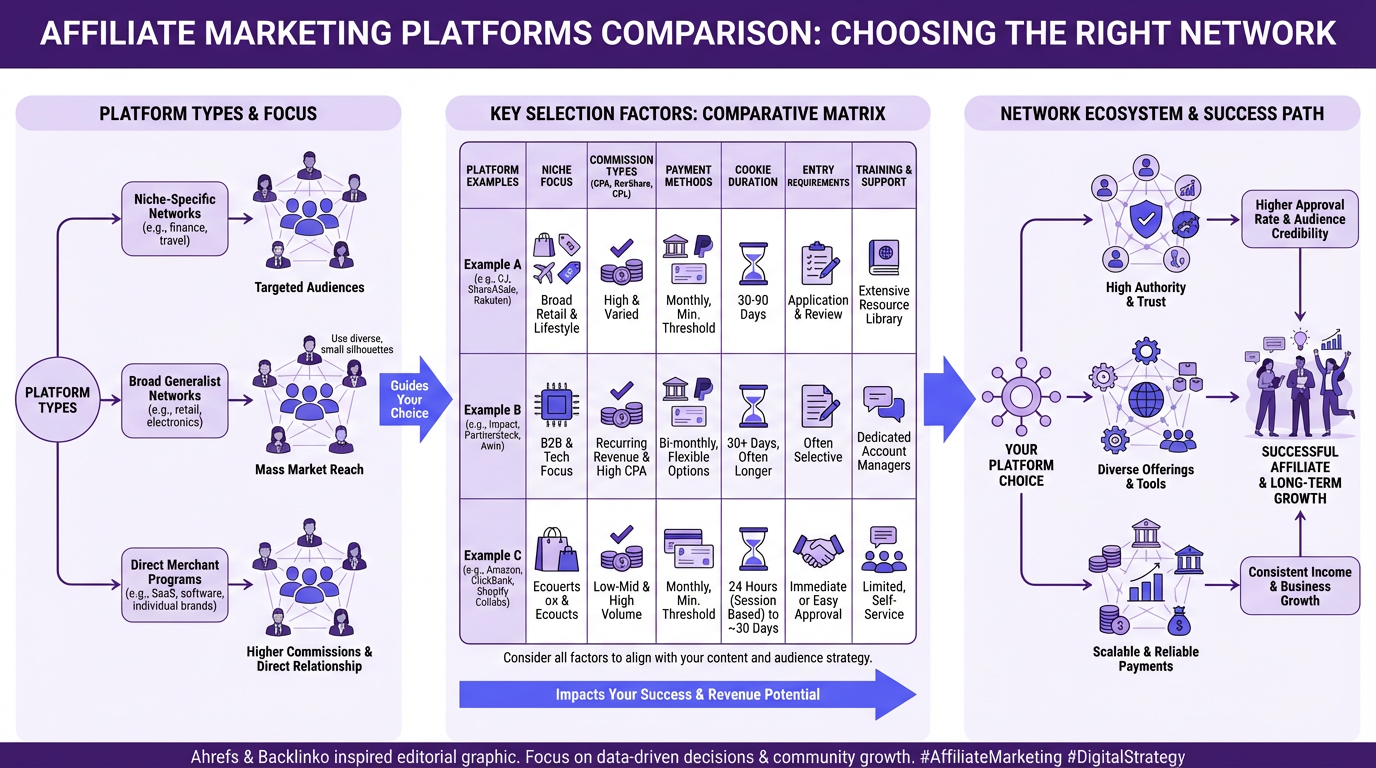
Affiliate platforms aren't monolithic; they cater to different needs and product types. Broadly, they can be categorized into several types:- Large Affiliate Networks: These are comprehensive platforms hosting thousands of merchants across various niches. Examples include ShareASale, CJ Affiliate, and Rakuten Marketing. They offer extensive tools, robust tracking, and a wide selection of products.
- Niche-Specific Networks: Some platforms specialize in particular industries, such as ClickBank for digital information products (e-books, courses) or Awin for fashion and retail. These can offer highly targeted opportunities.
- In-House Affiliate Programs: Many large companies (e.g., Amazon, eBay, Shopify) run their own direct affiliate programs without a third-party network. These often offer unique benefits but require individual application and management.
- SaaS/Software Affiliate Programs: A growing segment, these programs focus on promoting software-as-a-service products, often with recurring commissions. Examples include HubSpot, SEMrush, and ConvertKit.
Major Affiliate Marketing Platforms Comparison
| Platform | Best For | Product Focus | Commission Structure | Affiliate Support | Merchant Tools |
|---|---|---|---|---|---|
| Amazon Associates | Beginners, physical products | E-commerce (all categories) | % of sale (low) | Basic | Limited |
| ShareASale | Diverse niches, digital & physical | Wide range, many SMBs | % of sale, CPA | Good | Robust |
| CJ Affiliate (Commission Junction) | Large brands, established affiliates | Enterprise-level products | % of sale, CPA, CPL | Good | Advanced |
| ClickBank | Digital info products, high commissions | E-books, courses, software | % of sale (high) | Basic | Moderate |
| Rakuten Marketing | Premium brands, global reach | Retail, travel, finance | % of sale, CPA | Good | Advanced |
| Impact.com | SaaS, B2B, enterprise | Software, subscriptions | % of sale, recurring | Excellent | Comprehensive |
Key Considerations for Affiliates
When choosing an affiliate platform, affiliates should prioritize several factors to ensure a profitable and manageable experience. The range of products available within your niche is paramount. A platform might be excellent overall, but if it doesn't host relevant products for your audience, it's not the right fit.Commission rates and payment terms are also critical. Some platforms offer higher percentages, while others might have longer payment cycles or higher minimum payout thresholds. Reliability of tracking and reporting is non-negotiable; you need to trust that your sales are being accurately attributed. Finally, consider the ease of use and the quality of support offered by the platform, especially if you're new to affiliate marketing.
Expert Insight: "Don't put all your eggs in one basket. Diversifying across 2-3 reputable affiliate platforms not only gives you access to a wider range of products but also mitigates risk if one program changes its terms or closes down. Focus on quality over quantity in your platform choices, but don't limit yourself to just one."
5-Step Platform Selection Framework for Affiliates
Key Considerations for Merchants
For merchants looking to launch or expand their affiliate program, choosing the right platform is about finding a partner that can effectively manage and scale their efforts. Reach and network size are important, as they determine the potential pool of affiliates. However, quality of affiliates is often more critical than sheer numbers.Robust tracking, fraud prevention, and reporting tools are essential for merchants to monitor performance, prevent abuse, and make data-driven decisions. The platform's ability to handle various commission models, provide promotional tools, and offer dedicated account management can also be significant factors. Consider the platform's reputation for Affiliate program management and its ability to integrate with your existing e-commerce or CRM systems.
Diagram: Affiliate Network Selection Flow [Define Needs (Affiliate/Merchant)] → [Research Platform Types] → [Evaluate Key Criteria (Products/Commissions/Tools)] → [Shortlist Platforms] → [Test/Join Selected Networks] → [Monitor & Optimize]
Specialized Platforms and Direct Programs
Beyond the major networks, many companies run their own direct affiliate programs. These can sometimes offer higher commission rates because there's no network fee. However, they typically require individual application and management, and their tracking and reporting tools might not be as sophisticated as those offered by dedicated networks.For specific niches, specialized platforms can be incredibly valuable. For instance, if you're promoting online courses, platforms like Teachable or Thinkific often have built-in affiliate functionalities for their course creators. Similarly, for e-commerce businesses, Shopify has a robust app ecosystem that includes affiliate program management tools. These specialized options can provide a more tailored experience for both merchants and affiliates within a particular vertical.
Frequently Asked Questions
What is the difference between an affiliate network and an in-house program?
An affiliate network is a third-party platform that hosts multiple merchants and affiliates, providing tools for tracking, payments, and discovery. An in-house program is run directly by a single merchant, managing their affiliates without an intermediary network.Which affiliate platform is best for beginners?
Amazon Associates is often recommended for beginners due to its vast product selection, brand recognition, and relatively simple setup. However, commission rates are generally lower. ShareASale and ClickBank can also be good starting points depending on your niche.How do affiliate networks make money?
Affiliate networks typically charge merchants a setup fee, a monthly fee, and/or a percentage of the commissions paid to affiliates. They also often charge a small transaction fee on each sale facilitated through their platform.Can I join multiple affiliate platforms?
Yes, it is common and often recommended for affiliates to join multiple platforms. This allows you to diversify your income streams, access a wider range of products, and find the best commission rates for different offerings within your niche.Key Takeaways
- Affiliate marketing platforms act as crucial intermediaries connecting merchants and affiliates.
- Platforms vary widely, from large general networks to niche-specific and in-house programs.
- Affiliates should prioritize product relevance, commission rates, payment reliability, and tracking capabilities.
- Merchants need platforms with strong reach, quality affiliates, robust tracking, and fraud prevention.
- Diversifying across multiple platforms can mitigate risk and expand opportunities for affiliates.