Affiliate Program Management: Strategies for Merchants to Maximize ROI
Affiliate Program Management: Strategies for Merchants to Maximize ROI
Effective affiliate program management is the cornerstone of a successful affiliate marketing strategy for merchants. It's not enough to simply launch an affiliate program; consistent oversight, optimization, and relationship building are crucial for maximizing return on investment (ROI). From recruiting the right affiliates to ensuring compliance and optimizing commission structures, every aspect requires strategic attention. Poor management can lead to low-quality traffic, brand damage, and ultimately, a program that fails to deliver on its potential.For businesses looking to scale their customer acquisition efforts without incurring upfront advertising costs, a well-managed affiliate program offers a compelling solution. It allows you to leverage a network of motivated marketers who are incentivized by performance. However, the success hinges on proactive management that fosters a mutually beneficial environment for both the merchant and the affiliates. Understanding the intricacies of various Affiliate Marketing Programs is key to setting up a robust and profitable system.
Key Affiliate Program Management Statistics • Companies with dedicated affiliate managers see 20-30% higher program growth rates. • Active affiliate recruitment can increase program revenue by up to 50% within the first year. • Optimizing commission structures can improve affiliate engagement by 15-25%. • Fraud prevention measures save businesses an average of 10-15% in potential losses annually.
The Pillars of Effective Affiliate Program Management
Managing an affiliate program involves several interconnected components, each requiring careful attention. These pillars ensure the program runs smoothly, attracts high-quality affiliates, and delivers consistent results.- Recruitment & Onboarding: Actively seeking out and attracting affiliates who align with your brand and target audience. Providing clear onboarding materials and support is essential.
- Communication & Support: Maintaining open lines of communication with affiliates, providing timely updates, and offering responsive support for their queries and challenges.
- Commission & Incentives: Designing competitive and motivating Affiliate marketing commission structures that reward performance and encourage long-term partnerships.
- Tracking & Reporting: Implementing robust tracking systems to accurately attribute sales and providing transparent, accessible reports to affiliates.
- Compliance & Fraud Prevention: Establishing clear guidelines for promotion and actively monitoring for fraudulent activities or brand misuse. Understanding Legal aspects of affiliate marketing is crucial here.
- Optimization & Growth: Continuously analyzing program performance, identifying areas for improvement, and implementing strategies to scale the program.
Affiliate Program Management Strategies
| Strategy | Best For | Difficulty | ROI Potential |
|---|---|---|---|
| Proactive Recruitment | Expanding reach, niche targeting | Medium | High |
| Tiered Commissions | Motivating top performers | Medium | Very High |
| Regular Communication | Building trust, reducing churn | Easy | Medium |
| Performance Bonuses | Driving specific campaigns/products | Medium | High |
| Fraud Monitoring | Protecting brand & budget | Hard | Very High |
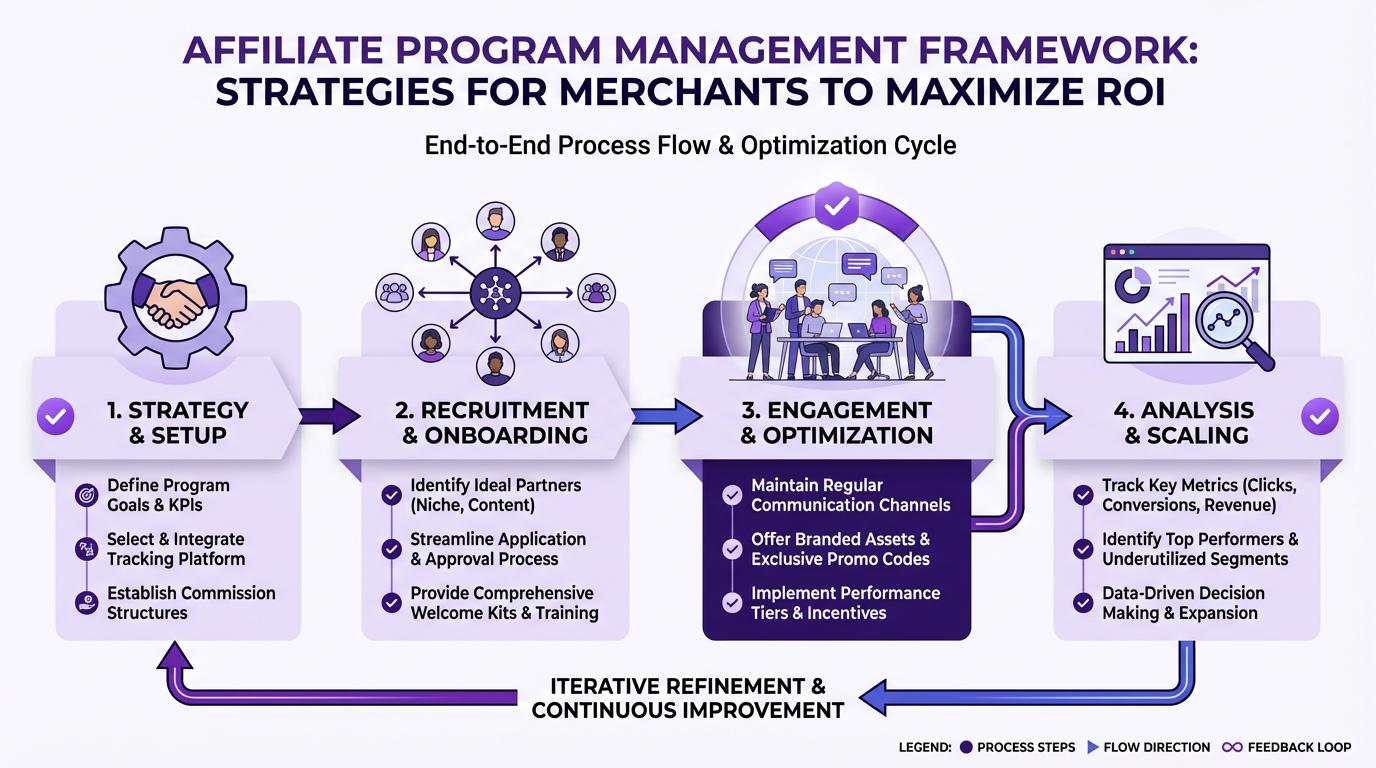
The 6-Step Affiliate Program Management Framework
Implementing a structured approach to managing your affiliate program can significantly enhance its effectiveness and profitability. This framework guides merchants through the essential stages of ongoing program oversight.6-Step Affiliate Program Management Framework
Building Strong Affiliate Relationships
The most successful affiliate programs are built on strong, mutually beneficial relationships. Treating your affiliates as partners, rather than just sales channels, can lead to greater loyalty and performance. This involves regular communication, providing value, and recognizing their efforts.Offer exclusive promotions or early access to new products to your top affiliates. Provide personalized feedback and support. Consider hosting webinars or training sessions to help them improve their marketing skills. Acknowledging their contributions and celebrating their successes can go a long way in fostering a dedicated and motivated affiliate base.
Expert Insight: "The biggest mistake merchants make is treating affiliates as a set-it-and-forget-it channel. Your affiliates are an extension of your sales team. Invest in their success through clear communication, valuable resources, and fair compensation, and they will, in turn, invest in promoting your brand."
Leveraging Affiliate Marketing Tools and Software
Managing an affiliate program, especially as it scales, becomes significantly easier with the right tools and software. These range from dedicated affiliate network platforms (like ShareASale or Impact.com) to in-house management software. These tools automate tracking, commission calculations, payment processing, and reporting, freeing up your time for strategic tasks.When selecting Affiliate marketing tools and software, consider features like real-time tracking, fraud detection, customizable commission structures, communication tools, and integration capabilities with your existing e-commerce platform or CRM. The right software can transform a complex, manual process into an efficient, automated system.
Diagram: Affiliate Program Management Cycle [Recruit Affiliates] → [Onboard & Equip] → [Communicate & Support] → [Track Performance] → [Optimize & Incentivize] → [Monitor Compliance] → [Feedback Loop to Recruit Affiliates]
Optimizing for Performance and Growth
Affiliate program management is an ongoing process of optimization. Regularly analyze your program's performance metrics, such as conversion rates, average order value, and affiliate ROI. Identify your top-performing affiliates and understand their strategies. Conversely, identify underperforming affiliates and consider ways to re-engage them or, if necessary, remove them from the program.Experiment with different promotional offers, landing pages, and product bundles. Encourage affiliates to test various Affiliate marketing content strategies and share their successes. Stay informed about Affiliate marketing trends to adapt your program and remain competitive. The goal is continuous improvement, ensuring your program remains attractive to affiliates and profitable for your business.
Frequently Asked Questions
What is the role of an affiliate manager?
An affiliate manager is responsible for overseeing all aspects of an affiliate program, including recruitment, onboarding, communication, support, performance monitoring, commission payouts, and optimization strategies to ensure the program meets its objectives.How do I prevent affiliate fraud?
Preventing affiliate fraud involves implementing robust tracking systems, setting clear terms and conditions, monitoring for suspicious activity (e.g., unusually high conversion rates from unknown sources), using fraud detection software, and regularly auditing affiliate traffic.What are common commission structures in affiliate programs?
Common commission structures include percentage of sale (most common), flat fee per sale, cost-per-lead (CPL), and recurring commissions for subscription products. The choice depends on the product type and business model.How often should I communicate with my affiliates?
Regular communication is key. This could be weekly or bi-weekly newsletters for general updates, and more frequent, personalized communication with top-performing affiliates or those needing specific support. Consistency builds trust and engagement.Key Takeaways
- Effective affiliate program management is crucial for maximizing ROI for merchants.
- Key pillars include recruitment, communication, commission optimization, tracking, and compliance.
- A structured framework helps ensure consistent oversight and strategic growth.
- Building strong, mutually beneficial relationships with affiliates is vital for long-term success.
- Leveraging the right tools and continuously optimizing performance are essential for scaling an affiliate program.