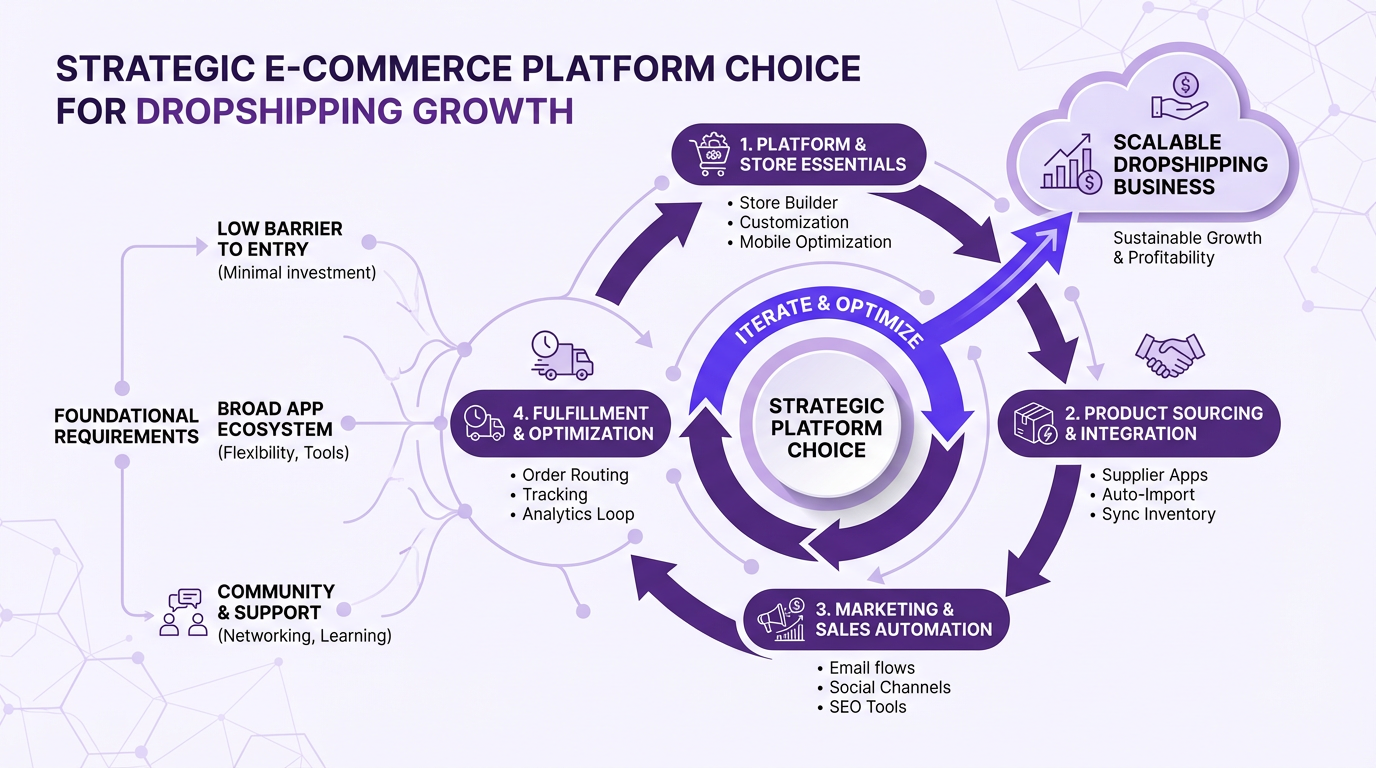
The Best E-commerce Platform for Dropshipping: A Strategic Guide
The Best E-commerce Platform for Dropshipping: A Strategic Guide
Dropshipping has revolutionized online retail, offering entrepreneurs a low-overhead entry point into the e-commerce world. However, the success of a dropshipping business hinges significantly on selecting the best e-commerce platform for dropshipping. This choice impacts everything from product sourcing and order fulfillment to website design and customer experience. Unlike traditional retail, dropshipping requires specific integrations and functionalities that streamline the connection between your store, suppliers, and customers. Understanding these unique demands is crucial when evaluating various E-commerce Platform Solutions.The ideal platform for dropshipping must offer seamless integration with dropshipping suppliers, automated order processing, and robust tools for marketing and scaling. A platform that complicates these core processes can quickly erode profit margins and lead to operational headaches. This guide will explore the key features and considerations for dropshippers, helping you identify the platform that best supports your business model and growth ambitions.
Key Dropshipping Statistics • The global dropshipping market size was valued at $243.4 billion in 2023 and is projected to reach $1.5 trillion by 2032. (Grand View Research) • 27% of online retailers have adopted dropshipping as their primary fulfillment method. (Statista) • Dropshipping businesses typically have profit margins ranging from 15% to 20%. (Shopify) • Over 33% of online stores use dropshipping as their fulfillment model. (Statista)
Unique Requirements for Dropshipping Platforms
Dropshipping is distinct from traditional e-commerce in several ways, and these differences dictate specific platform requirements. Without managing physical inventory, the focus shifts to supplier relationships, automated order routing, and efficient customer communication. Therefore, the best e-commerce platform for dropshipping must excel in these areas.Essential Dropshipping Platform Features
- Supplier Integration: Direct integration with major dropshipping suppliers (e.g., AliExpress, SaleHoo, Doba) or apps that facilitate this connection is paramount. This includes automated product import and inventory synchronization.
- Automated Order Fulfillment: The platform should allow for automated or semi-automated order placement with suppliers once a customer makes a purchase, minimizing manual intervention.
- Product Sourcing Tools: Features that help identify trending products, analyze competitor pricing, and manage product data from various suppliers are highly beneficial.
- Scalability: As your business grows, the platform must handle increased product listings, order volumes, and potentially multiple suppliers without performance issues.
- Ease of Use: A user-friendly interface for store setup, product management, and order tracking is crucial, especially for new dropshippers.
- Marketing & SEO Tools: Built-in or easily integrated tools for search engine optimization, email marketing, and social media promotion are vital for driving traffic.
- Customer Support: Reliable support is essential for troubleshooting issues related to orders, suppliers, or platform functionality.
| Platform Feature | Best For Dropshipping | Difficulty | ROI Potential |
|---|---|---|---|
| Automated Order Sync | High-volume dropshippers | Medium | Very High |
| Supplier Marketplace | New dropshippers, product discovery | Easy | Medium |
| Multi-vendor Support | Expanding product range, diverse suppliers | Medium | High |
| Advanced Analytics | Optimizing product selection, marketing | Medium | High |
Top E-commerce Platforms for Dropshipping
Several platforms stand out as excellent choices for dropshipping, each offering a unique blend of features and pricing. The decision often comes down to your budget, technical comfort, and specific dropshipping strategy. For a broader understanding of how these platforms compare to general e-commerce solutions, an e-commerce platform comparison can be insightful.Shopify: The Dropshipping King
Shopify is widely considered the best e-commerce platform for dropshipping due to its robust app ecosystem, particularly its seamless integration with dropshipping apps like Oberlo (now Dsers). It offers an intuitive interface, excellent scalability, and a vast array of themes and customization options. Its built-in payment processing and shipping tools further simplify operations.WooCommerce: Flexible and Powerful
For those who prefer WordPress, WooCommerce provides immense flexibility. While it requires more technical setup and self-hosting, plugins like AliDropship or Dropified can transform it into a powerful dropshipping solution. Its open-source nature allows for deep customization, making it suitable for dropshippers who need unique functionalities or want full control over their store's code.BigCommerce: Scalable for High-Volume Dropshippers
BigCommerce is a strong contender for dropshippers looking for a highly scalable platform with advanced features. It offers robust built-in SEO, multi-channel selling, and a flexible API for custom integrations. While it might have a steeper learning curve than Shopify for beginners, its comprehensive features make it ideal for growing dropshipping businesses with larger product catalogs.5-Step Dropshipping Platform Selection Framework
Integrating with Dropshipping Apps and Tools
The true power of the best e-commerce platform for dropshipping often lies in its ability to integrate seamlessly with specialized dropshipping apps and tools. These applications automate critical tasks, from product research and import to order tracking and supplier communication. Platforms like Shopify, with its extensive app store, provide a rich ecosystem for these integrations.Expert Insight: "Many new dropshippers get fixated on finding the 'cheapest' platform. However, the real cost-saver in dropshipping comes from automation. Invest in a platform and apps that automate product import, inventory updates, and order fulfillment. The time saved from manual tasks far outweighs a slightly higher monthly fee, allowing you to focus on marketing and customer service, which are the true drivers of dropshipping success."These integrations are vital for streamlining operations and ensuring a smooth workflow. For those exploring how to create an e-commerce website specifically for dropshipping, understanding the app ecosystem of each platform is as important as its core features. This ensures you have the necessary tools to manage your virtual inventory and supplier relationships effectively.
Diagram: Dropshipping Workflow Optimization [Customer Places Order] → [Platform Processes Order] → [Dropshipping App Notifies Supplier] → [Supplier Ships Product] → [Tracking Info Updated] → [Customer Receives Product]
Marketing and Scaling Your Dropshipping Business
Choosing the best e-commerce platform for dropshipping is just the first step. To succeed, you need to effectively market your products and scale your operations. The platform should offer robust SEO features, integration with social media, and tools for email marketing and advertising campaigns. As your business grows, you might explore advanced features like abandoned cart recovery, upsells, and cross-sells.Scalability also means the ability to manage multiple suppliers, handle international orders, and potentially expand into new product niches. The platform should provide analytics to track sales, customer behavior, and marketing campaign performance, enabling data-driven decisions for continuous improvement. These are all crucial aspects of effective E-commerce Platform Solutions for dropshippers.
Frequently Asked Questions
Is Shopify the only good platform for dropshipping?
While Shopify is extremely popular and well-suited for dropshipping due to its app ecosystem (like Dsers), it's not the only option. WooCommerce, BigCommerce, and even some specialized dropshipping platforms can be excellent choices depending on your specific needs, budget, and technical comfort level.Do I need a large budget to start dropshipping with a good platform?
No, dropshipping is known for its low startup costs. Many platforms offer affordable monthly plans, and dropshipping apps often have free tiers or reasonable subscription fees. Your main initial investment will typically be the platform subscription and potentially some marketing spend.How important are product sourcing tools in a dropshipping platform?
Product sourcing tools are very important. They help you find winning products, analyze market trends, and import product data efficiently. Platforms or integrated apps that offer these features can significantly reduce the time and effort required for product research and listing.Can I dropship from multiple suppliers on one platform?
Yes, many e-commerce platforms and their associated dropshipping apps support dropshipping from multiple suppliers. This allows you to diversify your product offerings and potentially reduce reliance on a single source, enhancing the resilience of your business.Key Takeaways
- The best e-commerce platform for dropshipping must offer seamless supplier integration, automated order fulfillment, and scalability.
- Shopify is a leading choice due to its user-friendliness and extensive app ecosystem for dropshipping.
- WooCommerce offers flexibility and control for those comfortable with WordPress, while BigCommerce suits high-volume and growing dropshipping businesses.
- Prioritize platforms with robust app integrations that automate key dropshipping processes to save time and increase efficiency.
- Beyond platform choice, effective marketing and continuous optimization are crucial for scaling a successful dropshipping business.