Blockchain for E-commerce: Enhancing Security, Transparency, and Efficiency
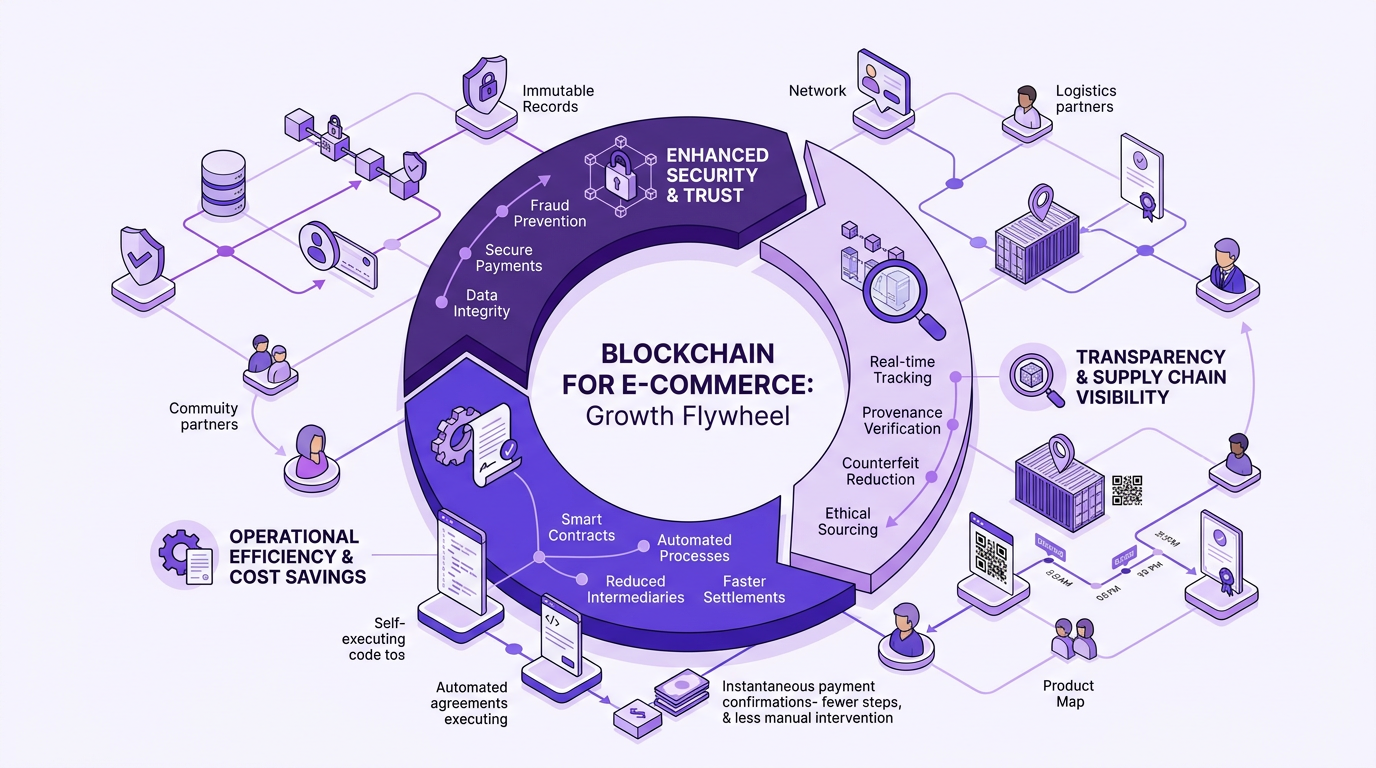
The e-commerce landscape is constantly evolving, driven by demands for greater security, transparency, and efficiency. Blockchain technology, with its immutable ledger and decentralized nature, offers a powerful solution to many of the challenges faced by traditional online retail. By integrating blockchain, e-commerce platforms can move beyond centralized vulnerabilities, reduce fraud, streamline supply chains, and empower consumers with greater control over their data and transactions. This integration is a critical component of the broader movement towards
Decentralized Commerce, promising a more robust and trustworthy digital economy.
Key Blockchain in E-commerce Statistics
• The global blockchain in retail market is projected to grow from USD 149.3 million in 2022 to USD 11.2 billion by 2030, at a CAGR of 70.8%.
• 65% of consumers are more likely to buy from brands that offer transparency in their supply chain.
• E-commerce fraud losses are estimated to exceed $48 billion globally by 2023, highlighting the need for enhanced security.
• Over 40% of consumers are willing to pay more for products with verifiable authenticity.
Addressing E-commerce Challenges with Blockchain Technology
Traditional e-commerce platforms often grapple with issues like data breaches, payment fraud, lack of supply chain transparency, and high transaction fees. Blockchain technology provides a robust framework to tackle these problems head-on. Its distributed ledger ensures that once a transaction or data point is recorded, it cannot be altered, providing an unprecedented level of security and integrity.
Enhanced Security and Fraud Prevention
Blockchain's cryptographic security makes it incredibly difficult for malicious actors to tamper with transaction records or customer data. Every transaction is encrypted and linked to the previous one, forming an unbreakable chain. This significantly reduces the risk of payment fraud, chargebacks, and identity theft, which are persistent threats in conventional e-commerce. Furthermore, the use of
smart contracts in decentralized commerce can automate escrow services, holding funds securely until both parties confirm fulfillment, thereby mitigating buyer-seller disputes.
| E-commerce Challenge | Traditional Solution | Blockchain Solution |
|---|
| Payment Fraud | Fraud detection algorithms, chargeback insurance | Cryptographic security, immutable ledger, smart contract escrow |
| Supply Chain Opacity | Manual audits, certifications | Distributed ledger tracking, verifiable product origin |
| Data Breaches | Centralized database security | Decentralized storage, user-controlled decentralized identity |
| High Transaction Fees | Payment gateway fees | Peer-to-peer crypto payments, lower network fees |
Streamlining Supply Chains and Authenticity Verification
One of the most impactful applications of blockchain in e-commerce is in supply chain management. By recording every step of a product's journey – from raw materials to manufacturing, shipping, and delivery – on a blockchain, businesses can create an unalterable and transparent record. This allows consumers to verify the authenticity of products, track their origin, and ensure ethical sourcing, building trust and combating counterfeit goods.
5-Step Blockchain Integration for Supply Chain Transparency
Identify Key Supply Chain Touchpoints — Map out all critical stages where data needs to be recorded, such as raw material acquisition, manufacturing, quality control, packaging, shipping, and retail arrival.
Select a Suitable Blockchain Platform — Choose a blockchain (e.g., VeChain, Hyperledger Fabric, Ethereum enterprise solutions) that offers the necessary scalability, privacy controls, and integration capabilities for your supply chain needs.
Develop Data Capture Mechanisms — Implement IoT devices, QR codes, or manual entry systems at each touchpoint to record relevant data (e.g., time, location, temperature, responsible party) onto the blockchain.
Create Smart Contracts for Automation — Use smart contracts to automate actions based on supply chain events, such as triggering payments upon delivery or updating inventory levels when goods arrive.
Develop User-Facing Interface — Build a front-end application (e.g., a web portal or mobile app) that allows consumers and partners to easily access and verify product information by scanning a QR code or entering a product ID.
Empowering Consumers and Reducing Costs
Blockchain technology empowers consumers by giving them more control over their personal data through
decentralized identity solutions. Instead of trusting a central platform with sensitive information, users can manage their digital identities and selectively share verifiable credentials. This shift not only enhances privacy but also reduces the risk of data exploitation.
Expert Insight: "The real game-changer for blockchain in e-commerce isn't just about faster payments or better tracking; it's about shifting the power dynamic. When consumers can verify product claims directly, control their data, and participate in truly open marketplaces, it forces brands to be genuinely transparent and accountable. This isn't just a tech upgrade; it's a fundamental re-alignment of trust in the digital economy."
Furthermore, by enabling direct peer-to-peer transactions using cryptocurrencies, blockchain can significantly reduce transaction fees and processing times often associated with traditional payment gateways. This cost-saving can be passed on to consumers or reinvested by businesses, fostering a more competitive and efficient market environment, especially within
decentralized marketplaces.
Diagram: Blockchain-Enhanced E-commerce Flow
[Customer Order] → [Smart Contract (Payment/Escrow)] → [Seller Confirmation]
↑ ↓
[Product Origin (Blockchain Record)] → [Manufacturing (Blockchain Record)] → [Shipping (Blockchain Record)] → [Delivery (Blockchain Record)]
↑ ↓
[Customer Verification (via DApp)]
The Future of E-commerce: A Decentralized Vision
As blockchain technology matures, its integration into e-commerce will become increasingly seamless. We can anticipate a future where product authenticity is guaranteed, supply chains are fully transparent, and consumer data is sovereign. This evolution will not only enhance the security and efficiency of online shopping but also foster a new era of trust and accountability between businesses and consumers, driving the widespread adoption of
Decentralized Commerce.
Frequently Asked Questions
How does blockchain prevent counterfeiting in e-commerce?
Blockchain prevents counterfeiting by creating an immutable and transparent record of a product's entire lifecycle, from manufacturing to sale. Each item can be assigned a unique digital identity on the blockchain, allowing consumers to verify its authenticity and origin.
Can blockchain make e-commerce payments faster and cheaper?
Yes, by enabling direct peer-to-peer cryptocurrency transactions, blockchain can bypass traditional financial intermediaries, leading to lower transaction fees and faster settlement times compared to conventional payment methods.
What is the role of smart contracts in blockchain for e-commerce?
Smart contracts automate agreements and transactions. In e-commerce, they can manage escrow services, trigger payments upon delivery, automate royalty distributions, and enforce terms of sale, all without the need for human intervention or third-party oversight.
Is blockchain suitable for all types of e-commerce businesses?
While blockchain offers significant benefits, its implementation requires investment and technical expertise. It's particularly suitable for businesses where transparency, authenticity, and security are paramount, such as luxury goods, pharmaceuticals, food, and high-value digital assets.
Key Takeaways
- Blockchain technology enhances e-commerce by improving security, transparency, and operational efficiency.
- It significantly reduces fraud, particularly in payments and product authenticity verification.
- Blockchain provides an immutable record for supply chains, allowing consumers to track product origins and ensure ethical sourcing.
- It empowers consumers with greater data control through decentralized identity and offers lower transaction costs.
- The integration of blockchain is a cornerstone of the future of Decentralized Commerce, fostering trust and accountability.