Blockchain-Powered Supply Chains: Enhancing Transparency and Efficiency in Decentralized Commerce
Blockchain-Powered Supply Chains: Enhancing Transparency and Efficiency in Decentralized Commerce
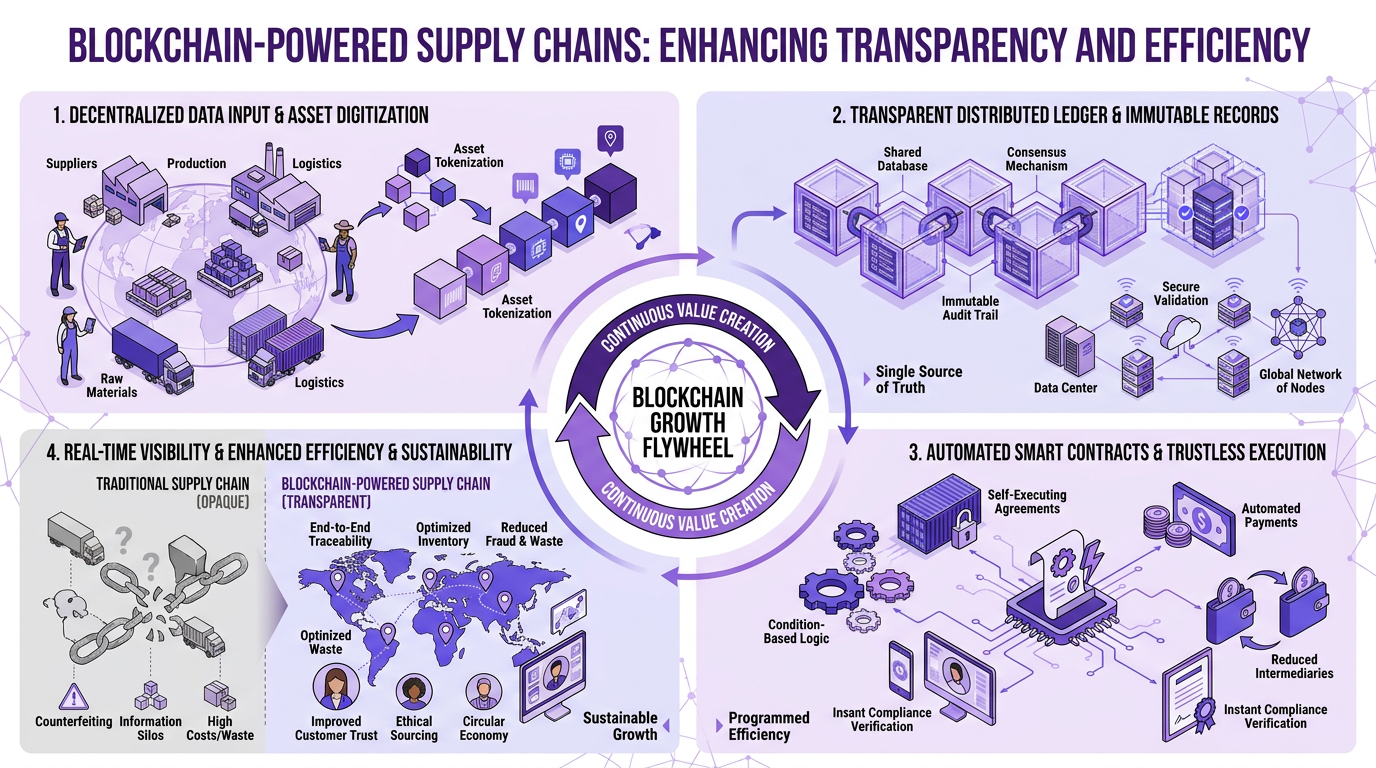
The advent of blockchain technology has ushered in a new era for supply chain management, fundamentally transforming how goods and services move from origin to consumer. In the context of Decentralized Commerce, blockchain-powered supply chains are not merely an enhancement but a foundational element, enabling unprecedented levels of transparency, traceability, and efficiency. By distributing ledger technology across all participants, from raw material suppliers to end-users, blockchain eliminates information silos and reduces reliance on intermediaries, fostering a more resilient and equitable global trade ecosystem. This shift is critical for building trust and ensuring the integrity of transactions in a decentralized marketplace.Traditional supply chains are often opaque, fragmented, and prone to inefficiencies, fraud, and disputes. Blockchain's immutable and transparent record-keeping capabilities directly address these challenges, offering a single source of truth that all authorized parties can access and verify. This not only streamlines operations but also empowers consumers with greater insight into product origins and ethical sourcing, a growing demand in today's conscious consumer landscape. The integration of blockchain into supply chain processes is a cornerstone for the future of commerce, driving innovation and fostering a truly decentralized economic model.
Key Supply Chain Transparency Statistics • 71% of consumers believe it's important for brands to be transparent about their supply chain practices (IBM, 2022). • Supply chain disruptions cost companies an average of $184 million per year (Accenture, 2023). • Blockchain technology could boost global GDP by $1.76 trillion over the next decade, with supply chain applications being a major driver (PwC, 2020). • 85% of supply chain executives believe blockchain will significantly impact their operations within five years (Deloitte, 2021). • Companies using blockchain for supply chain traceability reported a 15% reduction in administrative costs (Forbes, 2023).
The Core Principles of Blockchain in Supply Chain Management
At its heart, a blockchain-powered supply chain leverages the distributed, immutable ledger to record every transaction and movement of a product. Each 'block' contains a timestamped record of data, which, once added to the chain, cannot be altered or deleted. This creates an unchangeable audit trail that is accessible to all permissioned participants, fostering unparalleled trust and accountability. Key principles include decentralization, immutability, transparency, and enhanced security.Decentralization and Immutability for Trust
Unlike centralized databases controlled by a single entity, blockchain distributes data across a network of nodes. This decentralization means no single point of failure or control, making the system more robust and resistant to censorship or manipulation. The immutability of records ensures that once a transaction or event is recorded – such as a product leaving a factory or a quality check being completed – it becomes a permanent part of the ledger. This eliminates disputes over data accuracy and provides a verifiable history for every item, from its raw materials to its final delivery. This foundational trust is essential for the seamless operation of decentralized marketplaces.| Feature | Traditional Supply Chain | Blockchain-Powered Supply Chain |
|---|---|---|
| Data Storage | Centralized, siloed | Distributed, shared ledger |
| Transparency | Limited, often opaque | High, verifiable by all participants |
| Trust | Relies on intermediaries | Cryptographically secured, trustless |
| Security | Vulnerable to single point of failure | Enhanced, tamper-proof records |
| Efficiency | Manual processes, delays | Automated, real-time tracking |
| Cost | High overhead, reconciliation | Reduced, streamlined operations |
Enhancing Traceability and Authenticity
One of the most significant benefits of blockchain in supply chains is its ability to provide end-to-end traceability. Every step in a product's journey, from sourcing to manufacturing, shipping, and retail, can be recorded on the blockchain. This level of detail allows for instant verification of product authenticity, combating counterfeiting and ensuring compliance with ethical and sustainability standards. Consumers can scan a QR code on a product and instantly access its entire history, including origin, certifications, and even environmental impact data.The Role of Smart Contracts in Automation
Smart contracts are self-executing contracts with the terms of the agreement directly written into code. In a blockchain-powered supply chain, smart contracts automate various processes, such as payments, quality checks, and regulatory compliance. For instance, a smart contract can automatically release payment to a supplier once a shipment is confirmed as delivered and inspected, eliminating delays and reducing administrative overhead. This automation significantly boosts efficiency and reduces the need for manual intervention, which is a core tenet of decentralized autonomous organizations (DAOs) in commerce.5-Step Blockchain Supply Chain Implementation Framework
Overcoming Challenges and Future Outlook
While the benefits are substantial, implementing blockchain in supply chains presents challenges, including interoperability between different blockchain networks, data privacy concerns, and the initial cost of integration. However, ongoing advancements in blockchain technology, such as zero-knowledge proofs for privacy and cross-chain communication protocols, are steadily addressing these hurdles. The future of blockchain-powered supply chains is bright, promising a more resilient, transparent, and efficient global trade system that aligns perfectly with the principles of Decentralized Commerce.Expert Insight: "The real power of blockchain in supply chains isn't just about tracking a product; it's about building an ecosystem of trust where every participant, from the smallest farmer to the largest retailer, operates with verifiable integrity. This shifts the competitive landscape from who has the most control to who offers the most transparency and reliability."
Diagram: Blockchain Supply Chain Data Flow [Raw Material Supplier] → [Manufacturer (Smart Contract for Payment)] → [Logistics Provider (GPS & IoT Data)] → [Retailer (Inventory Update)] → [Consumer (Product Authenticity Check)] → [Feedback Loop to Supplier for Quality Improvement]
Impact on Consumer Trust and Brand Reputation
In an era where consumers are increasingly conscious of ethical sourcing, environmental impact, and product authenticity, blockchain-powered supply chains offer a powerful tool for building and maintaining trust. Brands that can transparently demonstrate their commitment to these values through verifiable blockchain records gain a significant competitive advantage. This transparency not only enhances brand reputation but also empowers consumers to make more informed purchasing decisions, driving demand for ethically produced and authentic goods. The ability to verify the provenance of goods directly contributes to the broader adoption of decentralized identity solutions, as consumers seek greater control over their data and interactions.Frequently Asked Questions
What is the primary benefit of using blockchain in supply chains?
The primary benefit is enhanced transparency and traceability, creating an immutable record of a product's journey from origin to consumer. This reduces fraud, improves authenticity verification, and builds trust among all stakeholders.How do smart contracts improve supply chain efficiency?
Smart contracts automate various processes, such as payments, quality checks, and regulatory compliance, based on predefined conditions. This eliminates manual intervention, reduces delays, and minimizes administrative costs.Is blockchain suitable for all types of supply chains?
While highly beneficial for many, blockchain implementation is most impactful for complex supply chains with multiple intermediaries, high-value goods, or those requiring stringent regulatory compliance and ethical sourcing verification. Its suitability depends on specific business needs and existing infrastructure.What are the main challenges in adopting blockchain for supply chains?
Key challenges include interoperability with existing legacy systems, data privacy concerns (especially for sensitive commercial data), the initial investment in technology and integration, and the need for industry-wide collaboration and standardization.Can blockchain prevent counterfeiting in supply chains?
Yes, blockchain significantly helps prevent counterfeiting by providing an immutable and verifiable record of a product's authenticity and origin. Consumers can use blockchain-based solutions to verify if a product is genuine, tracing its journey back to the manufacturer.Key Takeaways
- Blockchain fundamentally transforms supply chains by offering unparalleled transparency, traceability, and immutability.
- It combats fraud, enhances product authenticity, and ensures ethical sourcing, building greater consumer trust.
- Smart contracts automate critical processes, significantly improving efficiency and reducing operational costs.
- While challenges exist, ongoing technological advancements are making blockchain-powered supply chains increasingly viable and impactful.
- The integration of blockchain into supply chains is a crucial enabler for the broader vision of Decentralized Commerce, fostering a more equitable and efficient global trade ecosystem.