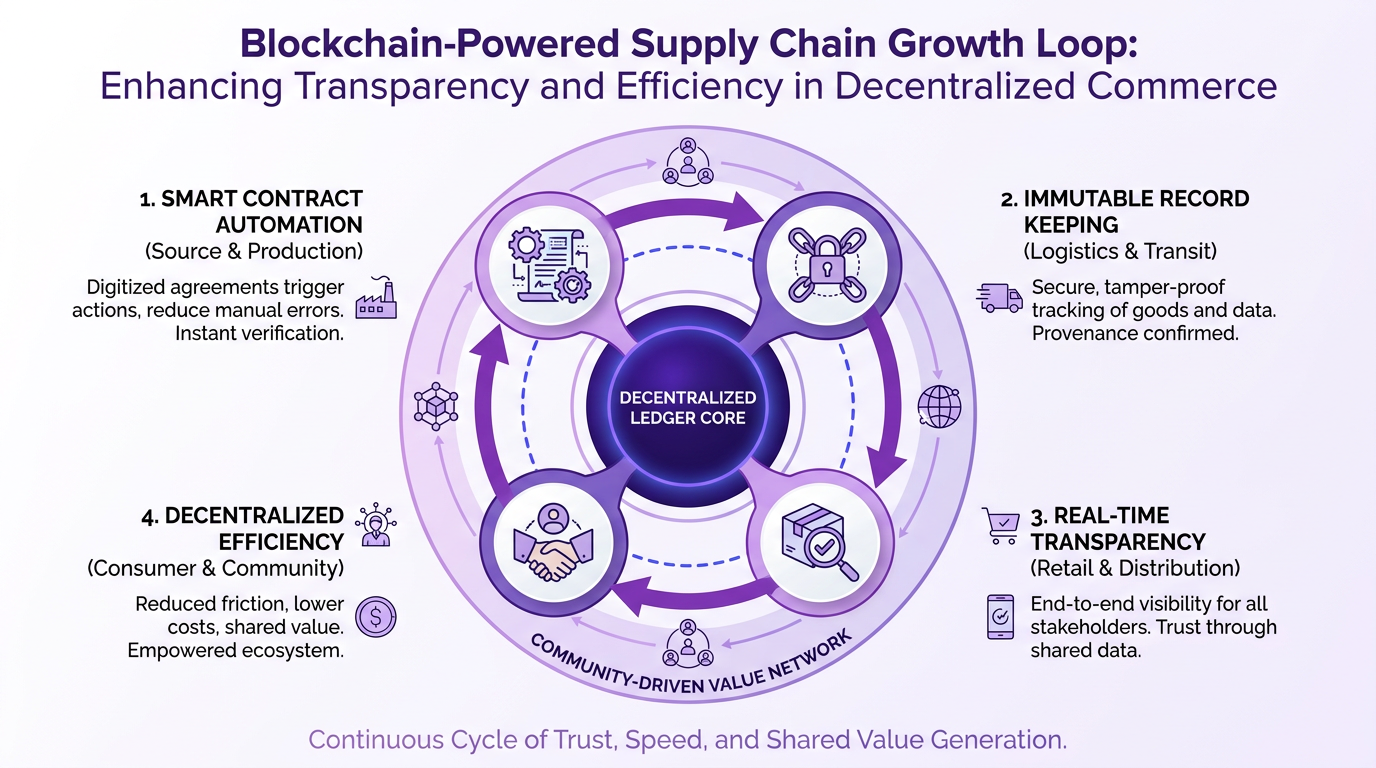
Blockchain-Powered Supply Chains: Enhancing Transparency and Efficiency in Decentralized Commerce
Blockchain-Powered Supply Chains: Enhancing Transparency and Efficiency in Decentralized Commerce
The traditional supply chain, often a labyrinth of intermediaries and opaque processes, has long been a bottleneck for efficiency and trust in global trade. However, the advent of blockchain technology is fundamentally reshaping this landscape, paving the way for a new era of transparency, traceability, and accountability. By leveraging the immutable and distributed ledger capabilities of blockchain, businesses can create supply chains that are not only more efficient but also inherently more trustworthy, a critical component for the future of Decentralized Commerce.This shift from centralized, siloed systems to a decentralized, interconnected network offers profound benefits, from reducing fraud and counterfeiting to optimizing logistics and improving consumer confidence. As the world moves towards more interconnected and transparent economic models, understanding the mechanics and implications of blockchain-powered supply chains becomes paramount for any entity engaged in or aspiring to participate in decentralized marketplaces.
Key Supply Chain Transparency Statistics • A 2023 survey indicated that 71% of consumers are willing to pay more for products from brands offering full supply chain transparency. • Blockchain implementation in supply chains is projected to save the global economy over $450 billion by 2030 through reduced fraud and operational efficiencies. • Companies using blockchain for supply chain management report an average 15% reduction in administrative costs. • Over 60% of supply chain executives believe blockchain will be a disruptive force in their industry within the next five years.
The Imperative for Transparency: Why Blockchain Matters
The complexities of modern supply chains, spanning multiple geographies, regulatory environments, and countless participants, often lead to a lack of visibility. This opacity breeds inefficiencies, makes it difficult to verify product authenticity, and hinders rapid response to disruptions. Blockchain technology addresses these challenges head-on by providing a shared, unchangeable record of every transaction and movement within the supply chain.Each step, from raw material sourcing to manufacturing, shipping, and final delivery, can be recorded as a block on the chain. This creates an unbroken digital thread that all authorized parties can access and verify, eliminating information silos and fostering unprecedented levels of trust among participants. This foundational transparency is essential for building robust decentralized marketplaces where trust is established cryptographically rather than through centralized authorities.
Core Principles of Blockchain in Supply Chains
Blockchain's effectiveness in supply chain management stems from several core principles:- Immutability: Once a transaction is recorded, it cannot be altered or deleted, ensuring data integrity.
- Decentralization: No single entity controls the entire ledger, reducing points of failure and censorship.
- Transparency: All authorized participants have access to the same real-time information, fostering trust.
- Traceability: Products can be tracked from origin to consumer with granular detail.
- Security: Cryptographic hashing protects data from tampering and unauthorized access.
| Feature | Traditional Supply Chain | Blockchain-Powered Supply Chain |
|---|---|---|
| Data Storage | Centralized databases, siloed | Distributed ledger, shared across network |
| Transparency | Limited, often opaque | High, real-time visibility for authorized parties |
| Trust Mechanism | Intermediaries, contracts | Cryptographic proof, smart contracts |
| Traceability | Manual, prone to errors | Automated, immutable record |
| Fraud Risk | High | Significantly reduced |
| Efficiency | Manual processes, delays | Automated, streamlined workflows |
Enhancing Efficiency Through Smart Contracts and Automation
Beyond transparency, blockchain technology, particularly through the use of smart contracts, introduces a new level of automation and efficiency to supply chain operations. Smart contracts are self-executing agreements with the terms of the agreement directly written into lines of code. They automatically execute predefined actions when specific conditions are met, eliminating the need for manual intervention and reducing delays.For instance, a smart contract can automatically release payment to a supplier once goods are confirmed to have arrived at a certain checkpoint, or trigger an insurance claim if a shipment is delayed beyond a specified timeframe. This automation not only speeds up processes but also reduces administrative overhead and the potential for human error, directly contributing to the agility required for effective decentralized finance applications within commerce.
5-Step Blockchain Supply Chain Implementation Framework
Mitigating Risks: Counterfeiting, Fraud, and Data Tampering
One of the most significant advantages of blockchain in supply chains is its robust capability to combat counterfeiting and fraud. The immutable ledger provides an unalterable record of a product's journey, making it extremely difficult for counterfeit goods to enter the legitimate supply chain undetected. Consumers can scan QR codes on products to verify their authenticity and origin, fostering greater trust in brands.Expert Insight: "Many companies focus solely on the 'track and trace' aspect of blockchain, but the real power lies in its ability to create a shared, verifiable truth across disparate entities. This isn't just about knowing where a product is; it's about building a foundation of trust that can withstand adversarial attempts and unlock entirely new business models for Decentralized Commerce that were previously impossible due to lack of trust between unknown parties."Furthermore, the cryptographic security inherent in blockchain technology protects sensitive supply chain data from tampering. Each block is cryptographically linked to the previous one, forming a secure chain that is virtually impossible to alter without detection. This level of data integrity is crucial for maintaining regulatory compliance and protecting intellectual property.
Diagram: Blockchain Supply Chain Flow [Raw Material Sourcing (Supplier)] → [Manufacturing (Factory)] → [Quality Assurance (Auditor)] → [Logistics & Shipping (Carrier)] → [Retail Distribution (Warehouse)] → [Consumer Purchase (Retailer)] → [Immutable Record on Blockchain]
The Future of Global Trade and Decentralized Commerce
Blockchain-powered supply chains are not just an incremental improvement; they represent a paradigm shift in how goods and services move across the globe. By fostering unprecedented levels of transparency, efficiency, and trust, they lay the groundwork for a truly global and equitable Decentralized Commerce ecosystem. This technology empowers smaller businesses to compete on a more level playing field, reduces barriers to entry, and ensures that consumers have greater assurance about the products they purchase.As more industries adopt these solutions, we can expect to see a significant reduction in waste, improved ethical sourcing practices, and a more resilient global economy. The integration of IoT devices with blockchain will further enhance real-time monitoring, providing even richer data about product conditions and environmental factors throughout the supply chain.
Frequently Asked Questions
What is the primary benefit of using blockchain in supply chains?
The primary benefit is enhanced transparency and traceability. Blockchain creates an immutable, shared record of every transaction and movement, allowing all authorized participants to track products from origin to consumer with unprecedented detail and verify authenticity.How do smart contracts improve supply chain efficiency?
Smart contracts automate predefined actions based on specific conditions, such as releasing payments upon delivery or triggering insurance claims. This reduces manual intervention, minimizes delays, lowers administrative costs, and decreases the potential for human error.Can blockchain eliminate counterfeiting entirely?
While blockchain significantly mitigates counterfeiting and fraud by providing an unalterable record of a product's journey and origin, it cannot entirely eliminate it. However, it makes it substantially more difficult for counterfeit goods to enter the legitimate supply chain and empowers consumers to verify authenticity.Key Takeaways
- Blockchain fundamentally transforms traditional supply chains by introducing unparalleled transparency, traceability, and security.
- The immutable and distributed nature of blockchain reduces fraud, counterfeiting, and operational inefficiencies.
- Smart contracts automate critical supply chain processes, leading to significant cost savings and faster operations.
- Blockchain-powered supply chains are a cornerstone for building trust and efficiency in the evolving landscape of Decentralized Commerce.
- Implementing blockchain requires careful planning, including platform selection, data standardization, and integration with existing systems.