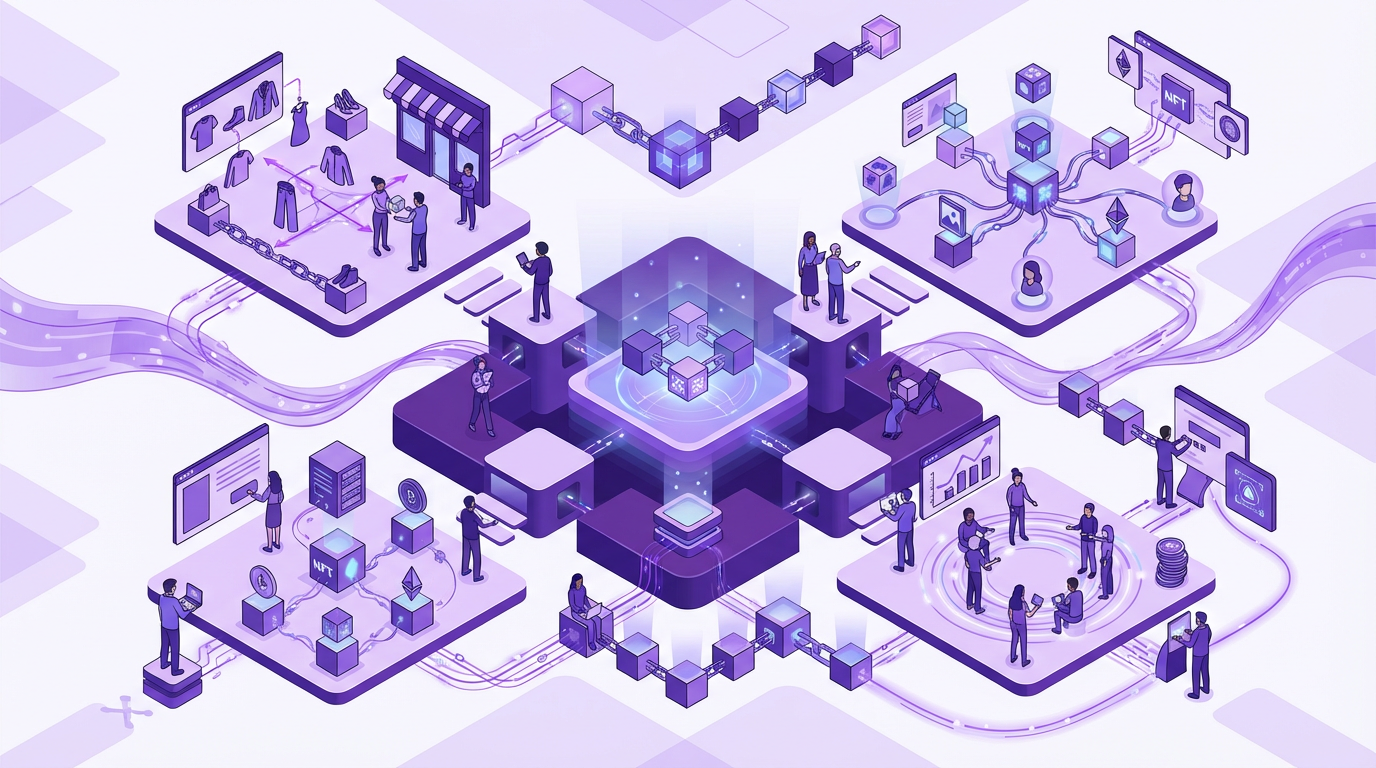
The Definitive Guide to Dcommerce Business Models: Unlocking Decentralized Value
The Definitive Guide to Dcommerce Business Models: Unlocking Decentralized Value
Table of Contents
- Specialized Models: Creator Economy to Fractional Ownership
- The Future Landscape of Decentralized Commerce
- Frequently Asked Questions
- Related Guides
Introduction: The Dawn of Decentralized Commerce
The internet has fundamentally reshaped commerce, yet its centralized architecture still leaves power concentrated in the hands of a few intermediaries. Enter Dcommerce, or Decentralized Commerce, a revolutionary paradigm leveraging blockchain technology, smart contracts, and cryptographic assets to create more transparent, equitable, and efficient marketplaces. This comprehensive guide delves into the intricate world of Dcommerce Business Models, exploring how businesses and individuals can harness decentralization to build resilient, community-owned, and value-driven commercial ecosystems. From novel governance structures to innovative revenue-sharing mechanisms, Dcommerce promises to redefine how goods and services are exchanged, challenging traditional e-commerce giants and empowering participants directly. This article serves as the definitive resource for understanding, implementing, and innovating within this burgeoning sector.Understanding the Core Principles of Dcommerce
Dcommerce fundamentally shifts control from central authorities to a distributed network of participants. This decentralization is not merely a technological choice; it's a philosophical one, aiming to mitigate censorship, reduce transaction costs, and foster greater trust through verifiable, immutable records. At its heart, Dcommerce is about empowering individuals and communities, allowing them to collectively own, govern, and benefit from the commercial ventures they participate in. This contrasts sharply with traditional e-commerce, where platforms dictate terms, extract significant fees, and control user data.DAO Commerce Structures: The New Governance Paradigm
Central to many Dcommerce initiatives are DAO commerce structures. Decentralized Autonomous Organizations (DAOs) provide a framework for collective decision-making, where token holders vote on proposals, allocate resources, and shape the direction of the platform. This shifts the power dynamic from a corporate board to a distributed community, fostering genuine [community ownership in commerce]. These structures can govern everything from product listings and dispute resolution to marketing strategies and treasury management. The transparency of blockchain ensures that all governance actions are auditable and publicly verifiable, building a new level of trust.Key Dcommerce Statistics • The global blockchain market size is projected to reach over $163 billion by 2029, growing at a CAGR of 56.3% from 2022, indicating a strong foundation for Dcommerce adoption (Source: Grand View Research). • Over $25 billion was locked in DeFi protocols by Q1 2023, demonstrating significant capital flow into decentralized financial systems that can underpin Dcommerce (Source: DeFi Llama). • The number of active DAO participants grew by over 130% in 2022, highlighting increasing engagement in decentralized governance (Source: DeepDAO). • Transaction fees on traditional e-commerce platforms can range from 1.5% to 3.5% plus fixed fees, whereas Dcommerce aims to significantly reduce these through direct peer-to-peer interactions (Source: Various Payment Processors).
Join a Global Community of Decentralized Shoppers and Creators
Experience a shopping ecosystem built on transparency and decentralization today.
Exploring Key Dcommerce Business Models
The versatility of blockchain technology allows for a diverse array of Dcommerce Business Models, each leveraging decentralization in unique ways. These models often intertwine with innovative financial mechanisms and community engagement strategies to create sustainable and scalable ecosystems.Tokenomics and Value Creation in Dcommerce
[Tokenomics for Dcommerce] is the economic engine driving these new models. It involves the design and implementation of digital tokens that incentivize participation, govern access, and distribute value within a decentralized ecosystem. These tokens can represent ownership, utility, or even a share of future revenue. For instance, [governance tokens in commerce] grant holders voting rights, allowing them to influence the platform's evolution. Effective tokenomics are crucial for sustainable [value creation in decentralized markets], ensuring that all stakeholders – creators, consumers, and platform contributors – are appropriately rewarded.Diagram: Dcommerce Value Flow
[Community/DAO] → [Governance Tokens] → [Platform Development/Funding] → [Product/Service Creation] → [User Engagement/Transactions] → [Revenue Sharing/Royalty Distribution] → [Community/DAO]
Community-Driven Ownership and Engagement
The concept of [community ownership in commerce] is a cornerstone of Dcommerce. Instead of a single corporate entity owning the platform, the community of users, creators, and developers collectively owns and operates it. This is often facilitated through [Decentralized autonomous organizations for retail] (DAOs), where members contribute to decision-making and share in the platform's success. This model fosters loyalty and active participation, as users have a direct stake in the platform's growth and profitability. Revenue generated can be shared back with token holders through various mechanisms, including [revenue sharing in Dcommerce], further aligning incentives.| Dcommerce Model | Best For | Difficulty | ROI Potential |
|---|---|---|---|
| DAO-governed Marketplace | Niche communities, digital goods | Medium | High |
| Creator Economy Platform | Artists, content creators | Medium | Very High |
| Fractional Ownership Platform | High-value assets, collectibles | Hard | High |
| P2P Lending/Rental | Asset utilization, financial services | Medium | Medium |
Implementing Dcommerce: A Strategic Framework
Building a successful Dcommerce venture requires a thoughtful approach, integrating technological innovation with sound business strategy. It's not enough to simply decentralize; the underlying business model must be robust and provide clear value propositions to all participants.Building Your Dcommerce Strategy
Here’s a 5-Step Dcommerce Strategy Framework to guide your implementation:Advanced Dcommerce Strategies and Hybrid Approaches
Beyond the foundational models, Dcommerce offers sophisticated strategies that cater to specific market needs and asset types. These advanced approaches often blend decentralized principles with existing commercial practices to create novel opportunities.Specialized Models: Creator Economy to Fractional Ownership
The [Creator economy Dcommerce] model empowers artists, musicians, writers, and other content creators to directly monetize their work, bypassing traditional intermediaries. Through NFTs and smart contracts, creators can establish direct relationships with their audience, ensuring fair [royalty distribution in Dcommerce] and retaining a larger share of their earnings. This model often leverages [subscription models in Dcommerce] for exclusive content or access, and can even incorporate [fractional ownership of assets in commerce] for high-value digital art or intellectual property.Another innovative area is [rental models in Dcommerce]. Imagine renting out physical assets like vehicles or tools, or even digital assets like gaming skins, through a decentralized platform. Smart contracts can automate rental agreements, payments, and even insurance, removing the need for trusted third parties and reducing friction. Similarly, [fractional ownership of assets in commerce] allows multiple individuals to collectively own a high-value asset, such as real estate, rare collectibles, or even intellectual property. This democratizes access to investments previously reserved for the wealthy, with ownership represented by tokens that can be easily traded.
Expert Insight: "Many Dcommerce projects fail not because of technical limitations, but due to a lack of understanding of human psychology and incentive design. A truly successful Dcommerce model doesn't just decentralize; it creates a compelling reason for people to participate, contribute, and feel a sense of belonging. The tokenomics must be a living, breathing system that adapts to community needs, not a static whitepaper. Over-reliance on pure decentralization without a clear path to user adoption and value capture is a common pitfall." - Dr. Anya Sharma, Lead Economist, Uni-fy Labs
The Future Landscape of Decentralized Commerce
The trajectory of Dcommerce points towards a future where commerce is more transparent, equitable, and directly controlled by its participants. The ongoing development of [open-source commerce platforms] will further accelerate this trend, providing accessible tools and infrastructure for anyone to launch a decentralized marketplace or service. We will likely see an increase in [hybrid Dcommerce models], where established businesses integrate decentralized components to enhance trust, reduce costs, or engage their communities more deeply. The emphasis will continue to be on [value creation in decentralized markets], ensuring that economic benefits are distributed broadly rather than concentrated at the top.As blockchain technology matures and regulatory frameworks evolve, Dcommerce is poised to disrupt various industries, from retail and finance to media and logistics. The shift from centralized platforms to community-governed ecosystems represents a fundamental re-imagining of economic interaction, promising a more resilient and inclusive global economy.
Frequently Asked Questions
What are Dcommerce Business Models?
Dcommerce Business Models are commercial frameworks that leverage decentralized technologies like blockchain, smart contracts, and cryptocurrencies to facilitate transactions and interactions without central intermediaries. They prioritize transparency, community ownership, and direct peer-to-peer engagement, often utilizing tokenomics and DAO structures for governance and value distribution.How do DAO commerce structures impact business operations?
DAO commerce structures fundamentally shift decision-making power from a centralized entity to a distributed community of token holders. This impacts operations by requiring proposals and voting for significant changes, treasury management, and even product development, fostering greater transparency and community alignment but potentially introducing slower decision cycles.What role do tokenomics play in Dcommerce?
Tokenomics are critical in Dcommerce as they define the economic incentives, utility, and value distribution within a decentralized ecosystem. They dictate how participants are rewarded, how governance is conducted (via governance tokens), and how value is created and captured, ensuring the long-term sustainability and growth of the Dcommerce platform.Can traditional businesses adopt Dcommerce models?
Yes, traditional businesses can adopt Dcommerce models, often through [hybrid Dcommerce models]. This involves integrating decentralized components, such as blockchain for supply chain transparency, NFTs for loyalty programs, or DAO-like structures for customer governance, while retaining some centralized operational aspects. This allows them to leverage the benefits of decentralization without a complete overhaul.What is fractional ownership of assets in commerce?
Fractional ownership of assets in commerce allows multiple individuals to collectively own a portion of a high-value asset, such as real estate, art, or intellectual property, represented by digital tokens. This democratizes access to investments, enables easier liquidity for illiquid assets, and is managed through smart contracts on a decentralized platform.Related Guides
- DAO Commerce Structures - Comprehensive guide to DAO commerce structures
- Tokenomics For Dcommerce - Comprehensive guide to Tokenomics for Dcommerce
- Community Ownership In Commerce - Comprehensive guide to Community ownership in commerce
- Decentralized Autonomous Organizations For Retail - Comprehensive guide to Decentralized autonomous organizations for retail
- Creator Economy Dcommerce - Comprehensive guide to Creator economy Dcommerce
- Subscription Models In Dcommerce - Comprehensive guide to Subscription models in Dcommerce
- Rental Models In Dcommerce - Comprehensive guide to Rental models in Dcommerce
- Fractional Ownership Of Assets In Commerce - Comprehensive guide to Fractional ownership of assets in commerce
- P2P Lending For Dcommerce - Comprehensive guide to P2P lending for Dcommerce
- Royalty Distribution In Dcommerce - Comprehensive guide to Royalty distribution in Dcommerce
- Governance Tokens In Commerce - Comprehensive guide to Governance tokens in commerce
- Revenue Sharing In Dcommerce - Comprehensive guide to Revenue sharing in Dcommerce
- Open-source Commerce Platforms - Comprehensive guide to Open-source commerce platforms
- Hybrid Dcommerce Models - Comprehensive guide to Hybrid Dcommerce models
- Value Creation In Decentralized Markets - Comprehensive guide to Value creation in decentralized markets
Secure Your Spot in the Next Generation of Dcommerce
Join the future of decentralized commerce and explore a new way to interact with your favorite digital brands.