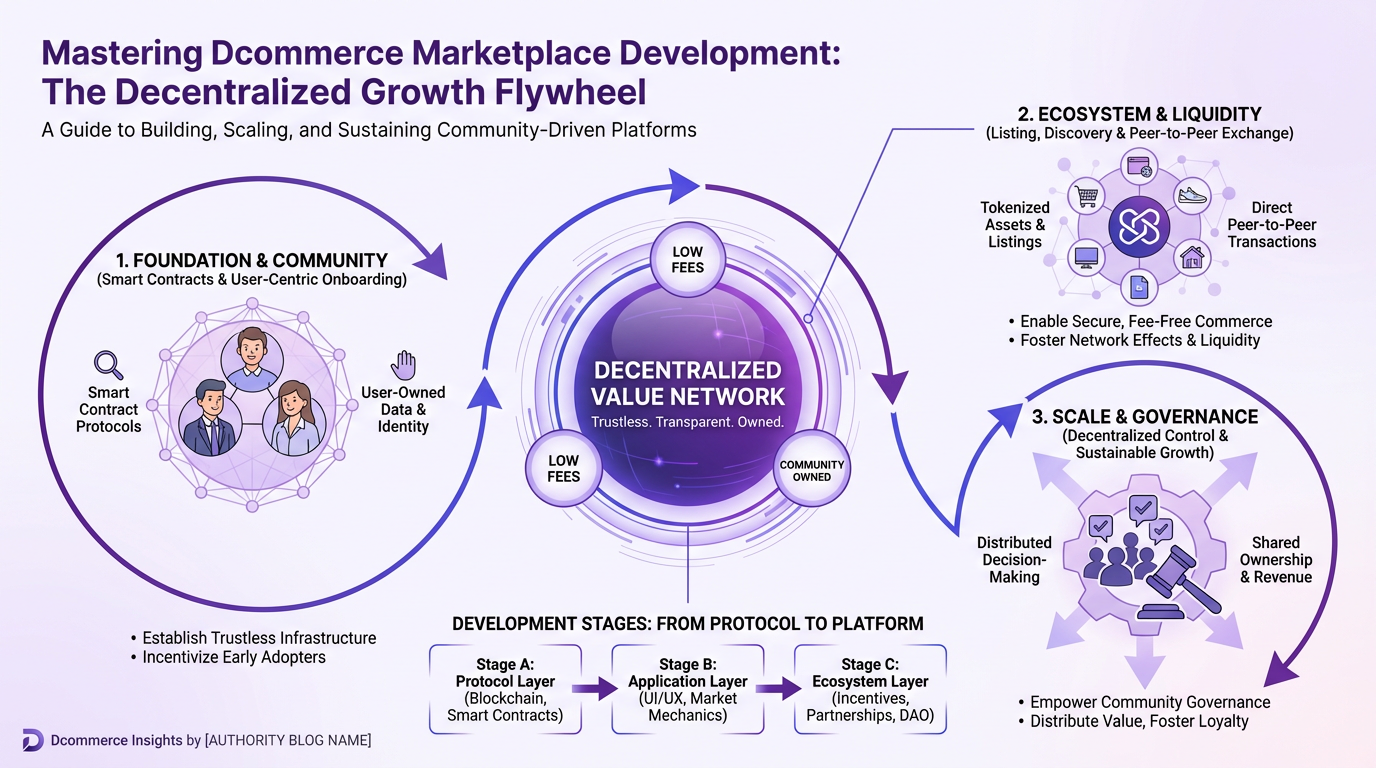
Mastering Dcommerce Marketplace Development: A Guide to Building Decentralized Marketplaces
Mastering Dcommerce Marketplace Development: A Guide to Building Decentralized Marketplaces
Dcommerce marketplace development is at the forefront of the Web3 revolution, offering a compelling alternative to traditional centralized e-commerce giants. These decentralized platforms empower users with greater control, transparency, and often, lower fees, by leveraging blockchain technology and smart contracts. For developers, entrepreneurs, and businesses looking to innovate in the digital commerce space, understanding the intricacies of building a Dcommerce marketplace is no longer optional but a strategic imperative. This guide delves into the core components and best practices for creating robust and scalable Decentralized Commerce Platforms.The shift towards decentralization in commerce is driven by a desire to eliminate intermediaries, reduce censorship risks, and foster more equitable economic models. A Dcommerce marketplace, by its very nature, distributes power among its participants rather than concentrating it in a single entity. This fundamental difference impacts everything from payment processing and dispute resolution to data ownership and governance. As the digital economy continues to evolve, the demand for secure, transparent, and user-centric marketplaces will only grow, making expertise in Dcommerce marketplace development highly valuable.
Key Dcommerce Marketplace Development Statistics • The global blockchain market, a foundational technology for Dcommerce, is projected to grow from $5.92 billion in 2021 to $163.83 billion by 2029, at a CAGR of 48.0%. • Over 60% of blockchain projects are open-source, indicating a strong community-driven development trend in the decentralized space. • Smart contract deployments increased by over 200% in the last year, highlighting the growing reliance on automated, trustless agreements in Dcommerce. • The average cost savings for businesses adopting blockchain solutions, including Dcommerce, can range from 10-30% due to reduced intermediary fees and increased efficiency.
Foundational Technologies for Dcommerce Marketplaces
Building a Dcommerce marketplace requires a deep understanding of several core technologies that underpin the decentralized web. At the heart of most Dcommerce platforms is a blockchain protocol, such as Ethereum, Polygon, or Solana, which provides the immutable ledger for transactions and smart contract execution. The choice of blockchain significantly influences the marketplace's scalability, transaction costs (gas fees), and overall performance. Developers must carefully evaluate these factors based on their target audience and business model.Smart contracts are another critical component, acting as self-executing agreements with the terms directly written into code. These contracts automate various marketplace functions, including product listings, payment processing, escrow services, and dispute resolution, eliminating the need for trusted third parties. Decentralized storage solutions, like IPFS or Arweave, are essential for storing product images, descriptions, and other media in a censorship-resistant manner, ensuring data availability even if a central server goes offline.
Essential Components for a Robust Dcommerce Marketplace
To create a truly resilient and user-friendly Dcommerce marketplace, several key components must be integrated seamlessly. These include a robust identity management system, often leveraging Self-sovereign identity in Dcommerce to give users control over their data. A well-designed user interface (UI) and user experience (UX) are paramount for adoption, as many users may be new to Web3 technologies. Furthermore, integrating with various cryptocurrency wallets and payment gateways is crucial for facilitating transactions.| Component | Best For | Difficulty | ROI Potential |
|---|---|---|---|
| Blockchain Protocol Selection | Scalability, security, transaction costs | Medium | High |
| Smart Contract Development | Automated transactions, trustless escrow | Hard | Very High |
| Decentralized Storage (IPFS/Arweave) | Censorship resistance, data availability | Medium | Medium |
| Frontend UI/UX Design | User adoption, ease of use | Medium | High |
| Wallet Integration | Seamless payments, user accessibility | Easy | Medium |
The Development Process: From Concept to Launch
The journey of Dcommerce marketplace development is iterative, typically involving several distinct phases. It begins with a clear conceptualization of the marketplace's purpose, target audience, and unique value proposition. This initial phase also includes thorough market research to identify existing gaps and opportunities within the decentralized commerce landscape. Defining the core features and functionalities that will differentiate your platform is crucial at this stage.Once the concept is solidified, the technical architecture is designed, including the choice of blockchain, smart contract logic, and integration points for other Web3 services. This is followed by the development phase, where smart contracts are coded, audited for security vulnerabilities, and deployed. Concurrently, the frontend application is built, ensuring a smooth and intuitive user experience. Rigorous testing, both automated and manual, is essential before launching the marketplace to the public. Post-launch, continuous monitoring, updates, and community engagement are vital for long-term success, especially for Community-governed commerce platforms.
7-Step Dcommerce Marketplace Development Framework
Security, Scalability, and Interoperability
Security is paramount in Dcommerce marketplace development. Smart contract vulnerabilities can lead to significant financial losses, making thorough auditing and robust coding practices indispensable. Implementing multi-signature wallets, time-locked contracts, and decentralized oracle networks for external data feeds can further enhance security. Furthermore, the decentralized nature of these platforms inherently offers a degree of censorship resistance, a key advantage over centralized alternatives.Scalability remains a significant challenge for many blockchain-based applications. Solutions like layer-2 scaling (e.g., rollups, sidechains) and sharding are being actively developed and implemented to increase transaction throughput and reduce gas fees. When considering Interoperability in Dcommerce ecosystems, platforms must be designed to communicate and transact across different blockchains, enabling a broader reach and more diverse offerings. This is where Cross-chain Dcommerce solutions become critical, allowing assets and data to flow freely between disparate networks.
Expert Insight: "Many Dcommerce projects focus heavily on the 'decentralized' aspect but often overlook the 'commerce' part. A truly successful Dcommerce marketplace needs to offer a user experience that rivals traditional platforms, not just a technically sound blockchain backend. This means prioritizing intuitive design, efficient dispute resolution, and robust customer support, even if it requires innovative decentralized approaches to achieve it."
The Future of Dcommerce: Beyond Basic Transactions
As Dcommerce marketplace development matures, we can expect to see more sophisticated features and integrations. This includes advanced Token-gated commerce experiences that offer exclusive access to products or services for specific token holders. The integration of AI for personalized recommendations, decentralized reputation systems, and even dynamic pricing models governed by smart contracts are on the horizon. The goal is to create highly efficient, fair, and engaging marketplaces that leverage the full potential of Web3 technologies.Diagram: Dcommerce Marketplace Architecture [User Interface (Web/Mobile)] ↔ [Web3 Wallet] ↔ [Smart Contracts (Listings, Escrow, Payments)] ↔ [Blockchain Network] ↔ [Decentralized Storage (IPFS)] ↔ [Oracle Networks (External Data)]
Frequently Asked Questions
What is a Dcommerce marketplace?
A Dcommerce marketplace is a decentralized e-commerce platform built on blockchain technology, using smart contracts to facilitate transactions and interactions between buyers and sellers without the need for a central intermediary.Why should businesses consider Dcommerce marketplace development?
Businesses should consider it for increased transparency, reduced transaction fees, enhanced security through blockchain, censorship resistance, and the ability to build community-governed platforms that empower users.What are the main challenges in Dcommerce marketplace development?
Key challenges include ensuring scalability for high transaction volumes, providing an intuitive user experience for Web3 newcomers, managing regulatory uncertainties, and maintaining robust security against smart contract vulnerabilities.How do Dcommerce marketplaces handle payments?
Dcommerce marketplaces typically handle payments using cryptocurrencies, facilitated by smart contracts that automate the transfer of funds from buyer to seller upon fulfillment of agreed-upon conditions, often through integrated Web3 wallets.What role do smart contracts play in Dcommerce?
Smart contracts are crucial in Dcommerce as they automate and enforce the terms of agreements between parties, handling everything from product listings and escrow services to payment processing and dispute resolution, all without intermediaries.Key Takeaways
- Dcommerce marketplace development is essential for building transparent, user-controlled, and censorship-resistant digital commerce platforms.
- Core technologies include blockchain protocols, smart contracts, and decentralized storage solutions like IPFS.
- The development process involves careful planning, secure smart contract coding, rigorous auditing, and a focus on user experience.
- Scalability, security, and interoperability are critical considerations, with solutions like Layer-2 scaling and cross-chain capabilities being vital.
- The future of Dcommerce will see advanced features like token-gated experiences and AI integration, pushing the boundaries of decentralized commerce.