Dcommerce vs. Traditional E-commerce: A Comparative Analysis for Businesses
Dcommerce vs. Traditional E-commerce: A Comparative Analysis for Businesses
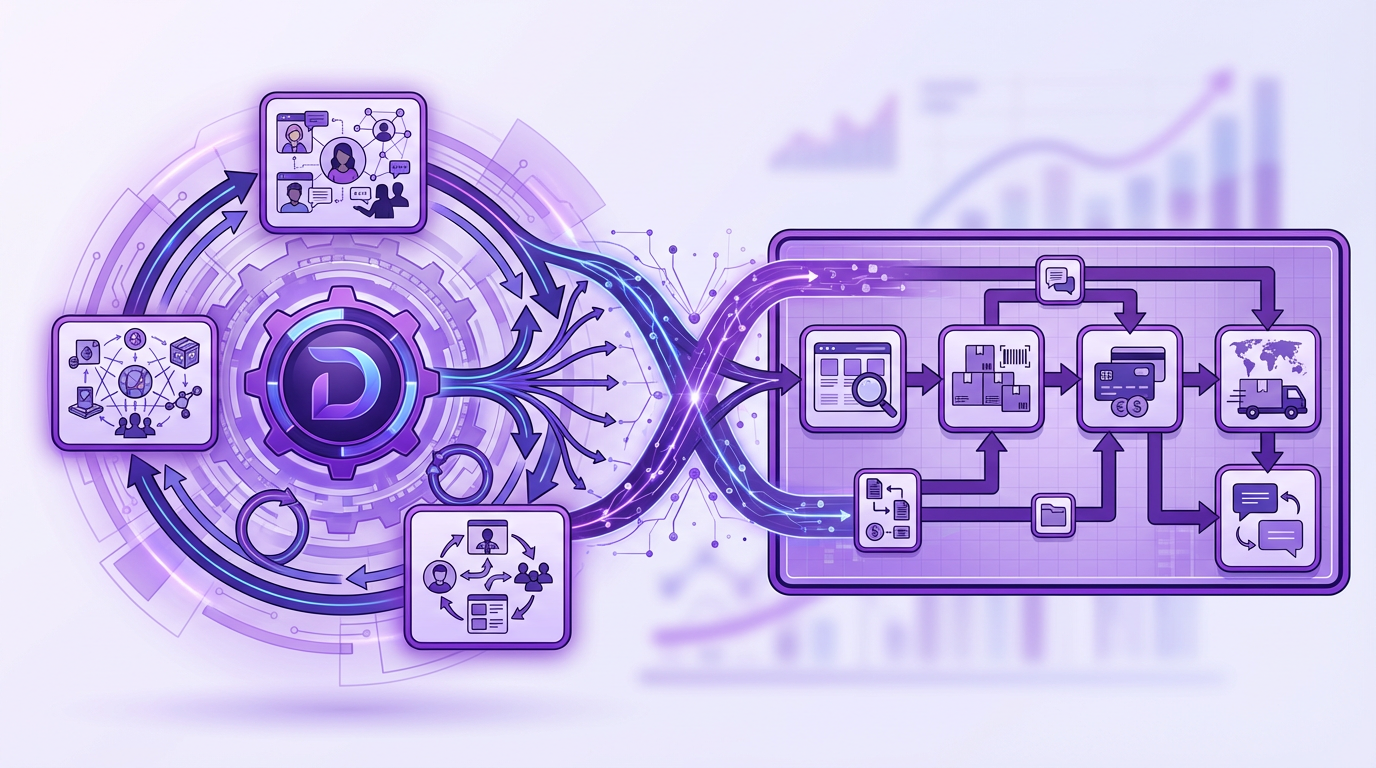
The landscape of online commerce is undergoing a profound transformation, with Decentralized Commerce (Dcommerce) emerging as a powerful alternative to traditional e-commerce models. While both aim to facilitate online transactions, their underlying architectures, operational philosophies, and implications for businesses and consumers differ significantly. Understanding these distinctions is crucial for any enterprise formulating its long-term digital strategy and is a cornerstone of a well-informed Dcommerce Strategy.This comparative analysis will dissect the core differences between Dcommerce and traditional e-commerce across key dimensions such as infrastructure, cost, security, data ownership, and customer experience. By highlighting where each model excels and where it faces challenges, businesses can make informed decisions about which approach, or combination thereof, best suits their objectives in an evolving digital marketplace. The choice between these paradigms is not merely technical; it's a strategic decision that impacts everything from brand trust to market reach.
Key E-commerce Landscape Statistics • The global e-commerce market is projected to reach $6.3 trillion in 2024, with traditional platforms dominating. • Transaction fees for traditional e-commerce platforms and payment processors typically range from 1.5% to 3.5% per sale. • Data breaches in centralized e-commerce cost businesses an average of $4.45 million per incident in 2023. • 78% of consumers are concerned about their data privacy when shopping online. • Decentralized finance (DeFi) and Dcommerce platforms have seen a 40% year-over-year growth in user adoption, indicating a growing shift in consumer preference.
Foundational Architecture: Centralized vs. Decentralized
The most fundamental difference between traditional e-commerce and Dcommerce lies in their architectural design: centralization versus decentralization.Traditional E-commerce: The Centralized Hub
Traditional e-commerce platforms (e.g., Amazon, Shopify, eBay) operate on a centralized model. A single entity owns and controls the entire platform, including servers, databases, payment gateways, and user data. This central authority acts as an intermediary, facilitating transactions, resolving disputes, and setting rules. While this model offers convenience and scalability, it also introduces single points of failure, potential for censorship, and reliance on the platform's policies and security measures. Businesses using these platforms are essentially tenants, subject to the landlord's terms.Dcommerce: The Distributed Network
Dcommerce, conversely, is built on decentralized networks, primarily blockchain technology. There is no single owner or central authority. Transactions and data are distributed across a network of computers (nodes), making the system resilient to censorship and single points of failure. Smart contracts automate agreements, and cryptocurrencies facilitate peer-to-peer payments. This architecture empowers direct interaction between buyers and sellers, fostering a trustless environment where participants rely on cryptographic proof rather than intermediaries. This foundational shift is a core element of any forward-looking Dcommerce Strategy.| Feature | Traditional E-commerce | Dcommerce | Key Differentiator |
|---|---|---|---|
| Infrastructure | Centralized servers, databases | Decentralized blockchain network | Control and resilience |
| Intermediaries | Required (platforms, banks, payment processors) | Minimized or eliminated (smart contracts) | Cost and autonomy |
| Data Ownership | Platform owns/controls user data | Users retain control (data sovereignty) | Privacy and trust |
| Transaction Fees | Percentage-based, often high | Network gas fees, generally lower | Cost efficiency |
| Security Model | Centralized security, honeypot risk | Distributed security, cryptographic proof | Vulnerability and trust |
Cost Implications and Financial Efficiency
The financial models of traditional e-commerce and Dcommerce present stark contrasts, particularly concerning transaction costs and revenue distribution.Transaction Fees and Revenue Share
Traditional e-commerce platforms often charge significant fees, including listing fees, transaction commissions (up to 15% or more), payment processing fees, and advertising costs. These fees can erode profit margins, especially for small and medium-sized businesses. Dcommerce, by eliminating many of these intermediaries, drastically reduces transaction costs. Payments are typically made directly using cryptocurrencies, incurring only network 'gas fees' which are often a fraction of traditional payment processing charges. This financial efficiency is a compelling benefit for businesses exploring the "Benefits of Dcommerce for businesses".The 5-Step Cost Comparison Framework
Security, Trust, and Data Sovereignty
Security and trust are critical for online commerce, and Dcommerce offers a fundamentally different approach to these concerns.Data Breaches and Fraud Prevention
Centralized e-commerce platforms are attractive targets for cybercriminals due to their vast repositories of sensitive customer data (a 'honeypot'). Data breaches are a constant threat, leading to financial losses, reputational damage, and erosion of customer trust. Dcommerce, leveraging blockchain's cryptographic security and distributed nature, mitigates many of these risks. Transactions are immutable, making fraud and chargebacks extremely difficult. While smart contract vulnerabilities can exist, the overall architecture is designed for enhanced security and transparency, a key aspect discussed in "Security challenges in Dcommerce".Expert Insight: "The shift from 'trusting intermediaries' to 'trusting cryptography' is the core paradigm change. Businesses need to understand that in Dcommerce, security isn't outsourced; it's embedded in the protocol. This demands a new level of diligence in smart contract development and user education, but the payoff in terms of resilience and customer confidence is immense."
Customer Data Ownership and Privacy
In traditional e-commerce, platforms often collect, own, and monetize vast amounts of customer data. Users have limited control over how their information is used. Dcommerce champions data sovereignty, allowing users to maintain control over their personal data. Through decentralized identity solutions and privacy-preserving technologies, customers can choose what information to share and with whom, fostering a more respectful and transparent relationship between businesses and consumers. This focus on customer experience in Dcommerce is a significant differentiator.Diagram: Trust Model Comparison [Traditional E-commerce: User] → [Trusts Platform] → [Trusts Payment Processor] → [Trusts Bank] → [Seller] [Dcommerce: User] → [Trusts Cryptography/Smart Contract] → [Seller]
Future Outlook and Strategic Considerations
The choice between Dcommerce and traditional e-commerce is not necessarily an either/or proposition. Many businesses may adopt a hybrid approach, leveraging the strengths of both. However, the trajectory of digital commerce clearly points towards greater decentralization, driven by consumer demand for privacy, transparency, and control. Businesses that proactively integrate Dcommerce principles into their operations will be better positioned to adapt to future market demands, innovate with new "Decentralized commerce business models", and build resilient, customer-centric ecosystems. A forward-thinking Dcommerce Strategy will consider how to gradually transition or integrate decentralized elements to stay competitive.Frequently Asked Questions
What is the primary architectural difference between Dcommerce and traditional e-commerce?
The primary difference is centralization. Traditional e-commerce operates on centralized servers and platforms controlled by a single entity, while Dcommerce is built on decentralized blockchain networks, distributing data and control across many nodes.How do transaction costs compare between the two models?
Dcommerce generally offers lower transaction costs because it eliminates many intermediaries like payment processors and banks, incurring only network gas fees. Traditional e-commerce involves higher percentage-based fees from platforms, payment gateways, and financial institutions.Which model offers better data privacy for consumers?
Dcommerce offers superior data privacy for consumers. It champions data sovereignty, allowing users to maintain control over their personal information and choose what data to share, unlike traditional e-commerce where platforms often collect and own vast amounts of user data.Is Dcommerce more secure against fraud and data breaches?
Dcommerce offers enhanced security against fraud and data breaches due to blockchain's immutable and cryptographically secured ledger, making transactions tamper-proof. While smart contract vulnerabilities are a concern, the decentralized architecture reduces single points of failure common in traditional e-commerce.Secure Your Spot in the Next Generation of Dcommerce
Join the future of decentralized commerce and explore a new way to interact with your favorite digital brands.
Related Resources
- Dcommerce Strategy — Complete Guide - The definitive pillar resource
- Benefits of Dcommerce for Businesses - Guide to Benefits of Dcommerce for businesses
- Security Challenges In Dcommerce - Guide to Security challenges in Dcommerce
- Decentralized Commerce Business Models - Guide to Decentralized commerce business models