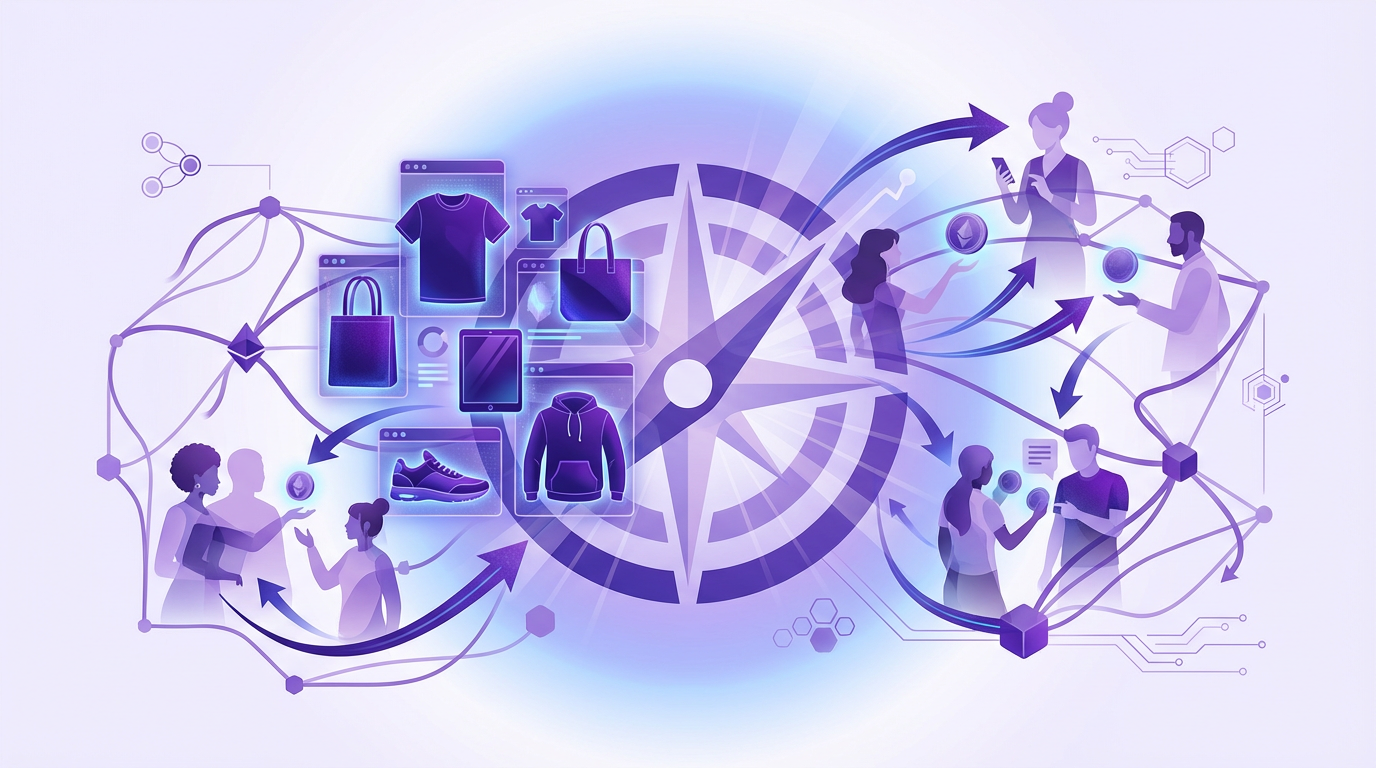
Decentralized Commerce Business Models: Innovating in the Dcommerce Era
Decentralized Commerce Business Models: Innovating in the Dcommerce Era
The advent of Decentralized Commerce (Dcommerce) is not just a technological shift; it's a catalyst for entirely new business models that challenge the established norms of traditional e-commerce. By leveraging blockchain, smart contracts, and cryptocurrencies, Dcommerce enables enterprises to build more transparent, equitable, and resilient ecosystems. For businesses looking to innovate and capture new market segments, understanding and adapting to these emerging decentralized commerce business models is paramount. This exploration forms a crucial component of any forward-thinking Dcommerce Strategy.These models move beyond simply selling products online; they redefine how value is created, exchanged, and governed. From peer-to-peer marketplaces to tokenized loyalty programs and decentralized autonomous organizations (DAOs), Dcommerce offers a spectrum of opportunities for entrepreneurs and established companies alike. This article will delve into the various innovative business models flourishing within the Dcommerce landscape, providing insights into their mechanics, advantages, and strategic implications for the future of digital trade.
Key Decentralized Business Model Statistics • The total value locked (TVL) in DeFi protocols, a precursor to many Dcommerce models, exceeded $100 billion in 2023. • Over 70% of blockchain projects are exploring or implementing some form of tokenization for assets or services. • Decentralized Autonomous Organizations (DAOs) collectively manage over $20 billion in assets, demonstrating a growing trend in decentralized governance. • Companies adopting Web3 loyalty programs report up to a 30% increase in customer engagement compared to traditional models. • The market for non-fungible tokens (NFTs), a key component of digital asset commerce, reached $25 billion in sales volume in 2021, indicating strong demand for tokenized goods.
Peer-to-Peer (P2P) Decentralized Marketplaces
One of the most direct applications of Dcommerce is the creation of peer-to-peer decentralized marketplaces. These platforms eliminate the need for a central intermediary, allowing buyers and sellers to interact directly.Direct Sales and Reduced Intermediary Fees
In a P2P decentralized marketplace, sellers list their products or services, and buyers discover them directly. Transactions are facilitated by smart contracts, which automatically execute agreements and release funds upon fulfillment of conditions. This model drastically reduces or eliminates the high commissions and fees typically charged by centralized platforms like Amazon or eBay. Businesses can retain a larger share of their revenue, leading to increased profitability and more competitive pricing for consumers. This efficiency is a core advantage, often highlighted when discussing the "Benefits of Dcommerce for businesses".| Business Model | Core Mechanism | Revenue Stream | Key Advantage |
|---|---|---|---|
| P2P Decentralized Marketplace | Smart contracts facilitate direct buyer-seller interaction | Small network fees, premium features | Lower costs, censorship resistance |
| Tokenized Loyalty Programs | Utility tokens reward customer engagement/purchases | Token sales, increased customer lifetime value | Enhanced loyalty, new funding avenues |
| Decentralized Autonomous Organizations (DAOs) | Community governance via token voting | Protocol fees, treasury management | Collective ownership, transparent decision-making |
| NFT Marketplaces/Digital Asset Sales | Blockchain verifies ownership of unique digital assets | Transaction fees on NFT sales | Monetization of digital scarcity, creator economy |
Tokenized Business Models and Digital Assets
Tokenization is a powerful aspect of Dcommerce, enabling new ways to represent ownership, reward loyalty, and create unique digital assets.Utility Tokens for Loyalty and Governance
Businesses can issue their own utility tokens that grant holders specific rights or benefits within their ecosystem. These tokens can be used for loyalty programs, where customers earn tokens for purchases or engagement, which can then be redeemed for discounts, exclusive access, or even voting rights in certain business decisions. This fosters a deeper connection with the customer base and creates a more engaged community. Furthermore, tokens can represent fractional ownership in assets or projects, opening up new avenues for crowdfunding and investment. This innovative approach to customer engagement is a vital part of a modern Dcommerce Strategy.The 5-Step Tokenized Business Model Framework
Decentralized Autonomous Organizations (DAOs) for Governance
DAOs represent a revolutionary approach to organizational structure, enabling community-led governance and decision-making within a Dcommerce ecosystem.Community-Driven Decision Making
In a DAO, decisions are made by token holders through voting mechanisms, rather than by a centralized management team. This can apply to various aspects of a Dcommerce platform, such as fee structures, feature development, or even treasury management. This model fosters transparency, accountability, and a strong sense of ownership among participants, aligning incentives between the platform, sellers, and buyers. While DAOs offer immense potential, they also present unique challenges in terms of coordination and legal recognition, topics often discussed in the context of the "Regulatory landscape of Dcommerce".Expert Insight: "The real innovation in Dcommerce business models isn't just about cutting out middlemen; it's about reimagining the very nature of ownership and participation. DAOs, for instance, shift from a hierarchical corporate structure to a network-centric, community-governed entity. This demands a radical rethinking of leadership, incentives, and even what constitutes a 'business' in the digital age."
Digital Asset Commerce (NFTs and Metaverse)
The rise of Non-Fungible Tokens (NFTs) has opened up entirely new avenues for commerce, particularly in the realm of digital assets and the burgeoning metaverse.Monetizing Digital Scarcity and Virtual Goods
NFTs allow for the creation and verifiable ownership of unique digital items, from art and collectibles to in-game assets and virtual real estate. Dcommerce platforms facilitate the buying, selling, and trading of these NFTs, creating a robust market for digital scarcity. Businesses can leverage NFTs to create exclusive digital products, enhance brand engagement, or even fund projects through fractionalized ownership. As the metaverse expands, the demand for secure and transparent digital asset commerce will only grow, making NFT marketplaces a significant Dcommerce business model. This area is rapidly evolving, impacting the "Future of Dcommerce" significantly.Diagram: Dcommerce Business Model Ecosystem [P2P Marketplaces] → [Tokenized Loyalty Programs] → [DAOs (Governance)] → [NFT Marketplaces] → [Interoperable Dcommerce Platforms]These decentralized commerce business models are not mutually exclusive; many successful Dcommerce platforms integrate elements from several categories. The key is to identify which models best align with your business objectives, target audience, and the unique value proposition you aim to deliver. By strategically adopting and innovating within these frameworks, businesses can position themselves at the forefront of the decentralized revolution, building resilient and future-proof enterprises that thrive in the Dcommerce era. A well-crafted Dcommerce Strategy will carefully consider these models and their potential for disruption and growth.
Frequently Asked Questions
What is a Peer-to-Peer (P2P) Decentralized Marketplace?
A P2P Decentralized Marketplace is an online platform built on blockchain technology that allows buyers and sellers to interact and transact directly, without the need for a central intermediary. Smart contracts automate the transaction process, reducing fees and increasing transparency.How do utility tokens create new business opportunities in Dcommerce?
Utility tokens create new business opportunities by enabling tokenized loyalty programs, governance models, and access rights. They can incentivize customer engagement, allow community participation in decision-making, and provide new funding mechanisms through token sales, fostering a more engaged and loyal customer base.What is a Decentralized Autonomous Organization (DAO) in the context of Dcommerce?
A DAO in Dcommerce is an organization governed by its community members through token-based voting, rather than a centralized authority. Decisions regarding platform fees, feature development, or treasury management are made collectively, promoting transparency and aligning incentives among participants.How do NFTs fit into decentralized commerce business models?
NFTs (Non-Fungible Tokens) fit into Dcommerce by enabling the verifiable ownership and trading of unique digital assets, such as art, collectibles, or virtual goods. Dcommerce platforms facilitate these transactions, creating new markets for digital scarcity and empowering creators and businesses to monetize digital content.Scale Your Business with Advanced Dcommerce Strategy and Tools
Stay ahead of the competition by leveraging blockchain-backed commerce solutions and affiliate tools.
Related Resources
- Dcommerce Strategy — Complete Guide - The definitive pillar resource
- Benefits of Dcommerce for Businesses - Guide to Benefits of Dcommerce for businesses
- Regulatory Landscape of Dcommerce - Guide to Regulatory landscape of Dcommerce
- Future of Dcommerce - Guide to Future of Dcommerce