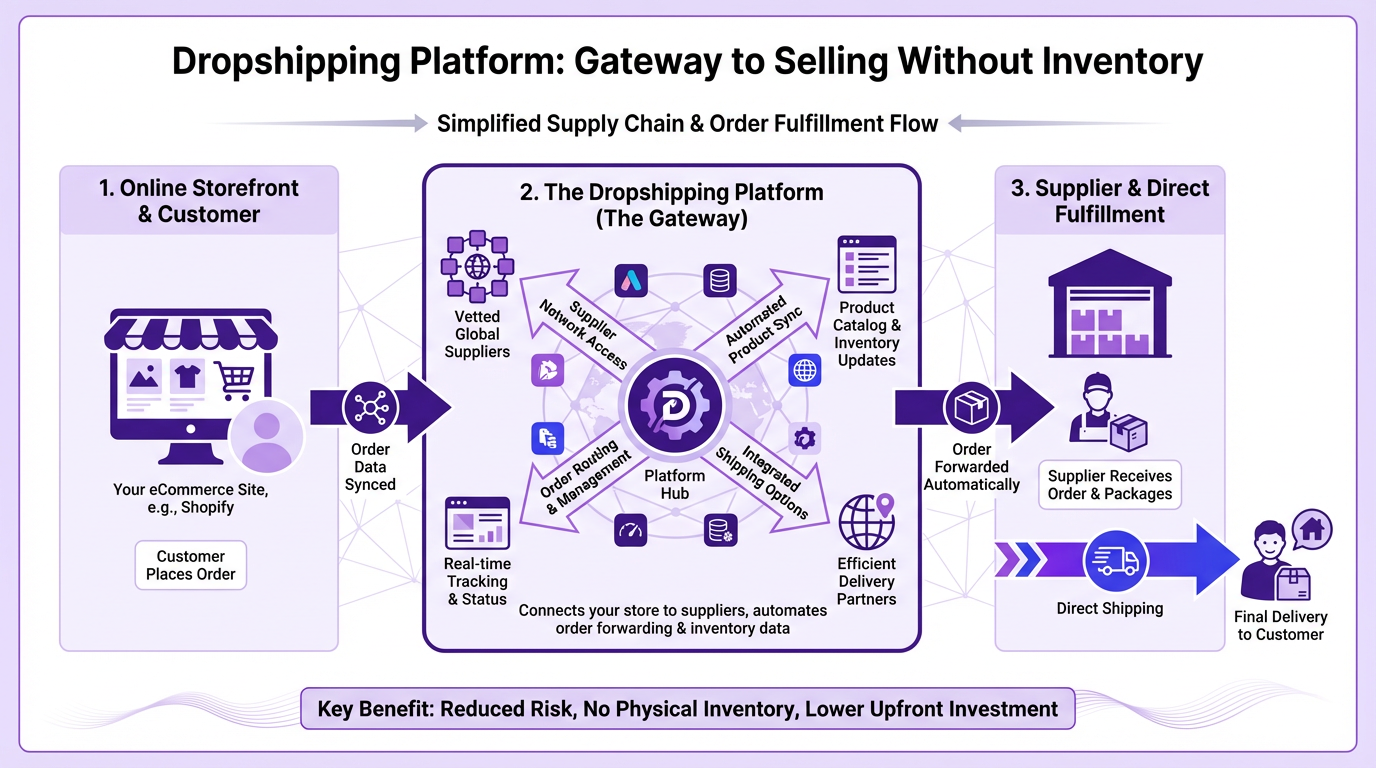
Dropshipping Platform: Your Gateway to Selling Online Without Inventory
Dropshipping has revolutionized the way entrepreneurs can
sell products online, offering a compelling business model that eliminates the need for managing physical inventory. A dropshipping platform acts as the crucial bridge between your online store and your suppliers, automating many of the complex processes involved in order fulfillment. This approach significantly lowers startup costs and reduces risk, making it an attractive option for new businesses and those looking to expand their product offerings without logistical headaches. Understanding how to leverage the right dropshipping platform is key to building a scalable and profitable e-commerce venture.
Key Dropshipping Statistics
• The global dropshipping market size was valued at $243.4 billion in 2023 and is projected to grow at a CAGR of 27.1% from 2024 to 2030 (Grand View Research).
• Over 27% of online retailers have adopted dropshipping as their primary fulfillment method (Statista).
• Dropshipping businesses typically have 18% higher profit margins compared to traditional retail (Shopify).
• 33% of online stores use dropshipping as a fulfillment method, indicating its widespread adoption (eMarketer).
What is a Dropshipping Platform and How Does It Work?
A dropshipping platform is essentially a software solution or service that facilitates the dropshipping business model. It connects your e-commerce store with a network of suppliers who store, pack, and ship products directly to your customers. When a customer places an order on your website, the dropshipping platform automatically or semi-automatically forwards the order details to the supplier, who then fulfills it. This means you never touch the product, eliminating warehousing, inventory management, and shipping logistics from your responsibilities.
Core Functions of a Dropshipping Platform
Effective dropshipping platforms offer a suite of features designed to streamline operations:
- Product Sourcing: Access to a vast catalog of products from various suppliers.
- Inventory Sync: Real-time updates on product availability and pricing from suppliers.
- Order Automation: Automatically sending customer orders to the relevant supplier.
- Shipping & Tracking: Integration with shipping carriers and providing tracking information to customers.
- Pricing Automation: Tools to set profit margins and automatically adjust product prices.
- Supplier Management: Tools to manage relationships with multiple suppliers.
- Integration with E-commerce Platforms: Seamless connection with popular store builders like Shopify, WooCommerce, etc.
| Platform Type | Best For | Difficulty | ROI Potential |
|---|
| Integrated (e.g., Oberlo/DSers) | Shopify users, beginners, product sourcing | Easy | Medium/High |
| Marketplace (e.g., AliExpress) | Wide product variety, low cost, manual effort | Medium | Low/Medium |
| Niche Supplier (e.g., Printful) | Specific product categories, branding control | Medium | High |
| Wholesale Directories | Experienced dropshippers, bulk sourcing | Hard | Very High |
Choosing the Right Dropshipping Platform for Your Business
The selection of a dropshipping platform is pivotal to your business's success. It dictates the range of products you can offer, the reliability of your supply chain, and the efficiency of your operations. When evaluating options, consider your target niche, budget, desired level of automation, and the e-commerce platform you're using to
build a website to sell products.
Popular Dropshipping Platforms and Their Strengths
- Oberlo (now DSers for Shopify): Primarily designed for Shopify stores, DSers is a powerful tool for finding products on AliExpress and importing them directly into your store. It automates order fulfillment and inventory updates, making it incredibly user-friendly for beginners.
- Spocket: Focuses on dropshipping products from suppliers in the US and Europe, offering faster shipping times and higher quality products compared to some Asian suppliers. It integrates with Shopify, WooCommerce, Wix, and BigCommerce.
- SaleHoo: A comprehensive directory of dropshipping suppliers and wholesalers. It's excellent for finding reliable suppliers across various niches and offers educational resources for new dropshippers.
- Printful/Printify: These platforms specialize in print-on-demand dropshipping, allowing you to design custom products (t-shirts, mugs, phone cases) and have them printed and shipped only when an order is placed. Ideal for creators and brands focused on unique designs.
5-Step Dropshipping Platform Setup Framework
Select Your Niche & Products — Research profitable niches and identify specific products you want to sell. This informs your supplier and platform choice.
Choose Your E-commerce Platform — Decide on your online store builder (e.g., Shopify, WooCommerce). Your dropshipping platform will need to integrate seamlessly with it.
Integrate Dropshipping Platform — Connect your chosen dropshipping platform (e.g., DSers, Spocket) to your online store. Follow the platform's specific setup instructions.
Source & Import Products — Use the dropshipping platform to find products from suppliers, import them into your store, and optimize product descriptions and images.
Configure Settings & Test — Set up pricing rules, shipping methods, and payment gateways. Place a test order to ensure the entire fulfillment process works smoothly before going live.
The Importance of Supplier Relationships and Product Quality
While dropshipping platforms automate many tasks, the success of your business heavily relies on the quality of your suppliers and the products they provide. Poor product quality, slow shipping, or unreliable communication from suppliers can severely damage your brand reputation and lead to high return rates. This is where careful due diligence comes in, even when using a platform that vets suppliers.
Expert Insight: "Many dropshippers fail because they treat their suppliers as mere cogs in a machine. Build relationships. Communicate clearly. Test products yourself. A reliable supplier is your most valuable asset in dropshipping, far more so than any fancy software feature. Prioritize quality and communication over the lowest price, always."
For those looking to expand their reach, considering
affiliate marketing platforms in conjunction with dropshipping can create additional revenue streams, allowing others to promote your products for a commission.
Diagram: Dropshipping Order Flow
[Customer Places Order on Your Store] → [Order Automatically Sent to Dropshipping Platform] → [Platform Forwards Order to Supplier] → [Supplier Ships Product Directly to Customer] → [Tracking Info Sent to Customer & Your Store]
Marketing Your Dropshipping Store
Even with a seamless dropshipping platform, effective marketing is crucial to drive sales. Utilize SEO strategies to ensure your products are discoverable, engage with customers on social media, and leverage email marketing for promotions and abandoned cart recovery. Understanding
online store design inspiration can also help you create a visually appealing and trustworthy storefront that converts visitors into buyers. Your ability to effectively market your products will directly impact your success when you aim to
sell products online through dropshipping.
Frequently Asked Questions
Is dropshipping still profitable in 2024?
Yes, dropshipping remains a highly profitable business model in 2024, especially with the continued growth of e-commerce. Success depends on selecting a profitable niche, finding reliable suppliers, effective marketing, and providing excellent customer service.
What are the biggest challenges in dropshipping?
The main challenges include finding reliable suppliers, managing customer expectations regarding shipping times, dealing with product returns, intense competition, and ensuring consistent product quality. Effective communication and thorough research can mitigate these issues.
Do dropshipping platforms handle customer service?
No, dropshipping platforms typically do not handle customer service directly. As the store owner, you are responsible for all customer inquiries, complaints, and returns. The platform facilitates the order fulfillment process, but customer interaction remains your responsibility.
Can I dropship from multiple suppliers using one platform?
Many advanced dropshipping platforms allow you to source products from multiple suppliers and manage them within a single dashboard. This provides greater flexibility in product offerings and can help diversify your supply chain, reducing reliance on a single vendor.
Key Takeaways
- Dropshipping platforms enable you to sell products online without holding inventory, significantly reducing startup costs and risk.
- Key features include product sourcing, inventory sync, order automation, and seamless integration with e-commerce stores.
- Choosing the right platform depends on your niche, budget, and desired level of automation, with options like DSers, Spocket, and Printful catering to different needs.
- Building strong relationships with reliable suppliers and prioritizing product quality are critical for long-term success.
- Effective marketing and a well-designed online store are essential to drive traffic and convert sales in the competitive dropshipping landscape.