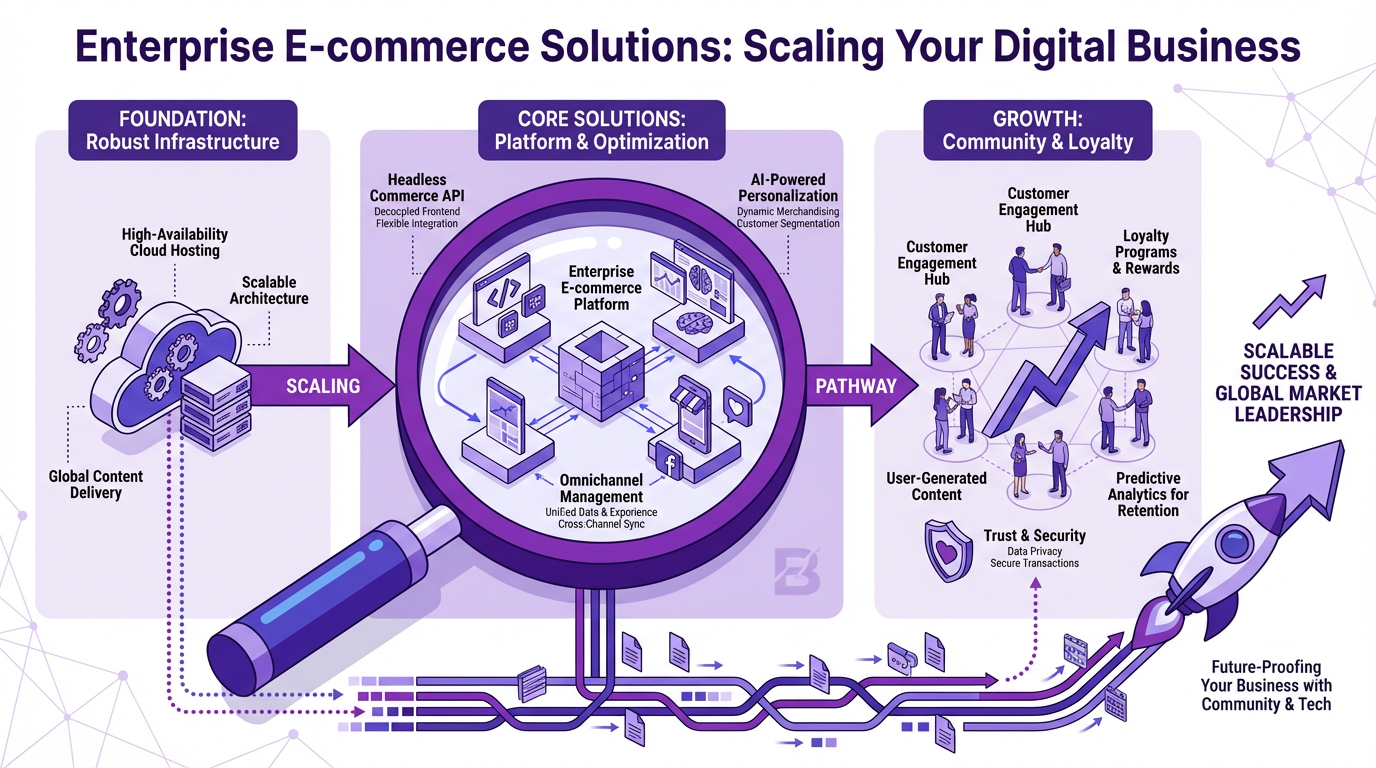
Enterprise E-commerce Solutions: Scaling Your Digital Business
For large organizations, navigating the complexities of digital commerce requires robust and scalable
e-commerce solutions for enterprises. These aren't merely off-the-shelf platforms; they are comprehensive ecosystems designed to handle high transaction volumes, intricate product catalogs, diverse customer segments, and global operations. Implementing the right enterprise-grade solution is critical for maintaining competitive advantage, streamlining operations, and fostering sustained growth in an increasingly digital-first economy. Unlike smaller businesses, enterprises often require deep integrations with existing ERP, CRM, and supply chain management systems, demanding a platform that offers flexibility, security, and performance at scale. This often leads them to consider advanced architectures, including those that support a
multi-vendor marketplace platform model, to expand their offerings and reach.
Key Enterprise E-commerce Statistics
• The global e-commerce market is projected to reach over $8 trillion by 2027, with B2B e-commerce accounting for a significant portion of this growth (Statista).
• 75% of B2B buyers now prefer to purchase through digital channels, highlighting the necessity of sophisticated enterprise e-commerce platforms (McKinsey).
• Companies that invest in personalized e-commerce experiences see an average 19% increase in sales (Accenture).
• Over 60% of enterprise e-commerce platforms are now cloud-based, emphasizing the shift towards flexible and scalable infrastructure (Gartner).
Understanding the Core Components of Enterprise E-commerce
Enterprise e-commerce solutions go far beyond a simple shopping cart. They encompass a sophisticated suite of tools and functionalities tailored to the unique demands of large-scale businesses. This includes advanced product information management (PIM), order management systems (OMS), customer relationship management (CRM) integrations, and robust analytics capabilities. The goal is to create a seamless, efficient, and personalized buying experience for customers, whether B2B or B2C, while providing internal teams with the tools needed for operational excellence.
Essential Features for Enterprise Platforms
When evaluating enterprise e-commerce platforms, several features stand out as non-negotiable. Scalability is paramount, ensuring the platform can handle peak traffic and transaction spikes without performance degradation. Security is another critical factor, protecting sensitive customer data and financial transactions. Furthermore, extensibility through APIs and integrations allows the platform to connect with an enterprise's existing technology stack, avoiding costly data silos and manual processes.
| Feature Category | Best For | Difficulty | ROI Potential |
|---|
| Headless Commerce | Omnichannel experiences, rapid UI changes | Medium/Hard | Very High |
| PIM/DAM Integration | Complex product catalogs, rich media | Medium | High |
| Multi-site/Multi-currency | Global operations, diverse brands | Medium | High |
| Advanced Analytics | Data-driven decision making, personalization | Medium | High |
The Strategic Advantage of Headless Commerce for Enterprises
For many enterprises, the traditional monolithic e-commerce architecture presents limitations in terms of flexibility and agility. This is where a headless commerce platform offers a significant strategic advantage. By decoupling the front-end presentation layer from the back-end commerce engine, enterprises gain unparalleled freedom to create bespoke customer experiences across any touchpoint – web, mobile, IoT, voice assistants – without being constrained by the platform's native templates. This architectural shift allows for faster innovation, easier integration with emerging technologies, and a more consistent brand experience across all channels.
Implementing a Headless Strategy
Adopting headless commerce involves a careful planning process. It requires a clear understanding of the desired customer journeys, the existing technology landscape, and the internal development capabilities. While the initial setup can be more complex than traditional platforms, the long-term benefits in terms of agility and customization often outweigh the upfront investment. It also opens doors for enterprises to build highly specialized front-ends that cater to niche markets or specific customer segments, enhancing their overall digital footprint.
Building a Robust Multi-Vendor Ecosystem
Many enterprises are now exploring the benefits of a marketplace model, transforming their e-commerce operations into a dynamic ecosystem where multiple sellers can offer products or services. This approach, powered by a sophisticated
multi-vendor marketplace platform, allows enterprises to expand their product assortment without increasing inventory risk, generate new revenue streams through commissions, and foster a vibrant community around their brand. For large organizations, this can mean launching a B2B marketplace for industry partners or a B2C marketplace featuring complementary brands.
5-Step Enterprise Marketplace Launch Framework
Define Marketplace Strategy — Clearly articulate the marketplace's purpose, target audience, value proposition for sellers and buyers, and revenue model. This includes identifying key product categories and potential vendor types.
Select Platform & Architecture — Choose a robust multi-vendor platform that integrates seamlessly with existing enterprise systems. Consider scalability, security, and API-first capabilities. This is where a leading multi-vendor marketplace platform becomes essential.
Onboard & Enable Vendors — Develop a streamlined process for vendor registration, product listing, and order fulfillment. Provide comprehensive tools and support to ensure vendor success and adherence to quality standards.
Implement Marketing & Growth — Launch targeted marketing campaigns to attract both buyers and sellers. Leverage data analytics to optimize user experience, personalize recommendations, and drive engagement.
Monitor & Optimize Performance — Continuously track key performance indicators (KPIs) such as GMV, conversion rates, vendor satisfaction, and customer feedback. Iterate on features and processes to ensure sustained growth and profitability.
Expert Insight: "Enterprises often underestimate the organizational change management required for a successful e-commerce transformation. It's not just about implementing new technology; it's about aligning sales, marketing, IT, and operations teams around a unified digital vision. Without executive buy-in and cross-functional collaboration, even the most advanced platform will struggle to deliver its full potential."
The Role of Data and AI in Enterprise E-commerce
In the enterprise space, data is a strategic asset. Advanced analytics, machine learning, and artificial intelligence are no longer optional but essential for optimizing every aspect of the e-commerce journey. From personalized product recommendations and dynamic pricing to fraud detection and supply chain optimization, AI-driven insights empower enterprises to make smarter decisions, enhance customer satisfaction, and improve operational efficiency. Leveraging these technologies can significantly differentiate an enterprise's offering from competitors, providing a superior and more intuitive experience.
Personalization at Scale
Enterprises deal with vast amounts of customer data. AI algorithms can process this data to create highly personalized experiences, recommending products based on past purchases, browsing behavior, and even external factors. This level of personalization not only boosts conversion rates but also fosters customer loyalty, turning one-time buyers into long-term advocates. This is a key differentiator for any
best e-commerce website builder that caters to enterprise needs.
Diagram: Enterprise E-commerce Data Flow
[Customer Interaction] → [Data Collection (CRM, ERP, Analytics)] → [AI/ML Processing] → [Personalized Experience & Operational Optimization] → [Feedback Loop to Customer Interaction]
Future-Proofing Your Enterprise E-commerce Strategy
The digital commerce landscape is constantly evolving. To future-proof their investments, enterprises must adopt a flexible and adaptable e-commerce strategy. This means prioritizing platforms that are API-first, cloud-native, and support modular architectures. It also involves fostering a culture of continuous innovation, regularly evaluating new technologies, and being prepared to pivot quickly in response to market changes. Investing in a robust
online marketplace builder that can evolve with market demands is crucial for long-term success.
Frequently Asked Questions
What defines an enterprise e-commerce solution?
An enterprise e-commerce solution is a robust, scalable platform designed to meet the complex needs of large organizations, handling high transaction volumes, extensive product catalogs, and deep integrations with existing business systems like ERP and CRM. It prioritizes performance, security, and flexibility for global operations.
How does headless commerce benefit enterprises?
Headless commerce benefits enterprises by decoupling the front-end user experience from the back-end commerce logic, allowing for greater flexibility in design, faster deployment of new features, and consistent customer experiences across multiple digital touchpoints (web, mobile, IoT). This agility is crucial for rapid innovation and adapting to market changes.
What are the key considerations for choosing an enterprise e-commerce platform?
Key considerations include scalability, security, integration capabilities with existing systems, total cost of ownership, vendor support, and the platform's ability to support advanced features like AI-driven personalization, multi-site management, and a
multi-vendor marketplace platform model. Future-proofing and extensibility are also vital.
Key Takeaways
- Enterprise e-commerce solutions are complex ecosystems requiring robust features for scalability, security, and integration.
- Headless commerce offers enterprises unparalleled flexibility and agility for delivering consistent, innovative customer experiences across all channels.
- Building a multi-vendor marketplace can unlock new revenue streams and expand product offerings for large organizations.
- Data and AI are critical for personalization, operational efficiency, and informed decision-making in enterprise e-commerce.
- Future-proofing involves adopting flexible, API-first platforms and fostering a culture of continuous innovation.