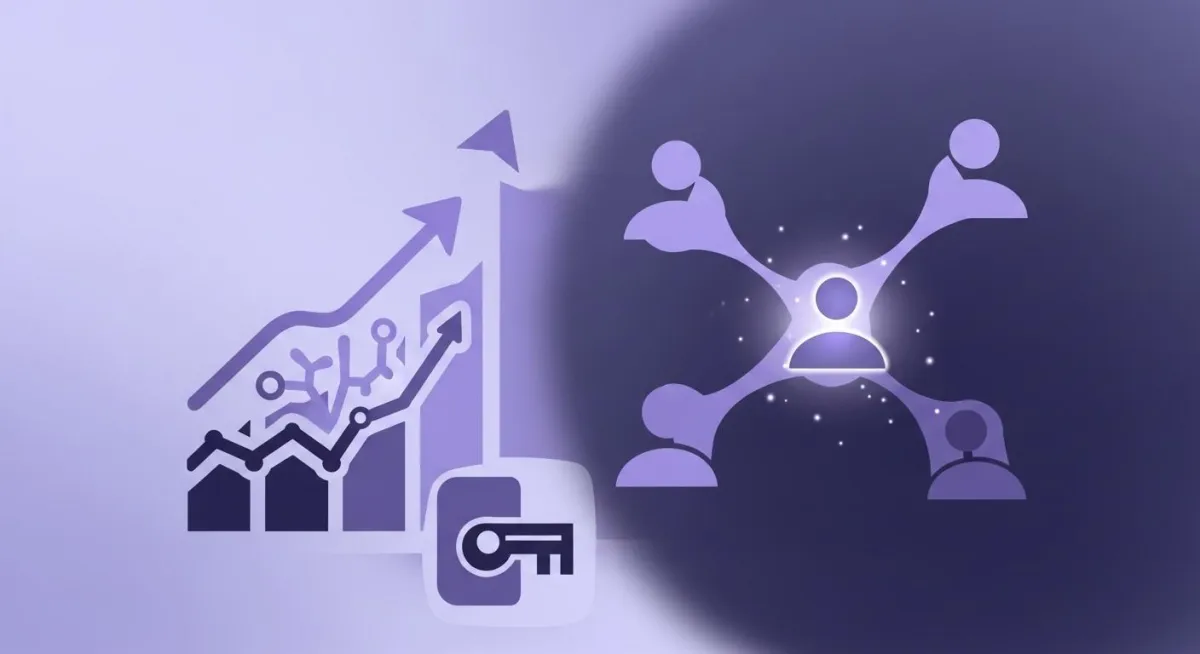
Beyond Commissions: How Affiliates Build Real, Lasting Equity in Web3

Introduction
Affiliate marketing has always paid well for people who understand distribution.
What it has rarely done is reward them with ownership. In Web2, affiliates generate value, but they don’t retain it. Traffic flows out. Revenue arrives briefly. Then the cycle resets.
A program changes terms.
A platform updates its algorithm.
A dashboard goes dark.
And suddenly, years of effort exist only as screenshots and memories. Web3 forces a harder question
Are you earning money, or building equity?
Why Commission-Only Affiliate Models Are Structurally Fragile

The problem isn’t commissions. The problem is what commissions exclude. In most traditional affiliate systems:
You don’t own attribution data
You don’t see the full conversion path
You don’t participate in long-term upside
You don’t influence the system you contribute to
You are compensated after value is created, not as value compounds. That works if your goal is cash flow.
It fails if your goal is durability. Web3 exposes this flaw because it treats contribution differently.
What “Equity” Actually Means in a Web3 Context

Equity isn’t just revenue you can reinvest. It’s stake, visibility, and persistence inside a system.
For affiliates, real equity shows up in three places:
1. Reputation That’s Verifiable
In Web3 systems, participation leaves a trail. Not vanity metrics. Not follower counts. Actual contribution history.
When performance, participation, or referrals are provable, reputation becomes portable. You’re no longer starting from zero every time you work with a new brand or ecosystem.
That’s equity.
2. Audience Relationships That Aren’t Platform-Dependent
Web3 doesn’t magically give you an audience, but it changes who controls access. When your relationship with users isn’t fully mediated by an algorithm, your influence becomes more durable. Whether that’s through communities, wallets, credentials, or direct participation layers, the point is simple:
You are harder to erase.
3. Upside Beyond Single Transaction
In Web2, affiliates are paid once per action. In Web3, contribution can be ongoing.
Systems can reward:
Consistency
Early participation
Network effects
Long-term alignment
That doesn’t mean get rich quick. It means stop being capped at the moment of conversion.
Why Most Affiliates Miss This Shift
Because Web2 trained them to optimize for immediacy.
Clicks.
CPAs.
Short attribution windows.
Web3 rewards patience, alignment, and visibility, concepts that don’t fit neatly into old dashboards.
So many affiliates keep doing the same thing:
Chasing higher commissions
Rotating offers
Restarting funnels
Meanwhile, the underlying systems are changing. Distribution is becoming infrastructure.
The Uni-fy Angle (Without the Pitch)

Uni-fy exists in this transition layer.
Not as another affiliate platform, but as coordination infrastructure between brands, ambassadors, and communities.The difference matters. Instead of treating affiliates as disposable traffic sources, the model assumes:
Contributors should be visible
Performance should be measurable
Relationships should compound
That’s how equity forms, quietly. Not through hype. Not through promises. Through structure.
What Smart Affiliates Are Doing Differently Now
The affiliates who will still matter in five years are already shifting how they operate.
They:
Choose fewer ecosystems, not more
Optimize for contribution, not just clicks
Think in terms of positioning, not campaigns
Care about where data, reputation, and upside live
They still earn commissions.They just don’t stop there.
The Real Question This Blog Is Asking You

If every affiliate program you work with shut down tomorrow,
what would you actually own?
If the answer is content and hope, you’re exposed.
Web3 doesn’t remove risk, it rewards alignment with systems that remember you.
That’s the difference between income and equity. And that’s the line serious affiliates are starting to draw.
Conclusion

Affiliate marketing isn’t dying.
It’s maturing.
The era of anonymous links and disposable contributors is ending.
The era of visible, accountable, equity-aware participation is beginning.
You can ignore that shift.
Or you can position yourself inside it.
Uni-fy is one of the places where that positioning is already happening.
Click here to see if web3 is worth your time.