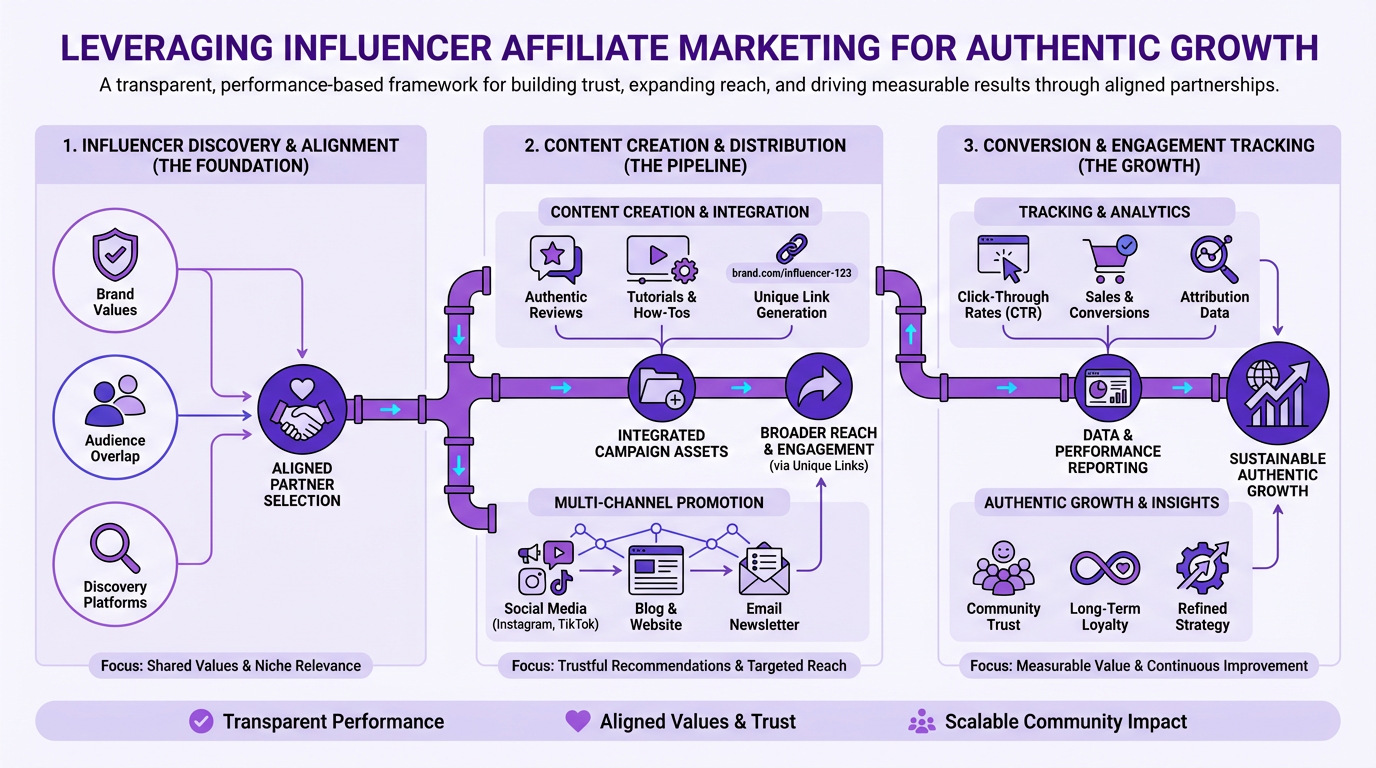
Leveraging Influencer Affiliate Marketing for Authentic Growth
Leveraging Influencer Affiliate Marketing for Authentic Growth
Influencer affiliate marketing has emerged as a cornerstone of modern digital strategy, seamlessly blending the power of social proof with performance-based advertising. It's a dynamic approach where content creators, often with dedicated and engaged followings, promote products or services and earn a commission on sales or leads generated through their unique affiliate links. This model capitalizes on the trust and authenticity influencers build with their audience, offering brands a highly effective way to reach targeted demographics. As the digital landscape continues to evolve, understanding and implementing effective influencer affiliate strategies is paramount for staying ahead of the curve in Affiliate Marketing Trends.Key Influencer Marketing Statistics • The global influencer marketing market size was valued at $21.1 billion in 2023. • 71% of marketers believe that the quality of customers and traffic from influencer marketing is better than other sources. • For every $1 spent on influencer marketing, businesses earn an average of $5.78 in earned media value. • 60% of consumers have purchased a product after seeing an influencer recommend it.
The Evolution from Brand Ambassador to Performance Partner
Initially, influencer collaborations often focused on brand awareness and content creation, with compensation typically being a flat fee or free products. While these models still exist, the integration of affiliate marketing has transformed influencers into direct revenue drivers. This shift means influencers are now incentivized by the actual performance of their promotions, aligning their success more closely with the brand's bottom line. This performance-driven approach is a key component of Performance marketing innovations.Micro-Influencers vs. Macro-Influencers in Affiliate Programs
The choice between micro-influencers (typically 10,000-100,000 followers) and macro-influencers (100,000+ followers) depends on campaign goals. Micro-influencers often boast higher engagement rates and a more niche, loyal audience, making them ideal for targeted campaigns and authentic product integration. Macro-influencers offer broader reach and brand visibility, suitable for larger-scale awareness campaigns. Many brands find success by combining both, leveraging macro-influencers for initial buzz and micro-influencers for sustained, high-conversion efforts.| Influencer Tier | Best For | Engagement Rate | Cost-Effectiveness |
|---|---|---|---|
| Nano-Influencers | Niche, authentic reviews | Very High | Very High |
| Micro-Influencers | Targeted sales, community building | High | High |
| Mid-Tier Influencers | Broader reach, balanced cost | Medium | Medium |
| Macro-Influencers | Brand awareness, mass reach | Low-Medium | Medium-Low |
Crafting Effective Influencer Affiliate Campaigns
Successful influencer affiliate marketing requires more than just sending out products and links. It demands a strategic approach to influencer selection, content creation, and performance tracking. Brands must empower influencers with the right tools and creative freedom while ensuring brand messaging remains consistent.6-Step Influencer Affiliate Campaign Framework
The Role of Authentic Content and Disclosure
Authenticity is the bedrock of influencer marketing. Consumers trust influencers who are genuine and transparent. This means clear disclosure of sponsored content and affiliate relationships is not just a legal requirement but a crucial element for maintaining audience trust. Influencers who genuinely believe in the products they promote tend to generate higher conversion rates.Expert Insight: "The biggest mistake brands make with influencer affiliates is over-scripting. You hire an influencer for their unique voice and connection with their audience. Give them the product, give them the key message, and then step back. Let them create. That authenticity is what drives conversions, not a perfectly polished, brand-approved script."Brands should encourage influencers to integrate products naturally into their content, whether it's through tutorials, reviews, or lifestyle posts. This organic integration feels less like an advertisement and more like a trusted recommendation, which is a core principle of effective Video affiliate marketing and other content forms.
Diagram: Influencer Affiliate Trust Loop [Brand Product] → [Influencer Experience] → [Authentic Content] → [Audience Trust] → [Affiliate Conversion] → [Brand Loyalty]
Measuring Success and Optimizing Influencer Affiliate Programs
Effective measurement is critical for optimizing influencer affiliate campaigns. Beyond direct sales, brands should track metrics like engagement rates, reach, website traffic, and customer lifetime value. Utilizing robust Affiliate marketing analytics tools can provide deep insights into which influencers and content types are performing best.Attribution models are also evolving to give influencers credit for their role in the customer journey, even if they aren't the last click. Multi-touch attribution models can help brands understand the full impact of influencer content, moving beyond simplistic last-click tracking. This ensures fair compensation and encourages continued high-quality content creation.
Frequently Asked Questions
What is influencer affiliate marketing?
Influencer affiliate marketing is a strategy where content creators promote products or services to their audience using unique affiliate links or codes, earning a commission on sales or leads generated. It combines the trust of influencer recommendations with performance-based compensation.How do brands find the right influencers for affiliate programs?
Brands find the right influencers by researching audience demographics, engagement rates, content style, and brand alignment. Tools and platforms can help identify influencers in specific niches, but manual vetting for authenticity and past performance is crucial.Why is authenticity important in influencer affiliate marketing?
Authenticity is vital because consumers trust genuine recommendations. Influencers who genuinely believe in and use the products they promote build stronger credibility with their audience, leading to higher engagement and conversion rates compared to overtly sponsored or inauthentic content.Key Takeaways
- Influencer affiliate marketing leverages trusted voices to drive performance-based sales, moving beyond traditional brand awareness campaigns.
- Strategic selection of influencers, whether micro or macro, is crucial for campaign success, aligning audience and content style with brand goals.
- A structured framework for campaign execution, from objective setting to performance monitoring, is essential for maximizing ROI.
- Authenticity and transparent disclosure are non-negotiable for building and maintaining audience trust, which directly impacts conversion rates.
- Robust analytics and evolving attribution models are key to accurately measuring influencer impact and optimizing future campaigns, reflecting the sophisticated nature of current Affiliate Marketing Trends.