The Rise of Influencer Affiliate Marketing: Strategies for Authentic Partnerships
The Rise of Influencer Affiliate Marketing: Strategies for Authentic Partnerships
In an era where traditional advertising often falls flat, influencer affiliate marketing has emerged as a powerful, authentic, and highly effective strategy. This approach combines the trust and reach of social media influencers with the performance-based model of affiliate marketing, creating a symbiotic relationship that benefits brands, influencers, and consumers alike. As we observe the evolving Affiliate Marketing Trends, the integration of influencer collaborations stands out as a critical component for sustained growth and audience engagement.Influencers, with their dedicated followings and perceived authenticity, can introduce products and services to highly targeted audiences in a way that feels organic and trustworthy. For affiliate marketers, this translates into higher conversion rates and a more engaged customer base, moving beyond simple clicks to genuine recommendations and advocacy.
Key Influencer Affiliate Marketing Statistics • Influencer marketing is projected to reach a market size of $24.1 billion by 2025. • 61% of consumers have purchased a product based on an influencer's recommendation. • Businesses earn an average of $5.78 for every $1 spent on influencer marketing. • 80% of marketers find influencer marketing effective, with 89% saying its ROI is comparable to or better than other marketing channels.
Understanding the Influencer Landscape: Micro, Macro, and Mega
The world of influencers is diverse, ranging from mega-influencers with millions of followers to micro-influencers with highly engaged niche audiences. Each tier offers distinct advantages for affiliate marketing campaigns. Mega-influencers provide broad reach and brand awareness, while micro-influencers often boast higher engagement rates and a deeper connection with their followers, leading to more impactful recommendations. Understanding these distinctions is crucial for crafting effective affiliate marketing strategies that align with campaign goals and budget.Choosing the Right Influencer for Your Niche
Selecting the appropriate influencer involves more than just follower count. It requires a deep dive into their audience demographics, content style, engagement rates, and brand alignment. An influencer whose values resonate with the product or service they are promoting will always yield better results than one who simply pushes products for a fee. Authenticity is the cornerstone of successful influencer affiliate marketing.| Influencer Tier | Best For | Engagement Rate | Reach | ROI Potential |
|---|---|---|---|---|
| Mega-Influencers | Brand Awareness, Mass Reach | Low-Medium | Very High | Medium-High |
| Macro-Influencers | Targeted Campaigns, Broad Niche | Medium-High | High | High |
| Micro-Influencers | Niche Audiences, High Trust | Very High | Medium | Very High |
| Nano-Influencers | Hyper-Niche, Community Building | Extremely High | Low | High |
Building Authentic Partnerships: Beyond the Transaction
Successful influencer affiliate marketing goes beyond a one-off transaction. It's about fostering genuine relationships with influencers who truly believe in the products they promote. This involves clear communication, fair compensation, and providing influencers with the creative freedom to integrate products into their content in a way that feels natural to their audience. Long-term partnerships often lead to more consistent results and deeper brand advocacy.The 6-Step Influencer Partnership Framework
Measuring Success and Optimizing Campaigns
Measuring the effectiveness of influencer affiliate campaigns requires robust tracking and analytics. Beyond direct sales attributed to affiliate links, it's important to consider metrics like engagement rates, brand mentions, website traffic, and audience sentiment. Tools that integrate with affiliate networks can provide comprehensive data, allowing marketers to identify top-performing influencers, refine their strategies, and optimize future collaborations. This data-driven approach is essential for maximizing ROI and adapting to new Affiliate Marketing Trends.Expert Insight: "The biggest mistake brands make in influencer affiliate marketing is treating influencers as mere advertisers. They are content creators and community builders. Give them the freedom to tell your brand's story in their authentic voice, and you'll unlock far greater engagement and conversion than any scripted ad ever could. Trust is the currency of influence, and it cannot be bought, only earned through genuine collaboration."
Navigating Disclosure and Compliance
Transparency is paramount in influencer affiliate marketing. Influencers are legally and ethically obligated to disclose their sponsored content and affiliate relationships. This not only builds trust with their audience but also ensures compliance with regulatory bodies like the FTC. Affiliates and brands must educate influencers on proper disclosure practices and ensure these guidelines are followed rigorously. Failure to do so can damage brand reputation and lead to legal repercussions.The Influencer-Affiliate Ecosystem
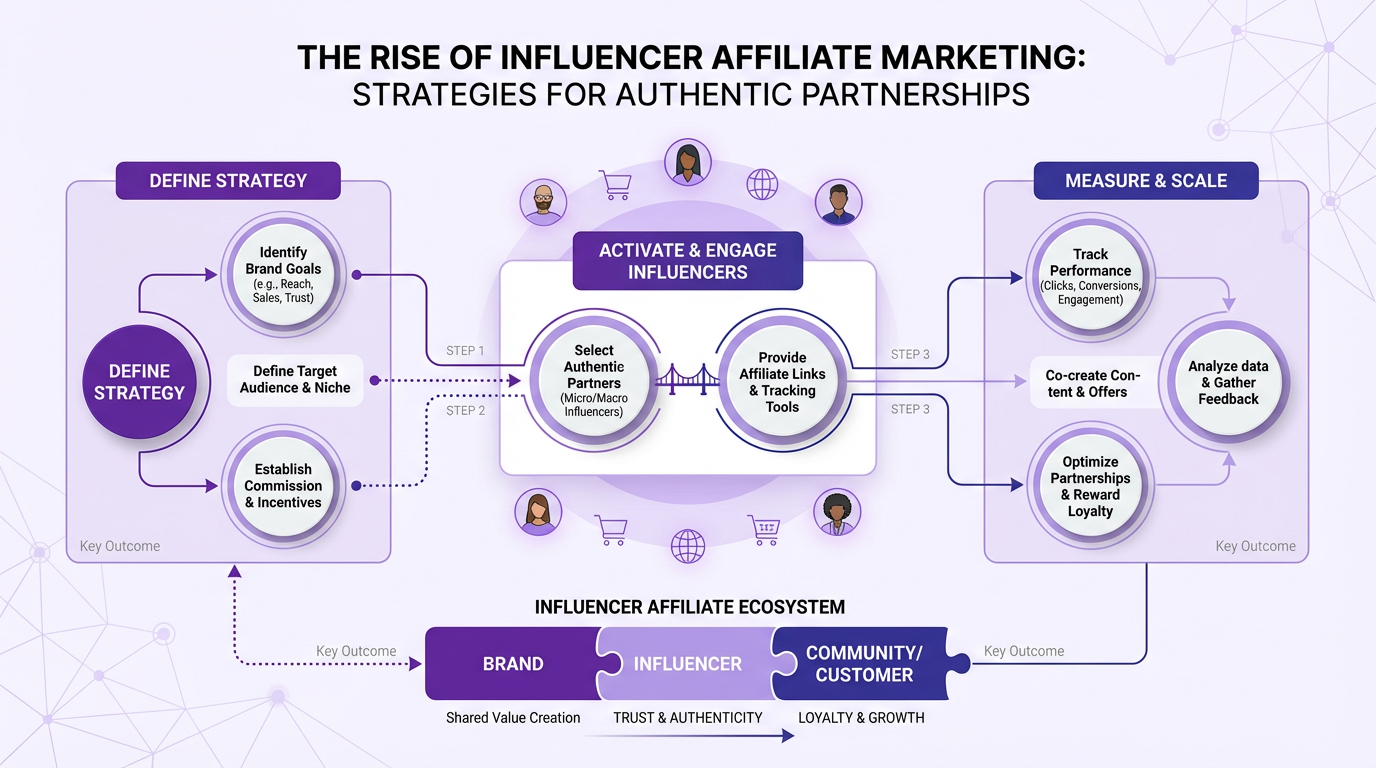
Diagram: Influencer Affiliate Marketing Flow [Brand/Affiliate Program] → [Influencer Selection & Outreach] → [Content Creation (Authentic Integration)] → [Audience Engagement & Promotion (Affiliate Link)] → [Conversion Tracking & Commission Payout] → [Feedback & Relationship Building]
The Future of Influencer Affiliate Marketing
The future of influencer affiliate marketing is bright, with continued growth expected across various platforms, including TikTok, Instagram, and emerging social commerce channels. We'll likely see a greater emphasis on long-term brand ambassadorships, deeper data integration for hyper-personalization, and the rise of AI tools to streamline influencer discovery and campaign management. As consumer trust in traditional advertising continues to wane, authentic voices will become even more valuable, solidifying influencer affiliate marketing's position as a cornerstone of modern digital marketing. This evolution is a key aspect of understanding current Affiliate Marketing Trends.Frequently Asked Questions
What is the difference between influencer marketing and influencer affiliate marketing?
Influencer marketing broadly refers to collaborating with influencers to promote products or services, often for brand awareness or content creation. Influencer affiliate marketing specifically integrates an affiliate component, where the influencer earns a commission for sales or leads generated through their unique affiliate link or code, making it a performance-based model.How do I find the right influencers for my affiliate program?
You can find influencers through various methods: manual research on social media, using influencer marketing platforms (e.g., Upfluence, Grin), or leveraging affiliate networks that have influencer discovery tools. Focus on relevance to your niche, audience demographics, engagement rates, and content quality.What are common compensation models for influencer affiliates?
Common compensation models include a percentage commission on sales, a flat fee per post or campaign, a hybrid model combining a base fee with commission, or product exchanges. The best model depends on the campaign goals, influencer tier, and the product's price point.How important is disclosure in influencer affiliate marketing?
Disclosure is critically important. It's a legal requirement in many regions (e.g., FTC guidelines in the US) and essential for maintaining audience trust. Influencers must clearly and conspicuously disclose their affiliate relationship or sponsored content to their followers to ensure transparency and avoid misleading consumers.Key Takeaways
- Influencer affiliate marketing combines influencer trust with performance-based commissions for effective promotion.
- Understanding different influencer tiers (mega, macro, micro) is crucial for targeted campaign success.
- Authentic, long-term partnerships with influencers yield better results than transactional relationships.
- Robust tracking and analytics are vital for measuring campaign ROI and optimizing future collaborations.
- Strict adherence to disclosure guidelines is essential for legal compliance and maintaining audience trust.