Mobile Affiliate Marketing: Optimizing for the On-the-Go Consumer
Mobile Affiliate Marketing: Optimizing for the On-the-Go Consumer
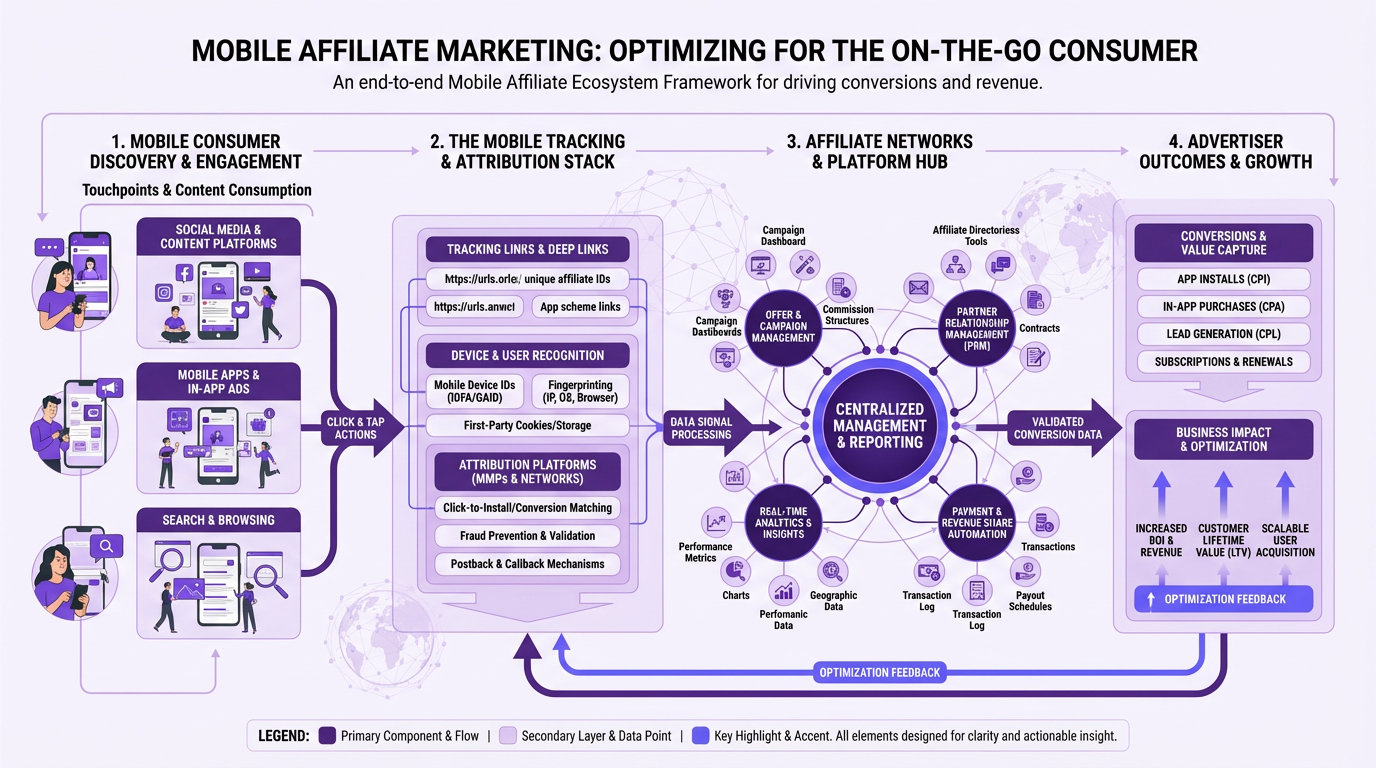
The smartphone has become an indispensable part of daily life, transforming how consumers interact with brands, make purchases, and consume content. For affiliate marketers, this pervasive mobile usage presents both a significant opportunity and a unique set of challenges. Mobile affiliate marketing is the strategic approach to reaching and converting consumers on their mobile devices, encompassing everything from app-based promotions to responsive website design. It's a critical component of modern Affiliate Marketing Trends, demanding a mobile-first mindset to capture the attention of an increasingly on-the-go audience.This article will explore the core principles of mobile affiliate marketing, detailing the essential strategies for optimizing campaigns for mobile users. We'll cover everything from user experience considerations to specific mobile-centric advertising formats, providing actionable insights to help affiliates thrive in this dynamic environment.
Key Mobile Affiliate Marketing Statistics • Mobile devices account for over 55% of all website traffic globally, a figure that continues to rise. • 79% of smartphone users have made a purchase on their mobile device in the last 6 months. • Mobile commerce is projected to reach $620.97 billion in the US by 2024, highlighting its immense growth potential. • Apps drive 80% of mobile time, indicating the importance of in-app advertising and app-focused affiliate strategies.
Understanding the Mobile User Experience (UX)
Optimizing for mobile affiliate marketing begins with a deep understanding of the mobile user experience. Mobile users have different expectations and behaviors compared to desktop users; they often seek quick information, seamless navigation, and fast loading times. A poor mobile experience can lead to high bounce rates and lost conversions.Responsive Design and Page Speed
At the foundation of effective mobile affiliate marketing is responsive web design. This ensures that your landing pages and content adapt seamlessly to any screen size, providing an optimal viewing experience. Equally crucial is page speed; mobile users are notoriously impatient. Slow-loading pages can severely impact conversion rates, making optimization for speed a top priority. This directly influences the effectiveness of your overall Affiliate Marketing Strategies.| Mobile Optimization Aspect | Best For | Impact on UX | Conversion Potential |
|---|---|---|---|
| Responsive Web Design | Universal device compatibility, consistent branding | High | High |
| Accelerated Mobile Pages (AMP) | Ultra-fast content delivery, news sites, blogs | Very High | High |
| Progressive Web Apps (PWAs) | App-like experience without installation, offline access | High | Medium/High |
| Mobile-First Indexing | SEO performance, Google ranking | High | High |
Mobile-Specific Affiliate Channels and Formats
Beyond website optimization, mobile affiliate marketing leverages unique channels and ad formats tailored for the mobile ecosystem. These include in-app advertising, SMS marketing, and mobile-optimized social media campaigns.In-App Advertising and Deep Linking
With users spending the majority of their mobile time within apps, in-app advertising offers a powerful avenue for affiliates. This can involve banner ads, interstitial ads, or rewarded video ads within popular mobile applications. Deep linking is essential here, allowing affiliate links to direct users directly to a specific product page within an app, rather than a generic app store page or mobile website, streamlining the user journey and improving conversion rates. This is a key consideration for Affiliate Marketing Platforms.5-Step Mobile Affiliate Campaign Launch Framework
Tracking and Analytics for Mobile Performance
Accurate tracking and robust analytics are paramount for understanding mobile campaign performance and making data-driven decisions. Mobile attribution models can be more complex due to the fragmented nature of the mobile ecosystem, involving app installs, in-app events, and cross-device journeys.Cross-Device Tracking and Unified Customer Journeys
Consumers often start their journey on one device (e.g., browsing on mobile) and complete it on another (e.g., purchasing on desktop). Cross-device tracking solutions are crucial for providing a holistic view of the customer journey, ensuring proper attribution for affiliate sales that span multiple devices. This advanced analytics capability is vital for understanding the true impact of your Affiliate Marketing Analytics.Expert Insight: "Many affiliates still treat mobile as an afterthought, simply shrinking their desktop experience. This is a critical mistake. Mobile users are in a different mindset – they're often multitasking, on the move, and have limited attention spans. Your mobile strategy needs to be designed from the ground up for speed, simplicity, and immediate value. If it's not intuitive within three taps, you've lost them."
Challenges and Future Trends in Mobile Affiliate Marketing
While mobile affiliate marketing offers immense potential, it also comes with challenges such as ad blockers, privacy concerns, and the need for continuous adaptation to new device capabilities and operating system updates. Staying ahead requires constant vigilance and innovation.Voice Search Optimization and Wearable Tech
Emerging trends like voice search and wearable technology are opening new frontiers for mobile affiliate marketing. Optimizing content for voice queries and exploring affiliate opportunities through smartwatches and other wearables will become increasingly important. These innovations represent the cutting edge of Affiliate Marketing Trends.Diagram: Mobile Affiliate Conversion Funnel [Mobile Ad/Content] → [Mobile-Optimized Landing Page] → [Clear Call-to-Action] → [Mobile Conversion (App Install/Purchase)] → [Affiliate Commission]
Frequently Asked Questions
What is mobile-first indexing and why is it important for affiliates?
Mobile-first indexing means Google primarily uses the mobile version of your content for indexing and ranking. It's crucial because if your mobile site isn't optimized, it can negatively impact your search visibility and, consequently, your mobile affiliate traffic and conversions.How can I improve my mobile landing page conversion rates?
Improve mobile landing page conversion rates by ensuring fast loading times, using a responsive design, simplifying forms, having clear and concise calls-to-action, and minimizing distractions. A/B testing different elements is also vital.What are the best mobile ad formats for affiliate marketing?
Effective mobile ad formats include native ads (blending with content), interstitial ads (full-screen ads between content), rewarded video ads (in-app), and mobile-optimized display banners. The best format depends on your offer and target audience.How do ad blockers affect mobile affiliate marketing?
Ad blockers can significantly reduce the visibility of traditional banner ads and pop-ups on mobile. Affiliates can mitigate this by focusing on native advertising, sponsored content, influencer marketing, and in-app promotions that are less susceptible to blocking.What role does app store optimization (ASO) play in mobile affiliate marketing?
ASO is crucial for affiliates promoting mobile apps. By optimizing app titles, descriptions, keywords, and screenshots, affiliates can increase an app's visibility in app stores, driving more organic downloads and potentially more conversions through their affiliate links.Key Takeaways
- Mobile affiliate marketing is essential for reaching the growing number of consumers who primarily use smartphones for online activities and purchases.
- A strong mobile user experience, characterized by responsive design and fast page speeds, is fundamental to retaining users and driving conversions.
- Leveraging mobile-specific channels like in-app advertising and formats like deep linking can significantly enhance campaign effectiveness.
- Accurate tracking, including cross-device attribution, is critical for understanding mobile performance and optimizing future campaigns.
- Affiliates must adapt to challenges like ad blockers and privacy concerns while exploring new opportunities in voice search and wearable technology.
- A mobile-first mindset, continuous optimization, and a focus on seamless user journeys are key to success in the evolving mobile affiliate landscape.