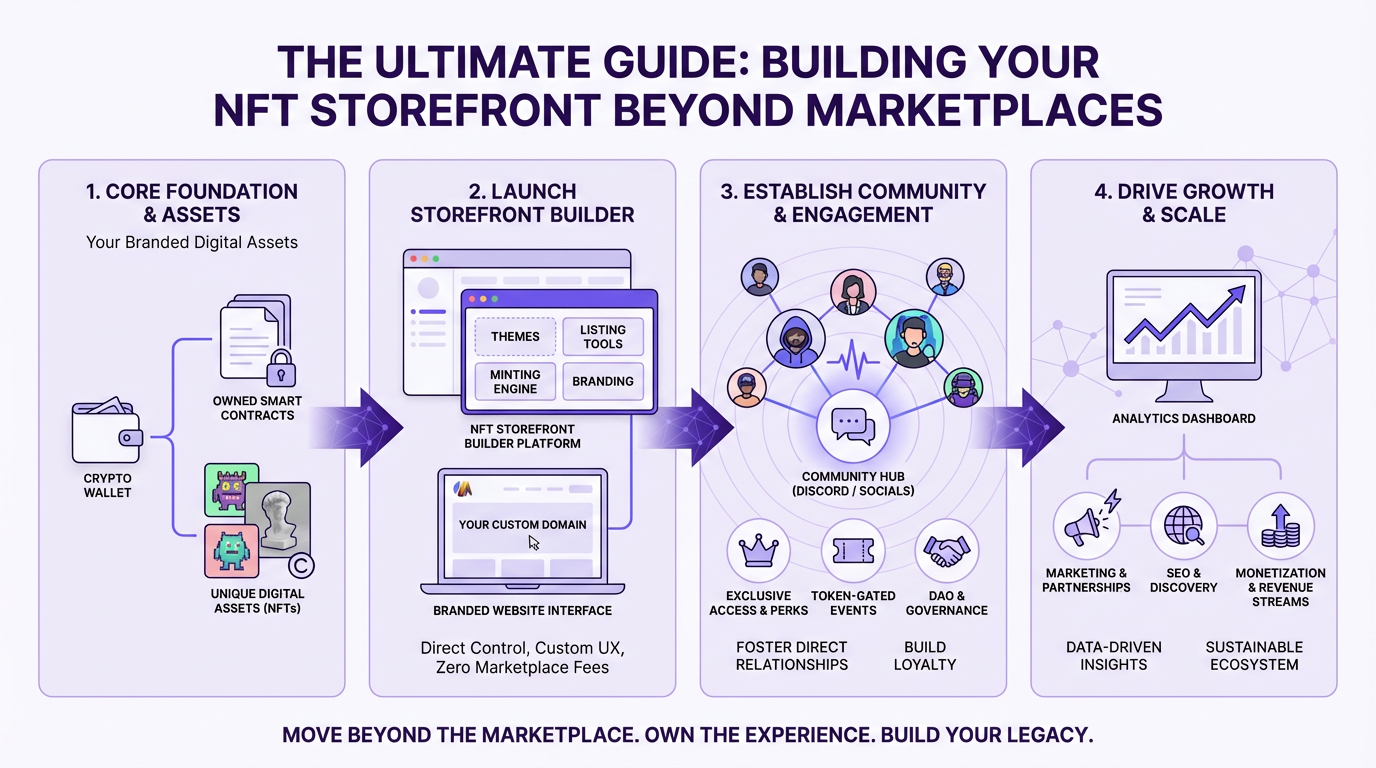
The Ultimate Guide to Building Your NFT Storefront: Beyond Marketplaces
The Ultimate Guide to Building Your NFT Storefront: Beyond Marketplaces
In the rapidly evolving world of Web3, owning your digital presence is paramount. While centralized NFT marketplaces offer convenience, creators and brands are increasingly seeking greater control, customization, and direct engagement with their audience. This comprehensive guide delves into the critical aspects of building your own NFT storefront, moving beyond the limitations of third-party platforms to establish a truly unique and powerful digital asset hub.An NFT storefront builder empowers you to design, launch, and manage your own branded platform for selling non-fungible tokens. This isn't just about listing assets; it's about curating an experience, fostering community, and retaining a larger share of your revenue. As the NFT market matures, the ability to differentiate and build direct relationships with collectors becomes a significant competitive advantage.
Key NFT Market Statistics • The global NFT market size was valued at approximately $15.7 billion in 2022 and is projected to reach over $200 billion by 2030, growing at a CAGR of 33.7% (Source: Grand View Research). • Over 80% of NFT creators express a desire for more control over their sales process and branding (Source: Industry Surveys). • Transaction fees on major centralized NFT marketplaces can range from 2.5% to 5% per sale, impacting creator revenue significantly (Source: Marketplace Disclosures). • The average royalty rate for secondary NFT sales typically ranges from 5% to 10%, a crucial revenue stream for creators (Source: Blockchain Data).
Why Build Your Own NFT Storefront?
The allure of a custom NFT storefront extends far beyond simply avoiding marketplace fees. It's about strategic positioning, brand identity, and long-term value creation. Understanding these core benefits is the first step toward making an informed decision.Unparalleled Brand Control and Customization
Centralized marketplaces impose their branding, user interface, and often, their rules on your collections. A dedicated storefront allows for complete creative freedom. You dictate the aesthetic, the user journey, and the narrative surrounding your NFTs. This level of control is crucial for artists, luxury brands, and intellectual property holders who need their digital assets to reflect their established identity.Enhanced Collector Experience and Community Building
Your storefront becomes a destination, not just a transaction point. You can integrate unique features like exclusive content, interactive experiences, and direct communication channels. This fosters a stronger sense of community and loyalty among your collectors, transforming passive buyers into active brand advocates. Imagine a storefront that doubles as a virtual gallery or an interactive lore hub for your NFT project.Direct Ownership of Data and Customer Relationships
When you sell on a third-party platform, they own the customer data. With your own storefront, you gain direct access to valuable insights about your collectors – their preferences, engagement patterns, and purchasing behavior. This data is invaluable for future marketing strategies, personalized offerings, and building lasting relationships without intermediaries.Optimized Revenue Streams and Fee Structures
While there are initial setup and maintenance costs, a self-hosted storefront eliminates the recurring sales commissions charged by major marketplaces. This can significantly increase your net revenue per sale, especially for high-volume or high-value collections. Furthermore, you have full control over royalty distribution for secondary sales, ensuring creators are fairly compensated.Key Features of a Robust NFT Storefront Builder
Choosing the right NFT storefront builder is critical. Look for platforms that offer a comprehensive suite of tools to manage every aspect of your NFT operations. Here are the essential features to prioritize:- Customizable Design Templates: The ability to tailor the look and feel to match your brand identity without extensive coding.
- Multi-Chain Support: Compatibility with various blockchains (e.g., Ethereum, Polygon, Solana) to reach a wider audience and offer flexibility.
- Minting Capabilities: Integrated tools to create and deploy your NFTs directly from the platform.
- Wallet Integration: Seamless connection with popular Web3 wallets (e.g., MetaMask, WalletConnect) for easy transactions.
- Payment Gateway Options: Support for cryptocurrency payments and potentially fiat options.
- Smart Contract Management: Tools to deploy, manage, and update your smart contracts.
- Analytics and Reporting: Dashboards to track sales, traffic, and collector engagement.
- Security Features: Robust measures to protect your assets and collector data.
- Community Features: Integration with Discord, Twitter, or built-in forums.
- Scalability: The ability to handle growing traffic and collection sizes.
Expert Insight: "Don't just think of your NFT storefront as an e-commerce site. Envision it as a digital embassy for your brand in the metaverse. The more immersive and unique the experience, the stronger the connection you'll forge with your community, turning casual buyers into lifelong patrons."
Comparing NFT Storefront Builder Approaches
There are several pathways to establishing your NFT storefront, each with its own trade-offs. Understanding these approaches will help you select the best fit for your technical expertise, budget, and long-term goals.| Strategy | Best For | Difficulty | ROI Potential |
|---|---|---|---|
| No-Code/Low-Code Platforms | Artists, small brands, quick launches | Easy | Medium/High |
| Custom Development (Headless CMS) | Large enterprises, unique experiences | Hard | Very High |
| Open-Source Solutions | Tech-savvy teams, budget-conscious | Medium | High |
| Hybrid Solutions | Brands needing flexibility & some custom dev | Medium | High |
The No-Code/Low-Code Advantage
Platforms like Uni-Fy.us exemplify the power of no-code solutions. They abstract away the complexities of blockchain development, allowing creators to focus on their art and brand. These builders typically offer drag-and-drop interfaces, pre-built templates, and integrated smart contract deployment. They are ideal for individuals and small to medium-sized businesses looking to launch quickly and efficiently without hiring a full development team.Custom Development: The Ultimate Control
For large enterprises or projects with highly specific requirements, a fully custom-developed storefront offers unparalleled flexibility. This involves building the entire platform from scratch, often utilizing a headless CMS for content management and integrating directly with blockchain protocols. While expensive and time-consuming, it provides complete control over every single aspect, from backend infrastructure to frontend user experience.Open-Source and Hybrid Models
Open-source solutions provide a foundation that can be customized by developers, offering a balance between control and cost. Hybrid models combine the ease of a platform with the flexibility of custom code, allowing for bespoke features to be added to a base builder solution.The 5-Step NFT Storefront Launch Framework
Launching your own NFT storefront might seem daunting, but by following a structured approach, you can navigate the process effectively.The Future of NFT Storefronts: Interoperability and Beyond
The NFT landscape is constantly evolving. Future storefronts will likely emphasize greater interoperability, allowing assets to move seamlessly across different blockchains and metaverses. Personalization, AI-driven recommendations, and deeper integration with decentralized autonomous organizations (DAOs) for community governance will also become standard.Diagram: NFT Storefront Ecosystem Flow
[Creator/Brand] → [NFT Storefront Builder (e.g., Uni-Fy.us)] → [Custom Branded Storefront] → [Collector Wallet Integration] → [Blockchain Network (Minting/Transactions)] → [Collector Community/Engagement] → [Feedback Loop to Creator/Brand]
This interconnected ecosystem highlights how a dedicated storefront acts as the central hub for creators to manage their digital assets, engage with their audience, and leverage blockchain technology directly.
Related: The Future of Dcommerce: Trends, Innovations, and Predictions
Frequently Asked Questions
What is an NFT storefront builder?
An NFT storefront builder is a platform or tool that allows individuals and businesses to create, customize, and manage their own branded website for selling non-fungible tokens (NFTs) directly to collectors, bypassing third-party marketplaces. It provides the infrastructure for minting, displaying, and transacting NFTs.How does an NFT storefront differ from a marketplace like OpenSea?
An NFT storefront offers complete brand control, direct customer relationships, and optimized revenue streams by eliminating marketplace commissions, whereas platforms like OpenSea are centralized hubs where many creators list their NFTs under the marketplace's branding and rules. Your storefront is your own digital property, while a marketplace is a shared public space.What blockchain should I choose for my NFT storefront?
The choice of blockchain depends on your project's needs, including transaction costs, speed, and community. Ethereum offers robust security and a large ecosystem but has higher gas fees. Polygon and Solana provide faster transactions and lower fees, making them suitable for high-volume collections or gaming NFTs. Many builders offer multi-chain support for flexibility.Is technical knowledge required to build an NFT storefront?
Not necessarily. Many modern NFT storefront builders, particularly no-code/low-code platforms, are designed for users with minimal technical expertise. They offer intuitive drag-and-drop interfaces and automated smart contract deployment, allowing creators to focus on design and content rather than complex coding.How much does it cost to build and maintain an NFT storefront?
The cost varies significantly based on the chosen approach. No-code builders typically have subscription fees ranging from tens to hundreds of dollars per month, plus blockchain transaction fees. Custom development can cost tens of thousands to hundreds of thousands of dollars upfront, with ongoing maintenance. Open-source solutions may have lower upfront costs but require developer resources for setup and customization.Scale Your Business with Advanced Dcommerce Strategy and Tools
Stay ahead of the competition by leveraging blockchain-backed commerce solutions and affiliate tools.