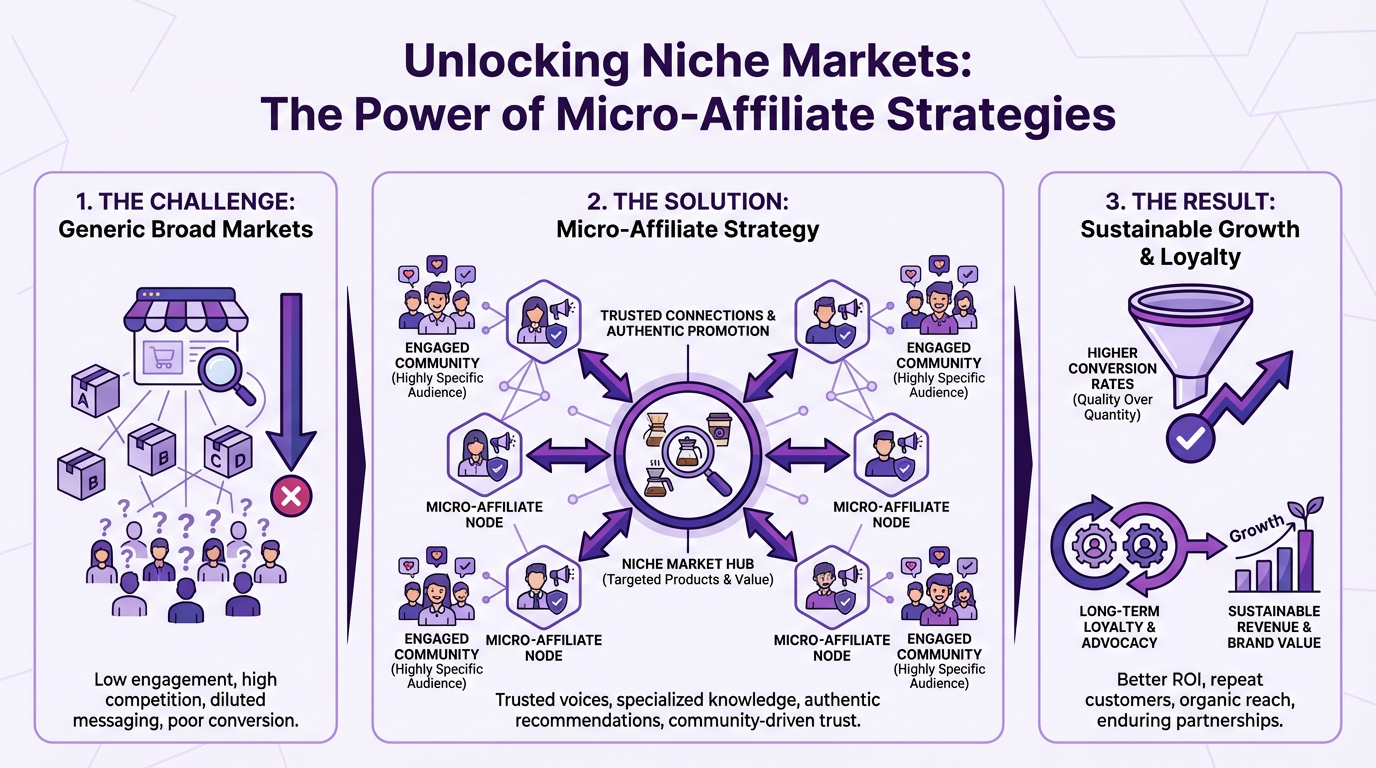
Unlocking Niche Markets: The Power of Micro-Affiliate Strategies
Unlocking Niche Markets: The Power of Micro-Affiliate Strategies
In an increasingly crowded digital landscape, the broad-stroke approach to affiliate marketing is yielding diminishing returns. Savvy affiliates are now turning their attention to niche markets, leveraging highly specific interests and communities to cultivate deeper engagement and higher conversion rates. This strategic pivot, often referred to as micro-affiliate marketing, is not just a trend but a fundamental shift in how successful affiliates operate, aligning perfectly with evolving Affiliate Marketing Trends.Niche affiliate marketing focuses on serving a very specific segment of the market with tailored content and product recommendations. Instead of trying to appeal to everyone, affiliates concentrate on a smaller, more defined audience with unique needs and preferences. This approach fosters greater trust, reduces competition, and often leads to more loyal customers, making it a highly effective and sustainable model for long-term growth in the affiliate space.
Key Niche Affiliate Marketing Statistics • Niche websites often boast conversion rates 2-3 times higher than generalist sites due to highly targeted traffic (Ahrefs). • 70% of consumers prefer personalized experiences, which niche marketing inherently provides (Segment). • Micro-influencers, often central to niche strategies, have engagement rates up to 7x higher than celebrity influencers (Markerly). • Long-tail keywords, crucial for niche SEO, account for over 70% of all search queries (Moz).
Why Niche is the New Broad in Affiliate Marketing
The allure of broad markets is understandable – more potential customers, seemingly larger revenue. However, broad markets are also characterized by intense competition, higher advertising costs, and a constant struggle for visibility. Niche markets, by contrast, offer a sanctuary from this fierce competition. By focusing on a specific segment, affiliates can become authoritative figures within that community, building trust and credibility that translates directly into sales.Advantages of a Niche Focus
Beyond reduced competition, niche markets allow for highly targeted content creation, which resonates deeply with the audience. This leads to better engagement, lower bounce rates, and ultimately, higher conversion rates. Furthermore, building an audience in a niche often requires less upfront investment in advertising, as organic traffic through specialized SEO and community engagement becomes more viable. This can significantly improve Affiliate Marketing ROI.| Niche Strategy | Best For | Difficulty | ROI Potential |
|---|---|---|---|
| Hyper-Niche Content | Very specific problems, passionate communities | Medium | High |
| Problem-Solution Focus | Addressing acute pain points with specific products | Easy/Medium | Very High |
| Demographic Niche | Targeting specific age groups, professions, or lifestyles | Medium | High |
| Geographic Niche | Localized products/services, regional events | Easy | Medium/High |
Identifying and Validating Profitable Niches
The success of niche affiliate marketing hinges on the ability to identify and thoroughly validate a profitable niche. This isn't just about finding a small market; it's about finding a small market with an active audience, unmet needs, and products or services available for promotion. Thorough research and validation are critical to avoid investing time and resources into a dead-end niche. Understanding Affiliate Marketing Research is paramount here.4-Step Niche Validation Framework
Content Strategy for Niche Dominance
Once a niche is identified, the content strategy becomes the cornerstone of success. Niche audiences expect highly specific, valuable, and authoritative content that directly addresses their unique concerns. Generic content will not suffice. The goal is to become the go-to resource for information and recommendations within that specific domain, building a loyal following.Expert Insight: "Many affiliates shy away from niches because they fear limited audience size. This is a mistake. A smaller, highly engaged audience that trusts your recommendations is far more valuable than a massive, disengaged one. Focus on solving their specific problems, and they will reward you with their loyalty and purchases. It's about depth, not just breadth."
Leveraging Long-Tail Keywords
Long-tail keywords are the lifeblood of niche SEO. These are longer, more specific keyword phrases that typically have lower search volume but much higher conversion intent. By targeting these keywords, niche affiliates can attract highly qualified traffic that is actively looking for solutions to specific problems, leading to better rankings and conversions. This is a key aspect of Affiliate Marketing SEO.Diagram: Niche Affiliate Success Loop [Identify Niche & Audience Needs] → [Create Highly Targeted, Valuable Content] → [Attract Engaged Niche Traffic] → [Build Trust & Authority] → [Promote Relevant Affiliate Offers] → [High Conversions & Repeat Business] → [Feedback Loop to Content Creation]
Monetization and Scaling Niche Affiliate Efforts
Monetizing a niche affiliate site involves more than just slapping up a few links. It requires a strategic approach to integrating offers naturally within valuable content. As the niche site grows in authority and traffic, opportunities for diversification, such as creating your own digital products or offering consulting services, can emerge. Scaling involves replicating successful strategies across different sub-niches or expanding content depth within the existing one.Diversifying Revenue Streams
While direct affiliate commissions are the primary goal, niche sites can also explore other revenue streams. This might include display advertising (once traffic reaches a certain threshold), selling digital products (e.g., e-books, courses related to the niche), offering premium content, or even direct sponsorships from brands looking to reach that specific audience. This diversification builds resilience and long-term profitability.Frequently Asked Questions
What defines a profitable niche in affiliate marketing?
A profitable niche is characterized by an active, engaged audience with specific needs, a reasonable level of search demand, and the availability of quality affiliate products or services to promote. It should also have manageable competition, allowing an affiliate to establish authority.How do I avoid choosing an overly narrow niche?
To avoid an overly narrow niche, ensure there's enough search volume for relevant keywords and that a sufficient number of affiliate products exist to monetize it. While specificity is good, a niche that's too small might not offer enough potential for growth or revenue.What kind of content works best for niche affiliate marketing?
Highly specific, problem-solving content that directly addresses the unique pain points and interests of the niche audience works best. This includes in-depth reviews, how-to guides, comparisons, and expert opinions that establish the affiliate as a trusted authority.Is it harder to find affiliate programs for niche markets?
It can sometimes be more challenging to find affiliate programs for very specific niches compared to broad categories. However, many smaller brands and specialized companies offer direct affiliate programs, and some larger Affiliate Marketing Platforms also cater to niche products. Persistence in research is key.How long does it take to see results from niche affiliate marketing?
Results from niche affiliate marketing can vary, but typically it takes 6-12 months to build significant organic traffic and establish authority. Consistent content creation, SEO optimization, and community engagement are crucial during this initial period. The long-term ROI, however, can be substantial.Key Takeaways
- Niche affiliate marketing offers a powerful strategy to overcome competition and build deep audience trust.
- Successful niche identification requires thorough research into market demand, competition, and product availability.
- Highly targeted, valuable content is essential for attracting and engaging a niche audience, often leveraging long-tail keywords.
- Authenticity and becoming an authoritative resource are critical for building loyalty and driving conversions.
- Monetization can extend beyond direct commissions, with opportunities for product creation and diversification as the niche grows.