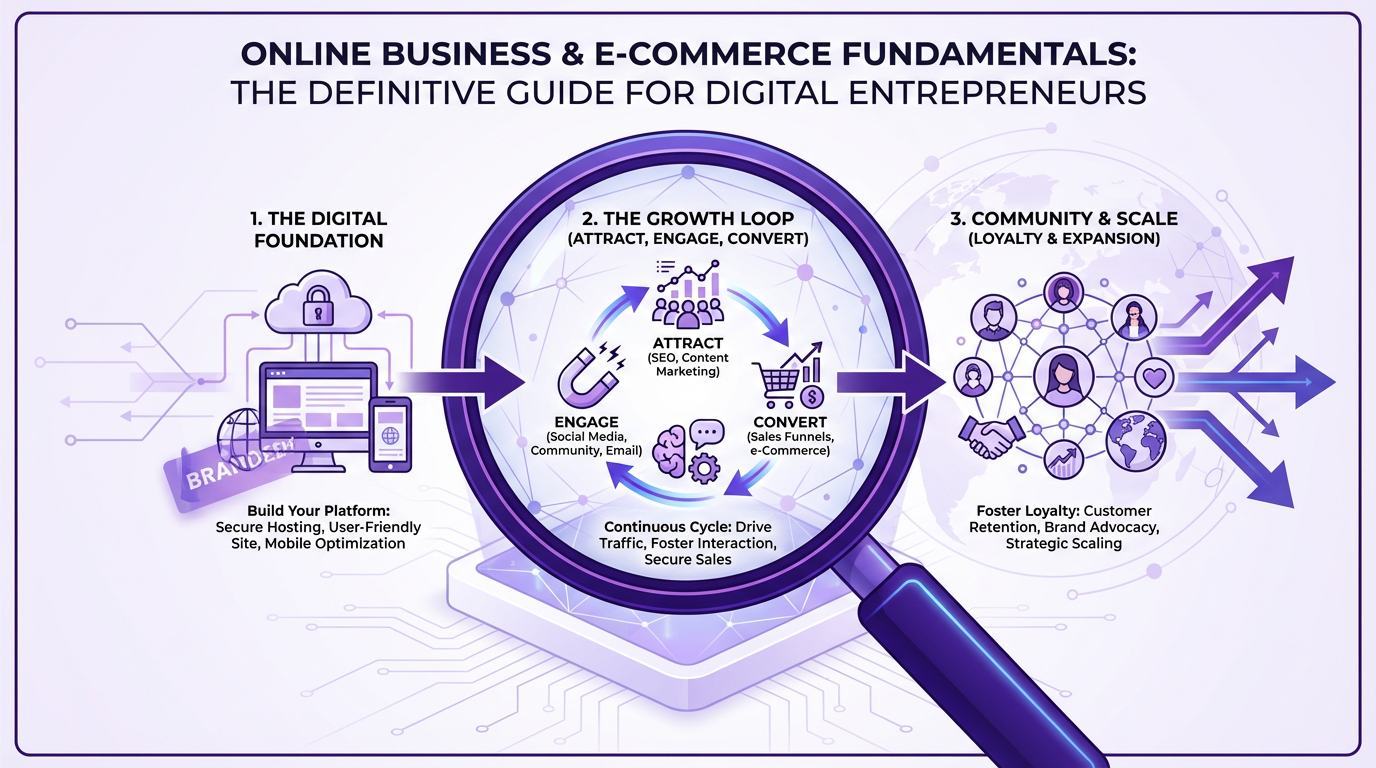
Online Business & E-commerce Fundamentals: The Definitive Guide for Digital Entrepreneurs
Online Business & E-commerce Fundamentals: The Definitive Guide for Digital Entrepreneurs
Table of Contents
- Introduction: Navigating the Digital Marketplace
- The Core Pillars of Online Business Success
- Crafting Your Digital Storefront: Platforms and Setup
- Driving Growth: Marketing, Sales, and Multi-Channel Strategies
- Sustaining Momentum: Operations, Security, and Retention
- Future-Proofing Your E-commerce Venture
- Frequently Asked Questions
- Related Guides
Introduction: Navigating the Digital Marketplace
In an increasingly interconnected world, understanding Online Business & E-commerce Fundamentals is no longer optional for aspiring entrepreneurs; it's a prerequisite for success. This comprehensive guide from uni-fy.us delves into the essential principles, strategies, and technologies that underpin a thriving digital enterprise. From conceptualizing compelling online business ideas to mastering the intricacies of global logistics, we provide an authoritative roadmap for building, launching, and scaling your online venture.E-commerce has transformed how goods and services are exchanged, democratizing entrepreneurship and opening unprecedented opportunities for innovation. Whether you're an individual with a unique product or an established brand looking to expand your digital footprint, the foundational knowledge presented here will equip you to navigate the complexities of the digital marketplace. This guide serves as your definitive resource, offering actionable insights and expert perspectives to demystify the journey of becoming a successful online business owner.
Key E-commerce Growth Statistics • Global e-commerce sales are projected to reach over $8.1 trillion by 2026, demonstrating sustained market expansion (Statista). • Over 2.64 billion people worldwide are expected to purchase goods online in 2023, highlighting a vast and growing customer base (eMarketer). • Mobile commerce now accounts for over 70% of all e-commerce sales, underscoring the critical need for mobile-optimized experiences (Insider Intelligence). • Customer acquisition costs have increased by nearly 60% over the past five years, making ecommerce customer retention more vital than ever (ProfitWell).
The Core Pillars of Online Business Success
Launching a successful online business transcends merely having a product; it requires a strategic blend of market understanding, operational efficiency, and customer-centricity. The journey begins with identifying viable online business ideas and understanding the landscape of ecommerce business ideas that resonate with market demand.Identifying Your Niche and Value Proposition
The first step in how to start an online business is pinpointing a specific niche. This involves researching market gaps, understanding customer pain points, and identifying unique selling propositions. A well-defined niche allows for targeted marketing efforts and helps differentiate your offering in a crowded digital space. Consider what problems you can solve or what unique value you can provide that competitors overlook.- Market Research: Analyze trends, competitor offerings, and customer reviews to identify unmet needs.
- Target Audience Definition: Understand demographics, psychographics, and purchasing behaviors of your ideal customer.
- Value Proposition Crafting: Clearly articulate what makes your product or service superior or distinct.
Expert Insight: "Many aspiring entrepreneurs fall into the trap of trying to appeal to everyone. The most successful online businesses start by deeply understanding a very specific segment of the market and then relentlessly serving that segment better than anyone else. Niche down, then scale up."
Crafting Your Digital Storefront: Platforms and Setup
Once your business idea is solidified, the next critical phase involves establishing your digital presence. This primarily revolves around choosing the right e-commerce platform and setting up your online store for optimal performance and user experience.Choosing the Right E-commerce Platform
The selection of an e-commerce platform is a foundational decision that impacts scalability, functionality, and ease of management. Options range from all-in-one hosted solutions to open-source platforms requiring more technical expertise. For startups, ease of use and integrated features are often paramount, while artists might prioritize aesthetic control and specific selling tools.| Platform Type | Best For | Difficulty | ROI Potential |
|---|---|---|---|
| Shopify | Startups, SMBs, dropshippers | Easy | Very High |
| WooCommerce | WordPress users, customizability | Medium | High |
| BigCommerce | Scaling businesses, multi-channel | Medium | High |
| Etsy | Artists, handmade goods | Easy | Medium |
| Squarespace | Creatives, portfolio-driven stores | Easy | Medium |
Setting Up Your Online Store
Building your online store involves more than just uploading products. It requires careful attention to design, navigation, product descriptions, and payment gateway integration. A seamless user experience is crucial for converting visitors into customers.Driving Growth: Marketing, Sales, and Multi-Channel Strategies
Once your online store is operational, the focus shifts to attracting customers and generating sales. This involves a blend of digital marketing tactics and strategic sales approaches.Digital Marketing Essentials
Effective digital marketing is the engine that drives traffic to your online store. Strategies include search engine optimization (SEO), social media marketing, email marketing, and paid advertising.- SEO: Optimize product pages and content for relevant keywords to improve organic search rankings.
- Content Marketing: Create valuable blog posts, guides, or videos that attract and engage your target audience.
- Social Media: Build a community and promote products on platforms where your audience spends time.
- Email Marketing: Nurture leads, announce promotions, and drive repeat purchases.
Multi-Channel Selling and Expansion
To maximize reach and revenue, consider multi-channel selling strategies. This involves selling your products not just on your own website, but also on marketplaces like Amazon, eBay, or even social commerce platforms. Each channel offers unique advantages and audience segments.Diagram: Multi-Channel E-commerce Ecosystem [Your E-commerce Website] → [Marketplaces (Amazon, Etsy)] → [Social Commerce (Instagram Shop)] → [Physical Pop-ups/Retail] → [Customer Data & Feedback Loop to Your E-commerce Website]For businesses exploring diverse product sourcing, understanding dropshipping suppliers is crucial. Dropshipping allows you to sell products without holding inventory, with the supplier handling storage and fulfillment. This model can be a low-risk way to test new ecommerce business ideas or expand product lines.
Sustaining Momentum: Operations, Security, and Retention
Long-term success in online business hinges on efficient operations, robust security, and a strong focus on customer satisfaction and retention.Streamlining Operations: Shipping and Fulfillment
Efficient ecommerce shipping solutions are paramount for customer satisfaction. This includes choosing reliable carriers, optimizing packaging, and managing returns effectively. Consider integrating with third-party logistics (3PL) providers for scalable fulfillment.Fortifying Your Store: Online Security Best Practices
In the digital realm, trust is currency. Implementing online store security best practices is non-negotiable to protect both your business and your customers' data. This includes SSL certificates, secure payment gateways, regular software updates, and strong password policies.The Power of Customer Retention
Acquiring new customers is expensive. Therefore, ecommerce customer retention strategies are vital for sustainable growth. This involves providing exceptional customer service, building loyalty programs, personalizing communications, and actively soliciting feedback. A loyal customer base not only provides recurring revenue but also acts as powerful brand advocates.Future-Proofing Your E-commerce Venture
The e-commerce landscape is constantly evolving. Staying ahead requires continuous learning, adaptation, and a willingness to embrace new technologies and trends. This includes exploring emerging sales channels, leveraging AI for personalization, and focusing on sustainable practices.5-Step E-commerce Adaptation Framework
By consistently applying these fundamentals and remaining agile, online businesses can not only survive but thrive in the dynamic digital economy. The journey of how to start an online business is continuous, marked by learning, adaptation, and a relentless focus on delivering value.
Frequently Asked Questions
What are the most crucial Online Business & E-commerce Fundamentals for beginners?
For beginners, the most crucial fundamentals include identifying a viable niche, choosing the right e-commerce platform, understanding basic digital marketing, and prioritizing customer service. Starting with a clear value proposition and a user-friendly online store sets the foundation for growth.How can I identify profitable online business ideas?
Profitable online business ideas are often found by identifying market gaps, solving common customer problems, or offering unique products/services. Researching trending products, analyzing competitor offerings, and leveraging personal expertise can help uncover lucrative opportunities.What is the best e-commerce platform for startups with limited budgets?
The best e-commerce platform for startups with limited budgets often balances affordability with essential features. Shopify Lite, Square Online, or even a basic WooCommerce setup on a shared hosting plan can be cost-effective starting points, offering core functionalities without significant upfront investment.How important is multi-channel selling for a new e-commerce business?
Multi-channel selling strategies are highly important even for new e-commerce businesses as they significantly expand reach and reduce reliance on a single sales channel. By listing products on marketplaces like Etsy or Amazon in addition to your own website, you tap into existing customer bases and diversify your revenue streams.What are key strategies for ecommerce customer retention?
Key strategies for ecommerce customer retention include providing exceptional customer service, implementing loyalty programs, personalizing communication through email marketing, offering exclusive discounts to repeat buyers, and actively soliciting and acting on customer feedback to continuously improve their experience.Related Guides
- Online Business Ideas - Comprehensive guide to online business ideas
- How To Start An Online Business - Comprehensive guide to how to start an online business
- Selling Products Online - Comprehensive guide to selling products online
- Ecommerce Business Ideas - Comprehensive guide to ecommerce business ideas
- Dropshipping Suppliers - Comprehensive guide to dropshipping suppliers
- Multi-channel Selling Strategies - Comprehensive guide to multi-channel selling strategies
- Ecommerce Customer Retention - Comprehensive guide to ecommerce customer retention
- Ecommerce Shipping Solutions - Comprehensive guide to ecommerce shipping solutions
- Online Store Security Best Practices - Comprehensive guide to online store security best practices
- Best E-commerce Platform For Startups - Comprehensive guide to best e-commerce platform for startups
- Best E-commerce Platform For Artists - Comprehensive guide to best e-commerce platform for artists