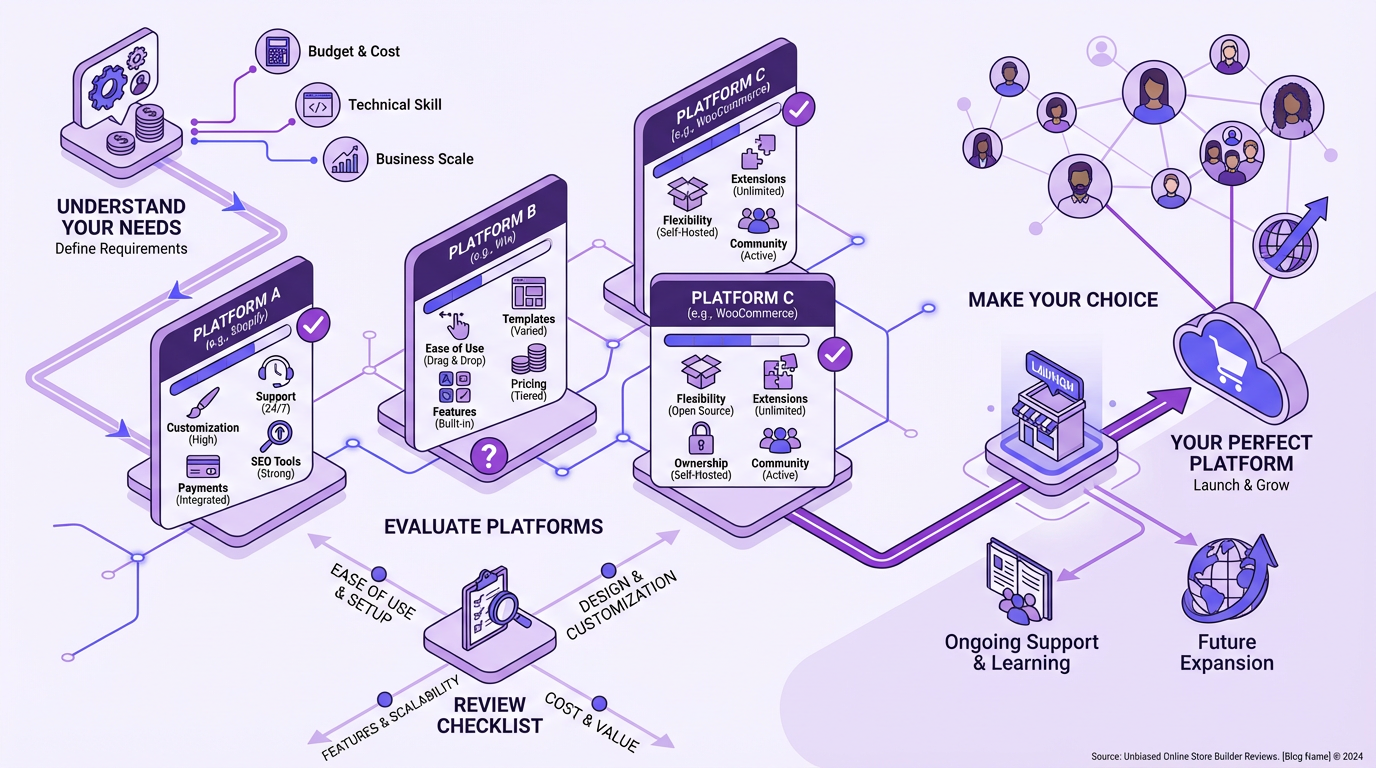
Unbiased Online Store Builder Reviews: Finding Your Perfect E-commerce Platform
Unbiased Online Store Builder Reviews: Finding Your Perfect E-commerce Platform
Navigating the vast landscape of online store builders can be a daunting task for any entrepreneur looking to establish or expand their digital presence. With countless platforms promising the ultimate solution, sifting through features, pricing, and user experiences becomes critical. This article delves into comprehensive online store builder reviews, providing insights to help you make an informed decision. A well-chosen platform is foundational to your e-commerce website design, directly impacting your store's functionality, scalability, and overall success.The right online store builder not only simplifies the technical aspects of setting up a shop but also empowers you with tools for marketing, sales, and customer management. Conversely, a poor choice can lead to frustration, limited growth, and unnecessary expenses. Our goal is to cut through the marketing hype and offer a clear perspective on what each major player brings to the table, helping you align a platform with your specific business model and growth aspirations.
Key E-commerce Platform Statistics • Shopify holds approximately 28% of the e-commerce platform market share, making it a dominant force (BuiltWith, 2023). • Over 2.14 billion people worldwide are expected to buy goods and services online in 2024 (Statista, 2023). • The average e-commerce conversion rate across all industries is around 2.5-3%, emphasizing the need for an optimized platform (Insider Intelligence, 2023). • Businesses using e-commerce platforms with integrated marketing tools report 20% higher revenue growth (Salesforce, 2022).
Top Contenders in the Online Store Builder Arena
The market for online store builders is dominated by a few key players, each with its unique strengths and target audience. Understanding these differences is the first step in narrowing down your options. Shopify, for instance, is renowned for its comprehensive feature set, extensive app store, and scalability, making it suitable for businesses of all sizes. Its robust infrastructure supports everything from small boutiques to large enterprises.Squarespace appeals to design-conscious users, offering stunning templates and an intuitive drag-and-drop interface, ideal for brands where visual aesthetics are paramount. Wix, on the other hand, provides immense flexibility with its ADI (Artificial Design Intelligence) and a vast array of customization options, catering to a broad spectrum of users from beginners to those seeking more control over their site's appearance. WooCommerce, as a WordPress plugin, offers unparalleled customization for those comfortable with self-hosting and a more hands-on approach.
Platform Comparison: Features & Suitability
| Platform | Best For | Ease of Use | Customization | Pricing Model |
|---|---|---|---|---|
| Shopify | Scalable businesses, dropshippers, app integrations | Medium | High (via apps/themes) | Subscription + Transaction Fees |
| Squarespace | Creatives, visually-driven brands, simple stores | High | Medium/High | Subscription |
| Wix | Small businesses, diverse needs, design flexibility | High | High | Subscription |
| WooCommerce | WordPress users, full control, budget-conscious | Medium/Hard | Very High | Free plugin + Hosting/Add-ons |
Evaluating Core E-commerce Functionality
Beyond the initial setup, the true value of an online store builder lies in its core e-commerce capabilities. This includes product management, inventory tracking, order processing, and shipping options. A platform should allow for easy product uploads, support various product types (physical, digital, services), and provide robust inventory management to prevent overselling.Payment processing is another critical area. Look for platforms that integrate with multiple payment gateways, including major credit cards, PayPal, and local payment methods relevant to your target audience. Secure checkout processes, including SSL certificates and PCI compliance, are non-negotiable for building customer trust and protecting sensitive data. The efficiency of these functions directly impacts customer satisfaction and your operational workflow.
6-Step Platform Evaluation Framework
Design Flexibility and Customization Options
The visual appeal and user experience of your online store are paramount for converting visitors into customers. Online store builder reviews often highlight the design capabilities, including the availability and quality of online store themes. Platforms like Squarespace excel in offering aesthetically pleasing, mobile-responsive templates out-of-the-box, requiring minimal customization.Expert Insight: "Don't let 'perfect' be the enemy of 'good enough' when it comes to design. While a unique look is great, a clean, functional, and mobile-optimized design that clearly showcases your products and simplifies the checkout process will always outperform a visually stunning but confusing site. Focus on conversion first, then refine aesthetics."Other builders, like Shopify and Wix, provide extensive theme marketplaces, offering both free and premium options. The ability to customize these themes using drag-and-drop editors, or for more advanced users, by editing CSS/HTML, allows for a truly unique brand representation. Consider how easily you can integrate your brand's colors, fonts, and imagery to maintain consistency across all customer touchpoints. This flexibility is key to creating a memorable online presence.
Diagram: E-commerce Platform Feature Prioritization [Core E-commerce] → [Design & UX] → [Marketing & SEO] → [Security & Support] → [Scalability]
SEO, Marketing, and Analytics Integrations
An online store, no matter how well-designed, won't succeed without visibility. Effective online store builders offer robust SEO features and seamless integrations with marketing and analytics tools. Look for platforms that allow for customizable URLs, meta descriptions, alt text for images, and the ability to generate sitemaps. These are crucial for search engine discoverability.Integration with email marketing services (e.g., Mailchimp, Klaviyo), social media platforms, and advertising channels (Google Ads, Facebook Ads) is essential for driving traffic and nurturing leads. Furthermore, built-in analytics or easy integration with Google Analytics provides invaluable insights into customer behavior, sales performance, and marketing campaign effectiveness. Understanding these metrics is vital for continuous optimization and growth, forming a core part of any successful e-commerce marketing strategies.
Security, Support, and Scalability
Security is non-negotiable for any e-commerce operation. Ensure the platform provides SSL certificates, is PCI compliant for secure payment processing, and offers fraud protection. Regular backups and high uptime guarantees are also critical to protect your data and ensure your store is always available to customers.Customer support quality can significantly impact your experience, especially when technical issues arise. Look for platforms with multiple support channels (phone, chat, email), extensive knowledge bases, and active community forums. Finally, consider scalability: can the platform handle increased traffic, a growing product catalog, and international expansion without requiring a complete overhaul? A platform that grows with you minimizes future disruptions and costs.
Frequently Asked Questions
Which online store builder is best for beginners?
For beginners, platforms like Squarespace and Wix are often recommended due to their intuitive drag-and-drop interfaces and guided setup processes. Shopify is also very user-friendly, though it has a steeper learning curve due to its extensive features.Are free online store builders a good option for small businesses?
While some platforms offer free plans, they often come with significant limitations, such as restricted features, custom domain limitations, and forced branding. For a professional and scalable online store, investing in a paid plan from a reputable builder is almost always a better long-term strategy.How important is an app store for an e-commerce platform?
An app store can be incredibly important, especially for businesses with unique needs or those planning to scale. It allows you to extend your store's functionality with third-party integrations for marketing, shipping, accounting, and more, without needing custom development.Can I migrate my existing online store to a new builder?
Yes, most platforms offer tools or guides for migrating existing stores. However, the complexity varies. It typically involves exporting product data, customer lists, and order history, then importing them into the new platform. It's advisable to plan this carefully and potentially use migration services for larger stores.Key Takeaways
- Thoroughly research online store builder reviews, focusing on platforms that align with your specific business model, budget, and technical comfort level.
- Prioritize core e-commerce functionalities such as product management, secure payment processing, and efficient order fulfillment.
- Evaluate design flexibility and the availability of high-quality themes to ensure your brand's visual identity is well-represented.
- Ensure the platform offers robust SEO tools and seamless integrations with essential marketing and analytics platforms.
- Security, reliable customer support, and the ability to scale with your business are critical factors for long-term success.