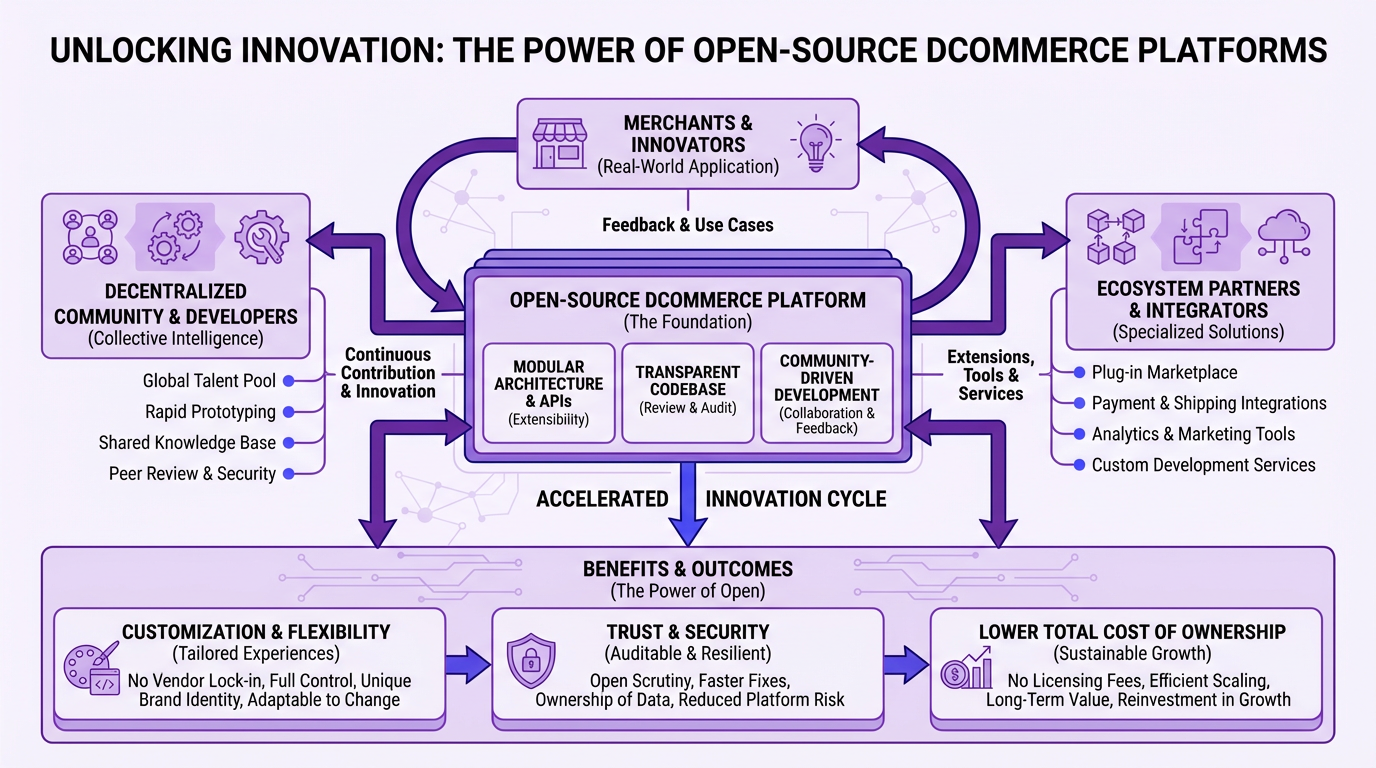
Unlocking Innovation: The Power of Open-Source Dcommerce Platforms
Unlocking Innovation: The Power of Open-Source Dcommerce Platforms
Open-source Dcommerce platforms represent a paradigm shift in how digital commerce is built and operated. Unlike traditional proprietary solutions, these platforms leverage transparent, community-driven development, offering unparalleled flexibility, security, and innovation. For businesses and developers looking to build resilient, censorship-resistant, and user-centric online stores, understanding the intricacies of open-source Dcommerce is paramount. This approach aligns perfectly with the broader vision of Decentralized Commerce Platforms, emphasizing user control and transparency over centralized authority.At its core, open-source Dcommerce empowers participants by removing vendor lock-in and fostering a collaborative ecosystem. This not only drives down development costs but also accelerates the pace of innovation, as improvements and new features can be contributed by a global community. The inherent transparency of open-source code also builds greater trust among users and developers, a critical factor in the nascent but rapidly expanding decentralized economy.
Key Open-Source Dcommerce Statistics • Over 70% of all software in use today contains open-source components, indicating a strong reliance on community-driven development across industries. • Projects built on open-source blockchain protocols have seen a 150% increase in developer activity over the last two years, highlighting growing interest in decentralized applications. • Businesses adopting open-source solutions report an average 25% reduction in licensing costs compared to proprietary alternatives. • The global market for open-source services is projected to reach over $50 billion by 2026, demonstrating significant economic impact.
The Core Principles of Open-Source Dcommerce
Open-source Dcommerce platforms are founded on several key principles that differentiate them from their centralized counterparts. Foremost among these is transparency, where the entire codebase is publicly accessible for review, modification, and distribution. This fosters a high degree of accountability and allows for rapid identification and patching of vulnerabilities, a crucial aspect for secure financial transactions.Another fundamental principle is community governance. While not all open-source projects are fully decentralized autonomous organizations (DAOs), many incorporate elements of community input and decision-making. This ensures that the platform evolves in a way that benefits its users and contributors, rather than being dictated by a single corporate entity. This collaborative model is a cornerstone of the broader Web3 movement, driving innovation in areas like Web3 commerce platforms.
Architectural Advantages and Challenges
The architecture of open-source Dcommerce platforms often involves a modular design, allowing for greater customization and integration with various blockchain networks and decentralized protocols. This flexibility is a significant advantage for businesses with unique requirements or those looking to integrate novel features like NFT marketplace platforms directly into their storefronts. However, this modularity can also introduce complexity in terms of deployment and maintenance, requiring a higher level of technical expertise.| Feature | Open-Source Dcommerce | Proprietary Dcommerce |
|---|---|---|
| Code Transparency | Fully transparent, auditable | Closed-source, proprietary |
| Customization | High, community-driven | Limited, vendor-dependent |
| Cost | Lower initial, higher potential dev | Higher licensing, lower dev |
| Security Audits | Community & professional | Vendor-controlled |
| Innovation Pace | Rapid, community-driven | Vendor-controlled |
Building Trust and Security Through Transparency
In the realm of decentralized commerce, trust is not placed in a central authority but in the verifiable code and the consensus mechanisms of the underlying blockchain. Open-source Dcommerce platforms inherently build this trust by allowing anyone to inspect the code that governs transactions, data storage, and user interactions. This level of transparency is critical for fostering confidence, especially when dealing with sensitive financial data and digital assets.Security in open-source Dcommerce is a collaborative effort. While vulnerabilities can exist, the open nature of the code means that a global community of developers is constantly scrutinizing it, leading to quicker identification and resolution of issues compared to closed systems. This collective vigilance often results in more robust and secure platforms over time, a key benefit for any business operating in the digital space.
5-Step Open-Source Dcommerce Adoption Framework
The Role of Community and Governance
The success of open-source Dcommerce platforms is inextricably linked to the strength and engagement of their communities. These communities are not just passive users; they are active contributors, developers, testers, and advocates. This collective intelligence drives innovation, provides support, and ensures the platform remains relevant and secure.Expert Insight: "Many businesses shy away from open-source Dcommerce due to perceived complexity, but they overlook the immense power of collective intelligence. The community isn't just a support channel; it's a co-development team that works tirelessly to improve the platform, often at a pace no single company could match. Embracing this collaborative model is key to unlocking its full potential, especially for those venturing into Decentralized Commerce Platforms for the first time."Community governance, particularly through DAOs, is becoming increasingly prevalent in the open-source Dcommerce space. This model allows token holders or active participants to vote on key decisions, such as protocol upgrades, treasury allocation, and feature prioritization. This democratic approach ensures that the platform's evolution reflects the collective interests of its stakeholders, fostering a more equitable and sustainable ecosystem.
Fostering a Robust Developer Ecosystem
For an open-source Dcommerce platform to thrive, it needs a robust and active developer ecosystem. This includes comprehensive documentation, developer tools, SDKs, and clear contribution guidelines. Platforms that prioritize developer experience tend to attract more contributors, leading to faster development cycles and a richer feature set. The availability of these resources is crucial for businesses looking to build custom solutions or integrate with existing systems.Diagram: Open-Source Dcommerce Ecosystem Flow [Core Protocol Development] → [Community Contributions & Audits] → [Feature Integration & Testing] → [Deployment & User Adoption] → [Feedback Loop to Core Protocol Development]
Future Trends and Interoperability
The future of open-source Dcommerce platforms is bright, with ongoing advancements in blockchain technology, zero-knowledge proofs, and cross-chain solutions. Interoperability is a key trend, allowing different Dcommerce platforms and protocols to communicate and exchange data seamlessly. This will enable more complex and integrated decentralized marketplaces, expanding the reach and functionality of individual platforms. The development of Cross-chain Dcommerce solutions is particularly exciting in this regard, promising a more unified decentralized web.Another significant trend is the integration of self-sovereign identity solutions. By allowing users to control their digital identities, open-source Dcommerce platforms can enhance privacy and reduce the risk of data breaches. This aligns with the broader movement towards greater user autonomy and data ownership in the decentralized web, making Self-sovereign identity in Dcommerce a critical area of development.
Frequently Asked Questions
What are the main benefits of using open-source Dcommerce platforms?
Open-source Dcommerce platforms offer transparency, flexibility, reduced vendor lock-in, and community-driven innovation. They allow businesses to customize their commerce solutions extensively and benefit from a global developer community constantly improving the platform's security and features.How do open-source Dcommerce platforms ensure security?
Security is ensured through public code audits by a global community, transparent bug bounty programs, and the inherent security features of underlying blockchain technologies. The open nature allows for rapid identification and patching of vulnerabilities, fostering collective vigilance.Is technical expertise required to use open-source Dcommerce platforms?
While some technical expertise is beneficial for customization and deployment, many open-source Dcommerce platforms are developing user-friendly interfaces and tools. The community also provides extensive support and resources, making them accessible to a broader range of users over time.Key Takeaways
- Open-source Dcommerce platforms offer transparency, flexibility, and community-driven innovation, setting them apart from proprietary solutions.
- They foster trust through publicly auditable code and enhance security through collective vigilance and rapid vulnerability patching.
- Community engagement and governance, often through DAOs, are crucial for the sustainable development and evolution of these platforms.
- Adopting open-source Dcommerce involves careful planning, pilot projects, and active participation in the developer community.
- Future trends include increased interoperability and the integration of self-sovereign identity, promising a more robust and user-centric decentralized commerce ecosystem.