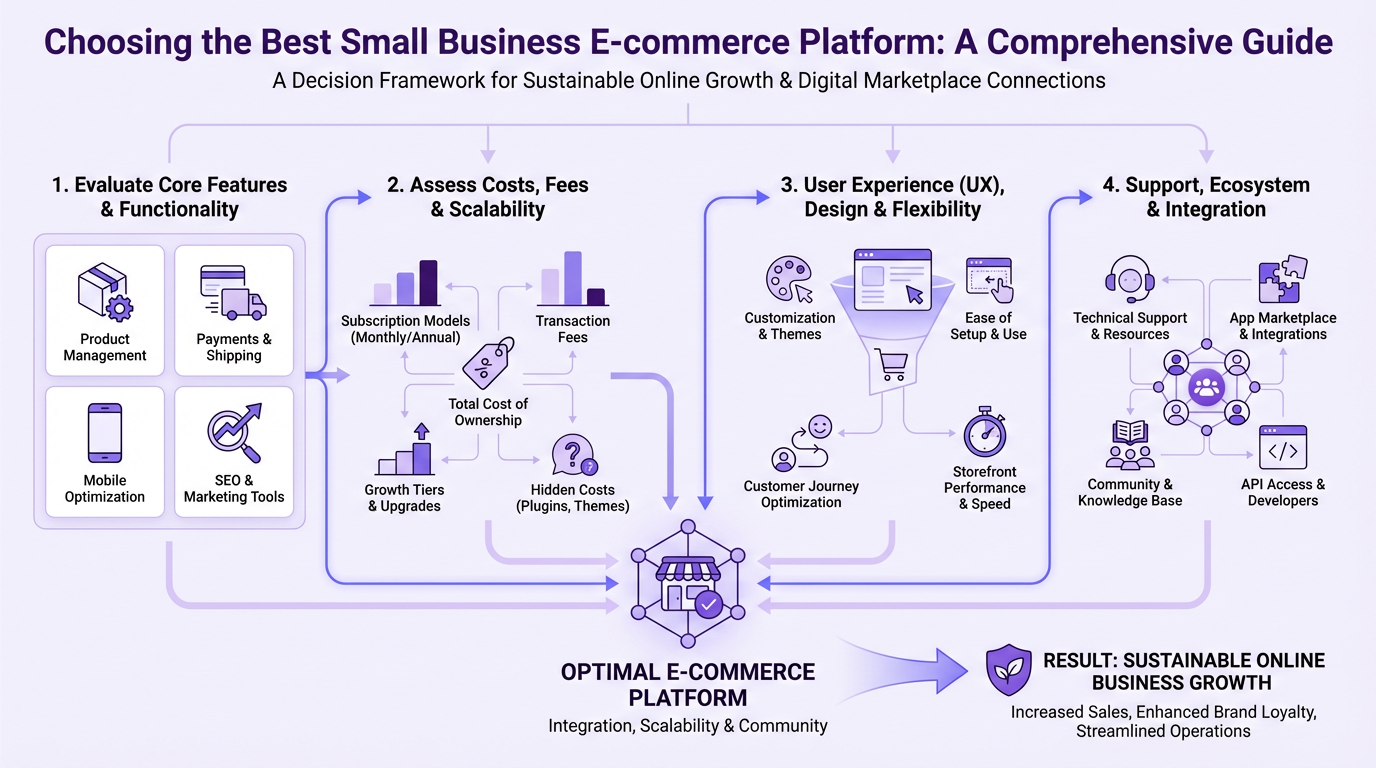
Choosing the Best Small Business E-commerce Platform: A Comprehensive Guide
Choosing the Best Small Business E-commerce Platform: A Comprehensive Guide
Launching an online store can be a game-changer for small businesses, expanding reach beyond local confines and unlocking new revenue streams. However, the sheer volume of available e-commerce platforms can be overwhelming, making the selection process a critical first step. The right small business e-commerce platform needs to balance ease of use with robust features, scalability, and affordability. It's not just about selling products; it's about creating a seamless customer experience, managing inventory efficiently, and integrating with existing business tools. Understanding the nuances of various platforms is crucial for any entrepreneur looking to establish a strong digital presence and leverage the power of E-commerce Platform Solutions.Selecting an appropriate platform is foundational to long-term success. A poorly chosen platform can lead to hidden costs, operational inefficiencies, and a frustrating experience for both the business owner and their customers. This guide will delve into the key considerations for small businesses, helping them navigate the options and make an informed decision that supports their growth ambitions.
Key Small Business E-commerce Statistics • Over 2.14 billion people worldwide are expected to buy goods and services online in 2023. (Statista) • Small businesses that sell online grow 49% faster than those that don't. (U.S. Small Business Administration) • 63% of online shoppers expect free shipping, making cost-effective fulfillment integrations critical for small businesses. (Statista) • The global e-commerce market is projected to reach $8.1 trillion by 2026. (eMarketer)
Understanding Your Small Business Needs
Before diving into specific platforms, a thorough assessment of your business requirements is paramount. This involves more than just listing features; it's about understanding your product type, target audience, budget constraints, and technical proficiency. Are you selling physical goods, digital products, or services? Do you anticipate high transaction volumes or a more niche market? These questions will shape the ideal platform choice.Core Considerations for Platform Selection
When evaluating a small business e-commerce platform, consider the following aspects:- Ease of Use & Setup: For many small business owners, technical expertise is limited. A platform with an intuitive interface, drag-and-drop builders, and minimal coding requirements is often preferred.
- Scalability: While you might start small, your business will hopefully grow. The platform should be able to handle increased traffic, product listings, and order volumes without requiring a complete migration.
- Features & Integrations: Look for essential features like inventory management, payment gateway options, shipping calculators, and SEO tools. Consider integrations with accounting software, email marketing platforms, and CRM systems.
- Pricing & Transaction Fees: Understand the monthly subscription costs, transaction fees, and any hidden charges. Some platforms offer free plans but take a higher percentage of sales.
- Customer Support: Reliable and accessible customer support is invaluable, especially when encountering technical issues or needing guidance.
- Design & Customization: The ability to create a professional and branded online store is crucial for building trust and attracting customers. Look for customizable templates and themes.
| Feature Category | Best For | Difficulty | ROI Potential |
|---|---|---|---|
| Drag-and-Drop Builder | Non-technical users, quick setup | Easy | Medium |
| Advanced API Access | Custom integrations, unique functionalities | Hard | Very High |
| Built-in SEO Tools | Organic traffic growth, visibility | Medium | High |
| Multi-channel Selling | Expanding reach to social media, marketplaces | Medium | High |
Leading E-commerce Platforms for Small Businesses
The market offers a diverse range of platforms, each with its strengths and weaknesses. For small businesses, popular choices often include Shopify, WooCommerce, Squarespace, and BigCommerce. Each of these offers distinct advantages depending on your specific needs and technical comfort level. For a broader overview of options, exploring an online store builder comparison can provide valuable insights into their core offerings.5-Step Platform Selection Framework
Integrating with Existing Systems and Future Growth
Choosing a small business e-commerce platform isn't a static decision; it's an investment in your business's future. The platform should integrate smoothly with your existing accounting software, CRM, and marketing tools. This ensures data consistency and reduces manual effort, allowing you to focus on core business activities. As your business evolves, the platform should be able to accommodate new features, such as multi-channel selling or international expansion.Expert Insight: "Many small businesses get caught up in feature lists and forget about the ecosystem. The true power of an e-commerce platform for a small business isn't just its standalone capabilities, but how well it integrates with your existing operational tools. A platform that plays well with others will save you countless hours and prevent data silos down the line. Prioritize seamless integrations over niche, standalone features you might rarely use."For businesses looking to expand their digital footprint, understanding how to create an e-commerce website effectively is crucial. This involves not just the platform choice but also strategic planning for design, content, and marketing. The right platform will simplify these processes, allowing you to focus on growth.
Diagram: Small Business E-commerce Platform Selection Flow [Define Needs & Budget] → [Research & Shortlist Platforms] → [Free Trial & Feature Evaluation] → [Integration & Scalability Check] → [Final Platform Selection] → [Launch & Optimize]
Optimizing Your Small Business E-commerce Store
Once you've selected and set up your platform, the work doesn't stop there. Continuous optimization is key to maximizing sales and customer satisfaction. This includes regularly updating product information, optimizing images for faster load times, implementing SEO best practices, and leveraging analytics to understand customer behavior. A robust small business e-commerce platform provides the tools to perform these optimizations effectively.Regularly review your website's performance, identify bottlenecks in the customer journey, and experiment with different marketing strategies. The goal is to create a frictionless shopping experience that encourages repeat business and positive word-of-mouth. The best E-commerce Platform Solutions offer built-in analytics or easy integrations with tools like Google Analytics to help you make data-driven decisions.
Frequently Asked Questions
What is the most affordable e-commerce platform for a small business?
Shopify Lite or WooCommerce (self-hosted) are often considered among the most affordable options. Shopify Lite allows you to add e-commerce functionality to an existing website for a low monthly fee, while WooCommerce is free to install but requires hosting and potentially paid plugins.Can I switch e-commerce platforms later if my business grows?
Yes, it is possible to migrate your store to a different platform as your business grows, but it can be a complex and time-consuming process. It's best to choose a platform with scalability in mind from the outset to minimize future migration efforts.Do I need technical skills to set up a small business e-commerce platform?
Many modern e-commerce platforms are designed for users with little to no technical skills, offering drag-and-drop builders and intuitive interfaces. Platforms like Shopify and Squarespace are particularly user-friendly, making it easier for small business owners to get started.How important is mobile responsiveness for a small business e-commerce site?
Mobile responsiveness is critically important. A significant portion of online shopping now occurs on mobile devices, so your store must look and function perfectly on smartphones and tablets to provide a good user experience and maximize sales.Key Takeaways
- Choosing the right small business e-commerce platform is crucial for online success, balancing ease of use, features, scalability, and cost.
- Thoroughly assess your business needs, budget, and technical comfort level before selecting a platform.
- Utilize free trials to test platforms and evaluate their user experience and core functionalities.
- Prioritize platforms that offer seamless integrations with existing business tools and robust customer support.
- Continuous optimization of your online store is essential for maximizing sales and customer satisfaction.