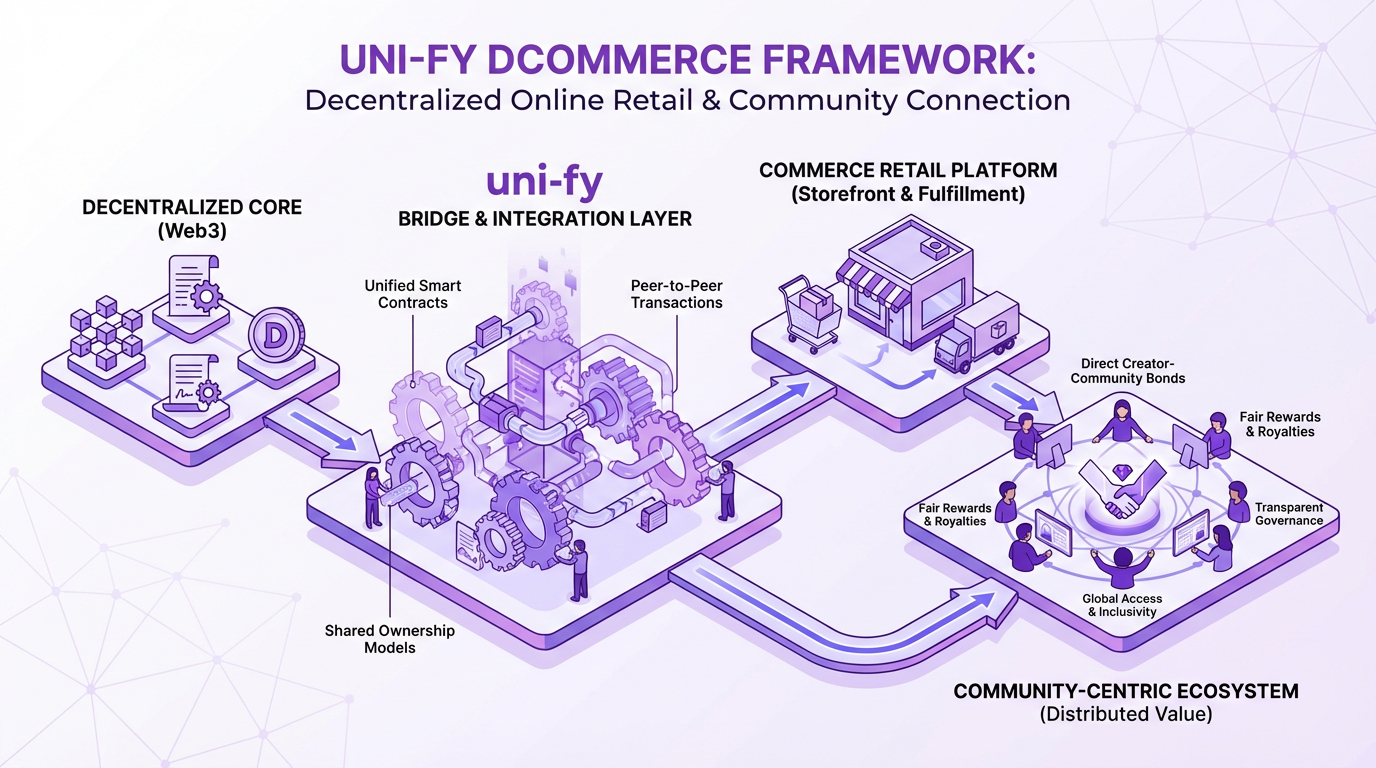
The Power of uni-fy DCommerce: Revolutionizing Online Retail with Web3
The Power of uni-fy DCommerce: Revolutionizing Online Retail with Web3
The digital economy is on the cusp of its next major evolution, moving beyond the centralized models that have dominated online retail for decades. This shift is powered by Web3 technologies, giving rise to Decentralized Commerce, or DCommerce. uni-fy is a pioneering force in this space, developing a robust uni-fy dcommerce platform that promises to fundamentally transform how we buy and sell online. By integrating blockchain, smart contracts, and decentralized identity, uni-fy is building an ecosystem that prioritizes user empowerment, transparency, and efficiency over traditional, intermediary-heavy systems.uni-fy's approach to DCommerce is about more than just new technology; it's about restoring trust and control to the hands of users. In an era where data breaches are common and platform fees can be exorbitant, uni-fy offers a compelling alternative. It envisions a future where online transactions are secure, private, and conducted directly between parties, fostering a more equitable and resilient digital marketplace. This article delves into the transformative power of uni-fy DCommerce and its potential to reshape the future of online retail.
Key Web3 E-commerce Growth Statistics • The global Web3 market size is projected to reach $81.5 billion by 2030, with e-commerce being a primary application area. • 45% of online shoppers are concerned about the security of their personal data on traditional e-commerce sites. • Blockchain technology can reduce payment processing costs by up to 80% for cross-border transactions, a significant advantage for DCommerce. • The market for NFTs, a form of digital commerce, grew by over 21,000% in 2021, indicating strong consumer interest in digital ownership.
Empowering Sellers with uni-fy DCommerce Tools
For businesses, uni-fy DCommerce offers a suite of tools designed to streamline operations, reduce costs, and expand reach. Traditional e-commerce platforms often impose high listing fees, transaction commissions, and strict terms of service that can limit a seller's autonomy. uni-fy, conversely, provides a more open and cost-effective environment, allowing sellers to retain more of their revenue and control over their storefronts.Key features include direct peer-to-peer transactions, which minimize intermediary fees, and transparent smart contracts that automate payment and fulfillment processes. This not only reduces administrative overhead but also builds greater trust with customers, as all transaction details are immutably recorded on the blockchain. For those looking to establish their presence, understanding how to build a dcommerce store on uni-fy is a straightforward process designed for efficiency.
Seller Benefits: uni-fy DCommerce vs. Traditional Platforms
uni-fy DCommerce provides distinct advantages for sellers compared to conventional e-commerce platforms, particularly in terms of cost, control, and transparency.| Feature | uni-fy DCommerce Seller | Traditional E-commerce Seller |
|---|---|---|
| Transaction Fees | Lower (network fees) | High (platform commissions) |
| Data Ownership | Seller-controlled | Platform-owned |
| Store Customization | High (Web3 native tools) | Limited by platform templates |
| Payment Processing | Instant crypto, smart contract escrow | Delayed, bank transfers, payment processor fees |
| Global Reach | Borderless crypto payments | Restricted by fiat banking/geography |
| Dispute Resolution | Smart contract automation, community governance | Centralized platform support, often slow |
Enhancing Buyer Confidence and Privacy
On the buyer side, uni-fy DCommerce addresses critical concerns around data privacy, security, and product authenticity. In an age of frequent data breaches and targeted advertising, consumers are increasingly wary of sharing personal information with centralized platforms. uni-fy's decentralized identity solutions allow buyers to transact pseudonymously, giving them complete control over their data and reducing their digital footprint.Furthermore, the transparency of blockchain ensures that buyers can verify the authenticity of products and the reputation of sellers through immutable on-chain records. This eliminates the risk of counterfeits and provides a higher degree of confidence in purchases. The shift towards a more secure and private shopping experience is a significant draw for the future of e-commerce web3, and uni-fy is making this a reality.
4-Step Secure Purchase Flow on uni-fy DCommerce
The Interoperability Advantage of uni-fy DCommerce
One of the most powerful aspects of uni-fy DCommerce is its inherent interoperability within the broader Web3 ecosystem. Unlike siloed traditional e-commerce platforms, uni-fy can seamlessly integrate with other decentralized applications (dApps), protocols, and services. This means that a product purchased on uni-fy could potentially be tracked by a decentralized supply chain dApp, financed by a DeFi lending protocol, or even tokenized as an NFT for secondary market trading.This interconnectedness unlocks entirely new possibilities for commerce, creating a more dynamic and flexible marketplace. It allows for innovative business models and enhances the overall user experience by providing a holistic digital environment. The vision for a truly interconnected dcommerce platform is being realized through uni-fy's commitment to open standards and blockchain interoperability.
Expert Insight: "Interoperability is the silent killer of walled gardens. uni-fy DCommerce isn't just building a marketplace; it's building a node in a vast, interconnected Web3 economy. This means products, payments, and even reputations can flow freely between different applications, creating unprecedented value and flexibility for users."This interoperability also extends to digital assets. uni-fy DCommerce can facilitate the buying and selling of NFTs, digital collectibles, and other tokenized assets with the same security and transparency as physical goods. This opens up new revenue streams for creators and provides consumers with verifiable ownership of digital items, further blurring the lines between physical and digital commerce.
Diagram: uni-fy DCommerce Interoperability [uni-fy DCommerce Marketplace] ↔ [Decentralized Identity (DID)] ↔ [Web3 Wallets] ↔ [DeFi Protocols (Lending/Staking)] ↔ [NFT Marketplaces] ↔ [Supply Chain DApps] ↔ [DAO Governance]
The Future Outlook for uni-fy DCommerce
The trajectory for uni-fy DCommerce is one of continuous innovation and expansion. As Web3 technologies mature and gain wider adoption, uni-fy is poised to become a leading force in the decentralized economy. The platform's focus on user empowerment, security, and efficiency addresses many of the shortcomings of current e-commerce models, making it an attractive option for both businesses and consumers.Future developments will likely include enhanced AI integration for personalized experiences, further advancements in cross-chain compatibility, and the expansion of its global community. uni-fy is not just building a platform; it's cultivating an ecosystem that will define the next generation of online retail, offering a glimpse into a more equitable and transparent digital future. The power of uni-fy dcommerce lies in its ability to adapt and innovate in a rapidly evolving technological landscape.
Frequently Asked Questions
What makes uni-fy DCommerce more secure than traditional e-commerce?
uni-fy DCommerce is more secure due to its use of blockchain technology, which provides immutable transaction records and cryptographic security. It also leverages decentralized identity, reducing the risk of personal data breaches associated with centralized servers.How do transaction fees work on uni-fy DCommerce?
Transaction fees on uni-fy DCommerce are typically network fees (gas fees) paid in cryptocurrency, which are generally lower and more transparent than the percentage-based commissions charged by traditional e-commerce platforms. These fees compensate the network validators.Can small businesses benefit from uni-fy DCommerce?
Absolutely. uni-fy DCommerce lowers barriers to entry for small businesses by reducing overhead costs, eliminating intermediaries, and providing access to a global, crypto-native customer base. It offers greater control and transparency, which can be highly beneficial for independent sellers.What is the role of decentralized identity in uni-fy DCommerce?
Decentralized identity (DID) allows users to control their personal data and transact pseudonymously on uni-fy DCommerce. It enhances privacy by enabling selective sharing of verifiable credentials without relying on centralized identity providers, reducing the risk of identity theft.How does uni-fy DCommerce handle disputes or returns?
uni-fy DCommerce utilizes smart contracts to automate dispute resolution based on predefined conditions. For returns, the smart contract can be programmed to release funds back to the buyer upon verified return of the product, ensuring fairness and transparency without manual intervention.Key Takeaways
- User Empowerment: uni-fy DCommerce shifts control and ownership from platforms to users, fostering a more equitable online retail environment.
- Cost Efficiency: By minimizing intermediaries and leveraging blockchain, uni-fy significantly reduces transaction fees and operational costs for sellers.
- Enhanced Security & Privacy: Decentralized identity and cryptographic security protect user data and ensure secure, transparent transactions.
- Web3 Interoperability: uni-fy seamlessly integrates with the broader Web3 ecosystem, unlocking new business models and enhancing the overall user experience.
- Future of Retail: uni-fy DCommerce is pioneering the next generation of online retail, offering a resilient, transparent, and user-centric alternative to traditional e-commerce.