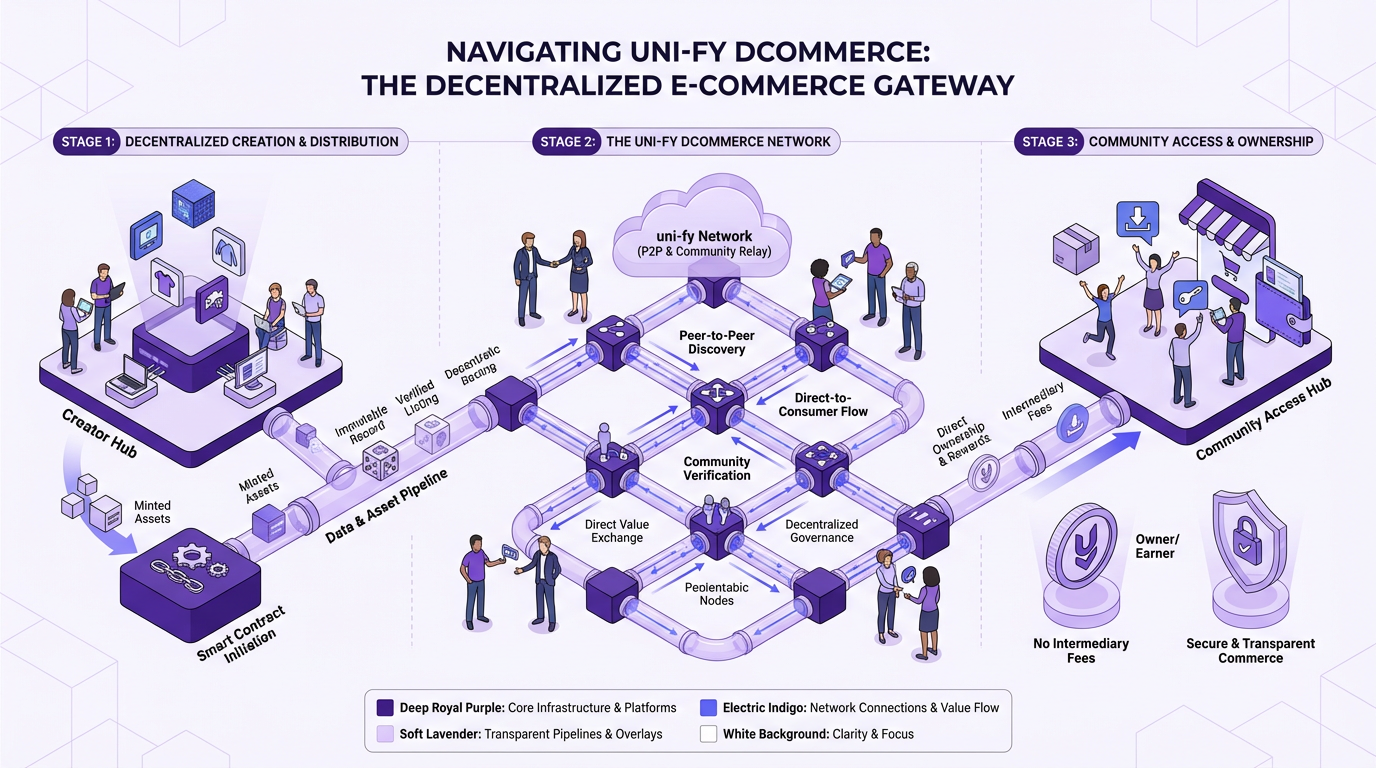
Navigating uni-fy DCommerce: Your Gateway to Decentralized E-commerce
Navigating uni-fy DCommerce: Your Gateway to Decentralized E-commerce
The digital economy is rapidly evolving, and at its cutting edge is uni-fy dcommerce, a transformative approach to online retail that leverages the power of Web3. This innovative model moves beyond the limitations of traditional e-commerce, offering a more secure, transparent, and user-centric environment for buying and selling goods and services. For those seeking to understand or engage with this next generation of digital marketplaces, uni-fy dcommerce represents a crucial step forward, promising greater autonomy for both merchants and consumers.uni-fy dcommerce is not just a buzzword; it's a practical application of blockchain technology designed to solve real-world problems in online commerce, such as data privacy concerns, high transaction fees, and centralized control. By exploring the capabilities of uni-fy dcommerce, individuals and businesses can gain a competitive edge in a rapidly changing digital landscape. This article serves as a navigational guide to understanding its core components and benefits.
Key Web3 E-commerce Adoption Statistics • Over $2.5 billion in NFT sales were recorded in the first half of 2021, indicating growing interest in digital asset commerce. • 75% of consumers are more likely to purchase from brands that offer transparent supply chain information, a core dcommerce benefit. • The average e-commerce platform takes a 5-15% commission on sales, which dcommerce aims to significantly reduce. • Blockchain-based payment solutions can reduce international transaction costs by up to 80% compared to traditional methods.
What Exactly is uni-fy DCommerce?
uni-fy dcommerce stands for decentralized commerce, and it's a paradigm shift from the centralized e-commerce models we've grown accustomed to. Instead of relying on a single company (like Amazon or eBay) to facilitate transactions, store data, and enforce rules, uni-fy dcommerce distributes these functions across a network of participants. This distribution is primarily enabled by blockchain technology, which creates an immutable and transparent ledger for all transactions and interactions.The fundamental idea behind uni-fy dcommerce is to empower users. This means giving consumers direct ownership of their data and digital assets, and providing merchants with more control over their storefronts and customer relationships, free from the dictates of a central authority. It's about creating a more equitable and efficient marketplace where trust is built into the system itself, rather than relying on intermediaries. For a deeper dive into the foundational concepts, consider exploring dcommerce explained.
The Decentralized Marketplace Architecture
The architecture of a uni-fy dcommerce marketplace is fundamentally different from its centralized counterparts. Instead of a single server hosting all data and logic, it utilizes a network of nodes. Smart contracts, self-executing agreements stored on the blockchain, automate key processes like product listings, payment processing, and dispute resolution. This eliminates the need for trusted third parties, reducing costs and increasing efficiency.| Component | Centralized E-commerce | uni-fy DCommerce |
|---|---|---|
| Platform Host | Single company server | Distributed blockchain network |
| Data Storage | Centralized database | Decentralized storage (e.g., IPFS) |
| Payment Processing | Third-party payment gateways | Direct crypto payments via smart contracts |
| Identity Management | Platform-controlled accounts | Self-sovereign identity (SSI) |
| Governance | Platform dictates rules | Community-driven (DAO) |
| Intermediaries | Many (banks, payment processors) | Few to none |
Key Benefits for Merchants and Consumers
Both merchants and consumers stand to gain significantly from the adoption of uni-fy dcommerce. For merchants, the primary benefits include drastically reduced transaction fees, direct access to customer data (with user consent), and the ability to build more resilient and censorship-resistant storefronts. They can also leverage tokenization for loyalty programs, crowdfunding, and even fractional ownership of products, opening up new revenue streams and engagement models. Building a robust dcommerce platform can unlock these advantages.Consumers, on the other hand, benefit from enhanced data privacy and security, as their personal information is not stored on a central server vulnerable to breaches. They gain greater control over their digital identities and can verify product authenticity through blockchain records. Furthermore, the transparency of transactions fosters trust, and the potential for lower prices due to reduced intermediary costs is an attractive proposition. The overall experience aims to be more empowering and fair, aligning with the vision of the future of e-commerce web3.
4-Step Merchant Onboarding to uni-fy DCommerce
For merchants looking to transition to or establish a presence in uni-fy dcommerce, here’s a simplified framework:The Role of Web3 in Shaping uni-fy DCommerce
Web3 is the overarching term for the next generation of the internet, characterized by decentralization, blockchain technology, and user ownership. uni-fy dcommerce is a direct application of Web3 principles to the realm of e-commerce. It utilizes blockchain for immutable record-keeping, smart contracts for automated agreements, and decentralized identifiers (DIDs) for self-sovereign identity. This technological foundation allows for the creation of marketplaces that are resistant to censorship, transparent by design, and owned by their communities rather than corporations.This shift is not just about technology; it's about a philosophical change towards a more open and fair internet. As Web3 infrastructure matures, uni-fy dcommerce will become even more seamless and accessible, paving the way for mainstream adoption. The ability to create a dcommerce platform that truly serves its users is a testament to the power of Web3.
Expert Insight: "The biggest hurdle for uni-fy dcommerce isn't the underlying tech; it's the user experience. We need to abstract away the complexity of crypto wallets and gas fees so that the average consumer can shop on a decentralized platform without even realizing they're using Web3. Simplicity and familiarity will drive mass adoption."
Interoperability and the Future of uni-fy DCommerce
One of the exciting aspects of uni-fy dcommerce is its potential for interoperability. Different decentralized marketplaces and protocols can communicate and share data, creating a more interconnected and fluid digital economy. This means a product listed on one dcommerce platform could potentially be discovered and purchased through another, fostering a truly global and open marketplace. This vision of interconnectedness is central to the long-term success of uni-fy dcommerce.Diagram: uni-fy DCommerce Interoperability Merchant DApp → Blockchain Protocol A → Cross-Chain Bridge → Blockchain Protocol B → Consumer DApp → Payment Settlement
Getting Started with uni-fy DCommerce
For individuals and businesses interested in engaging with uni-fy dcommerce, the first step is often education. Understanding the basics of blockchain, cryptocurrencies, and Web3 wallets is essential. For merchants, exploring existing decentralized marketplaces or considering how to build a dcommerce store can be a valuable starting point. Many platforms offer user-friendly interfaces that simplify the process of listing products and managing sales.As the ecosystem matures, more tools and resources will become available, making it easier for anyone to participate. The key is to approach uni-fy dcommerce with an open mind, recognizing its potential to reshape online commerce for the better. The journey into decentralized commerce is just beginning, and uni-fy is at the forefront of this exciting evolution.
Frequently Asked Questions
What does 'decentralized' mean in uni-fy dcommerce?
'Decentralized' means that no single entity controls the marketplace. Instead, power, data, and transaction processing are distributed across a network of participants, typically using blockchain technology, which enhances security and transparency.How does uni-fy dcommerce protect user data and privacy?
uni-fy dcommerce protects user data by giving individuals ownership and control over their personal information, often through self-sovereign identity solutions. Data is not stored on central servers vulnerable to breaches, and transactions are pseudonymous on the blockchain.Are transactions on uni-fy dcommerce secure?
Yes, transactions on uni-fy dcommerce are highly secure due to the cryptographic nature of blockchain technology and the use of smart contracts. These technologies ensure immutability, transparency, and resistance to fraud, making transactions more secure than many traditional methods.What cryptocurrencies are used in uni-fy dcommerce?
While specific cryptocurrencies vary by platform, common ones include Ethereum (ETH), stablecoins like USDC or DAI, and native tokens of specific dcommerce platforms. The choice often depends on the underlying blockchain network and the platform's design.Is uni-fy dcommerce only for digital products like NFTs?
No, uni-fy dcommerce is not limited to digital products. While NFTs are a prominent example, it can facilitate the sale of physical goods, services, and any other item that can be represented and transacted on a blockchain, offering verifiable authenticity and ownership.Key Takeaways
- User Empowerment: uni-fy dcommerce prioritizes user control over data, privacy, and marketplace governance.
- Blockchain Foundation: It leverages blockchain for transparency, security, and immutable transaction records.
- Benefits for All: Merchants gain lower fees and direct customer access; consumers get enhanced privacy and verifiable authenticity.
- Web3 Integration: uni-fy dcommerce is a core application of Web3 principles, driving the next internet evolution.
- Future-Proofing E-commerce: Embracing uni-fy dcommerce prepares businesses for a more equitable, efficient, and secure digital retail future.