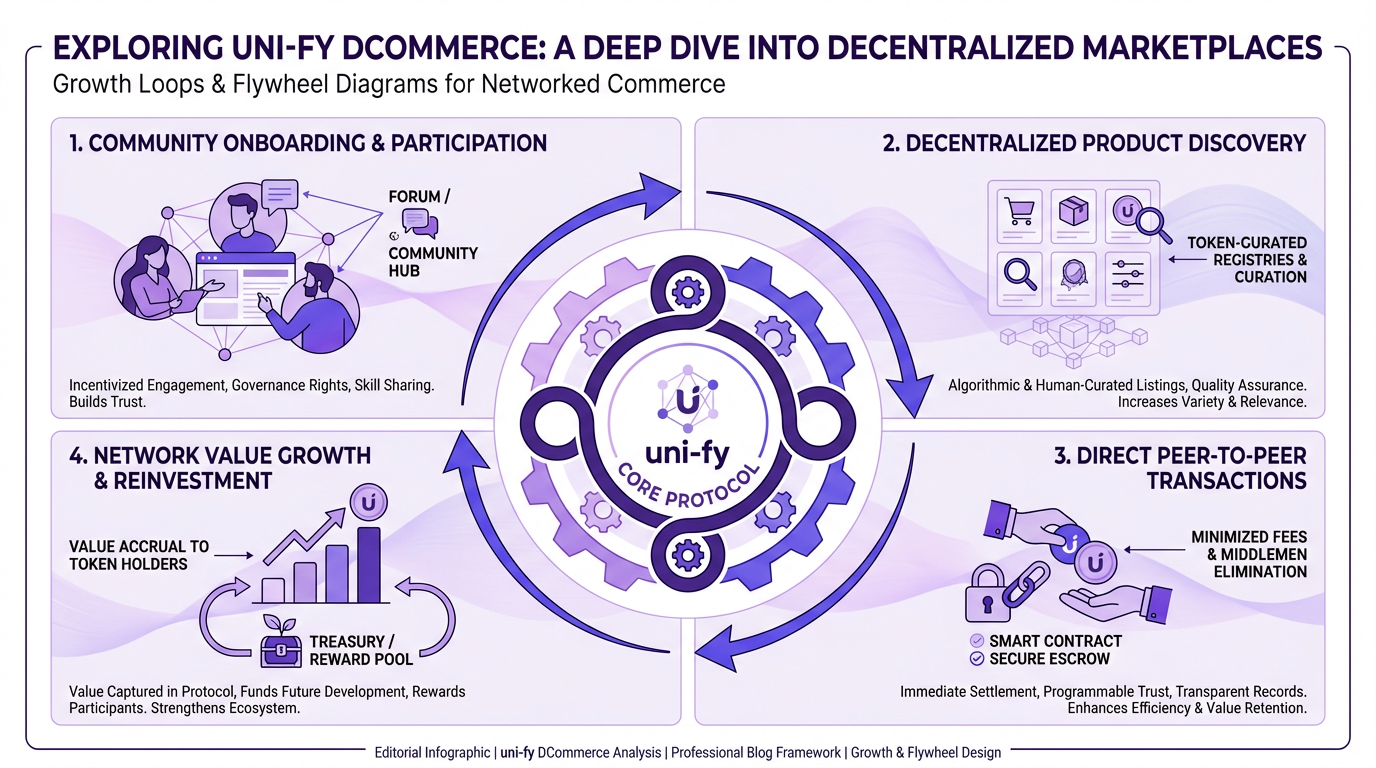
Exploring uni-fy DCommerce: A Deep Dive into Decentralized Marketplaces
Exploring uni-fy DCommerce: A Deep Dive into Decentralized Marketplaces
The landscape of online commerce is undergoing a profound transformation, moving towards models that prioritize user control, transparency, and efficiency. At the heart of this evolution is DCommerce, or Decentralized Commerce, a paradigm shift enabled by Web3 technologies. uni-fy is at the forefront of this movement, developing a robust uni-fy dcommerce platform that redefines how businesses and consumers interact in the digital realm. This approach moves beyond the limitations of traditional e-commerce, offering a more equitable and secure environment for all participants.uni-fy's DCommerce initiative is not merely an incremental improvement; it's a foundational redesign of online marketplaces. By leveraging blockchain and smart contracts, uni-fy aims to eliminate the need for centralized intermediaries, thereby reducing costs, enhancing data privacy, and fostering a truly trustless ecosystem. This deep dive will explore the intricate mechanisms and benefits that make uni-fy DCommerce a pivotal player in the future of online retail.
Key Decentralized Market Statistics • The global market for decentralized applications (dApps) is projected to reach over $368 billion by 2027, with commerce being a significant segment. • 75% of consumers are willing to pay more for products from brands that offer greater transparency and ethical practices, a core DCommerce advantage. • Blockchain-based supply chain solutions can reduce administrative costs by up to 30%, directly impacting DCommerce operational efficiency. • Over $10 billion was transacted on NFT marketplaces in Q3 2021 alone, demonstrating significant user comfort with decentralized digital asset commerce.
The Architectural Foundation of uni-fy DCommerce
The strength of uni-fy DCommerce lies in its underlying architecture, which is built on principles of decentralization and cryptographic security. Unlike traditional e-commerce platforms that rely on centralized servers and databases, uni-fy utilizes a distributed ledger technology (DLT) to record all transactions and interactions. This distributed nature ensures that no single point of failure can compromise the entire system, making it incredibly resilient and secure.Smart contracts are the operational backbone, automating agreements between buyers and sellers without the need for human intermediaries. These self-executing contracts are programmed to release funds or transfer ownership only when predefined conditions are met, ensuring fairness and reducing disputes. This programmatic trust is a cornerstone of the uni-fy DCommerce experience, providing a level of assurance rarely found in conventional online shopping.
Smart Contracts vs. Traditional Escrow Services
Understanding the role of smart contracts is essential for grasping the efficiency and security of uni-fy DCommerce. Traditional escrow services involve a third party holding funds until transaction conditions are met, which can be slow and incur fees. Smart contracts automate this process on the blockchain.| Feature | Smart Contracts (uni-fy DCommerce) | Traditional Escrow Services |
|---|---|---|
| Automation | Fully automated on blockchain | Manual intervention by third party |
| Fees | Network transaction fees (gas) | Service fees, often percentage-based |
| Speed | Near-instantaneous once conditions met | Can involve delays for verification |
| Transparency | Publicly verifiable on blockchain | Private agreement with escrow agent |
| Trust Model | Trustless (code is law) | Relies on trust in third-party agent |
Enhancing Supply Chain Transparency with uni-fy DCommerce
One of the most compelling applications of uni-fy DCommerce is its ability to revolutionize supply chain transparency. In traditional commerce, tracing a product's origin and journey can be opaque, leading to issues like counterfeiting, unethical sourcing, and inefficient logistics. uni-fy's blockchain-powered platform provides an immutable record of every step a product takes, from manufacturing to delivery.This level of transparency benefits both consumers and businesses. Consumers can verify the authenticity of products, ensuring they are purchasing genuine items and supporting ethical practices. Businesses gain a clearer view of their supply chain, enabling better inventory management, fraud prevention, and compliance. This enhanced visibility is a critical differentiator for a dcommerce platform like uni-fy, setting a new standard for accountability in retail.
6-Step Transparent Supply Chain Framework
The Economic Model of uni-fy DCommerce: Tokenomics and Governance
The economic model of uni-fy DCommerce is deeply intertwined with Web3's concept of tokenomics and decentralized governance. Unlike traditional platforms that extract value through high commissions, uni-fy aims to distribute value back to its community. This is often achieved through native utility tokens that can be used for transaction fees, staking, or participating in governance decisions.Users who hold these tokens can have a say in the platform's future development, fee structures, and feature implementations. This democratic approach ensures that the platform evolves in a way that benefits its users, not just a select few. This community-driven model is a hallmark of the Web3 era and a core strength of the uni-fy dcommerce ecosystem, fostering a sense of ownership and collective responsibility among its participants.
Expert Insight: "The true power of DCommerce isn't just in removing intermediaries; it's in aligning incentives. When users have a financial stake and a voice in the platform's governance, they become active contributors to its success. This creates a virtuous cycle of growth, innovation, and trust that centralized models simply can't replicate."Decentralized Autonomous Organizations (DAOs) play a crucial role in the governance of many DCommerce platforms, including uni-fy. DAOs allow token holders to vote on proposals, manage treasury funds, and collectively steer the direction of the platform. This ensures that uni-fy remains truly decentralized and responsive to the needs of its community, rather than being dictated by a corporate board. This innovative governance structure is a key aspect of what makes a dcommerce platform sustainable and resilient in the long term.
Diagram: uni-fy DCommerce Value Flow [Seller (Product/Service)] → [Smart Contract (Terms)] → [Buyer (Crypto Payment)] → [Blockchain (Immutable Record)] → [Token Holders (Governance/Rewards)] → [Platform Development (Community Input)]
The Future Impact of uni-fy DCommerce on Global Trade
The implications of uni-fy DCommerce extend far beyond individual transactions; they have the potential to reshape global trade. By lowering barriers to entry, reducing costs, and increasing transparency, uni-fy can empower small businesses and entrepreneurs worldwide to participate in the global economy on a more equal footing. This democratization of commerce can foster economic growth in developing regions and create new opportunities for innovation.Furthermore, the interoperability of blockchain networks means that DCommerce platforms like uni-fy can seamlessly connect with other decentralized applications and services, creating a vast, interconnected digital economy. This interconnectedness will unlock new business models, enhance user experiences, and accelerate the adoption of Web3 technologies across various industries. The vision for uni-fy dcommerce is not just about a better way to shop, but a better way to trade globally.
Frequently Asked Questions
What are smart contracts in uni-fy DCommerce?
Smart contracts in uni-fy DCommerce are self-executing agreements stored on the blockchain that automatically enforce the terms of a transaction between a buyer and seller. They eliminate the need for intermediaries, ensuring trustless and automated fulfillment of conditions like payment release upon delivery.How does uni-fy DCommerce ensure product authenticity?
uni-fy DCommerce ensures product authenticity through blockchain-based supply chain tracking. Each product's journey, from manufacturing to delivery, is recorded as an immutable entry on the blockchain, allowing consumers to verify its origin and genuine nature.Can I use fiat currency on uni-fy DCommerce?
While uni-fy DCommerce primarily operates with cryptocurrencies for decentralized transactions, many platforms offer integrations with fiat on-ramps and off-ramps. This allows users to convert fiat to crypto and vice-versa, bridging the gap between traditional finance and the decentralized economy.What is the role of tokens in uni-fy DCommerce?
Tokens in uni-fy DCommerce serve multiple purposes, including facilitating transactions (utility tokens), enabling participation in governance (governance tokens), and providing rewards for community contributions. They are integral to the platform's economic model and user incentives.How does uni-fy DCommerce protect user data and privacy?
uni-fy DCommerce protects user data and privacy through decentralized identity (DID) solutions, allowing users to control their personal information and share only what's necessary. Transactions are pseudonymous, and data is stored on a distributed ledger, reducing the risk of centralized data breaches.Key Takeaways
- Decentralized Architecture: uni-fy DCommerce is built on a resilient, distributed ledger technology, eliminating single points of failure and enhancing security.
- Smart Contract Automation: Smart contracts automate transactions, ensuring trustless execution of agreements and reducing the need for intermediaries.
- Supply Chain Transparency: Blockchain integration provides immutable records for product provenance, combating counterfeiting and promoting ethical sourcing.
- Tokenomics & Governance: A community-driven economic model with tokens empowers users with ownership and a voice in the platform's evolution.
- Global Impact: uni-fy DCommerce has the potential to democratize global trade, fostering economic growth and innovation by lowering barriers to entry.