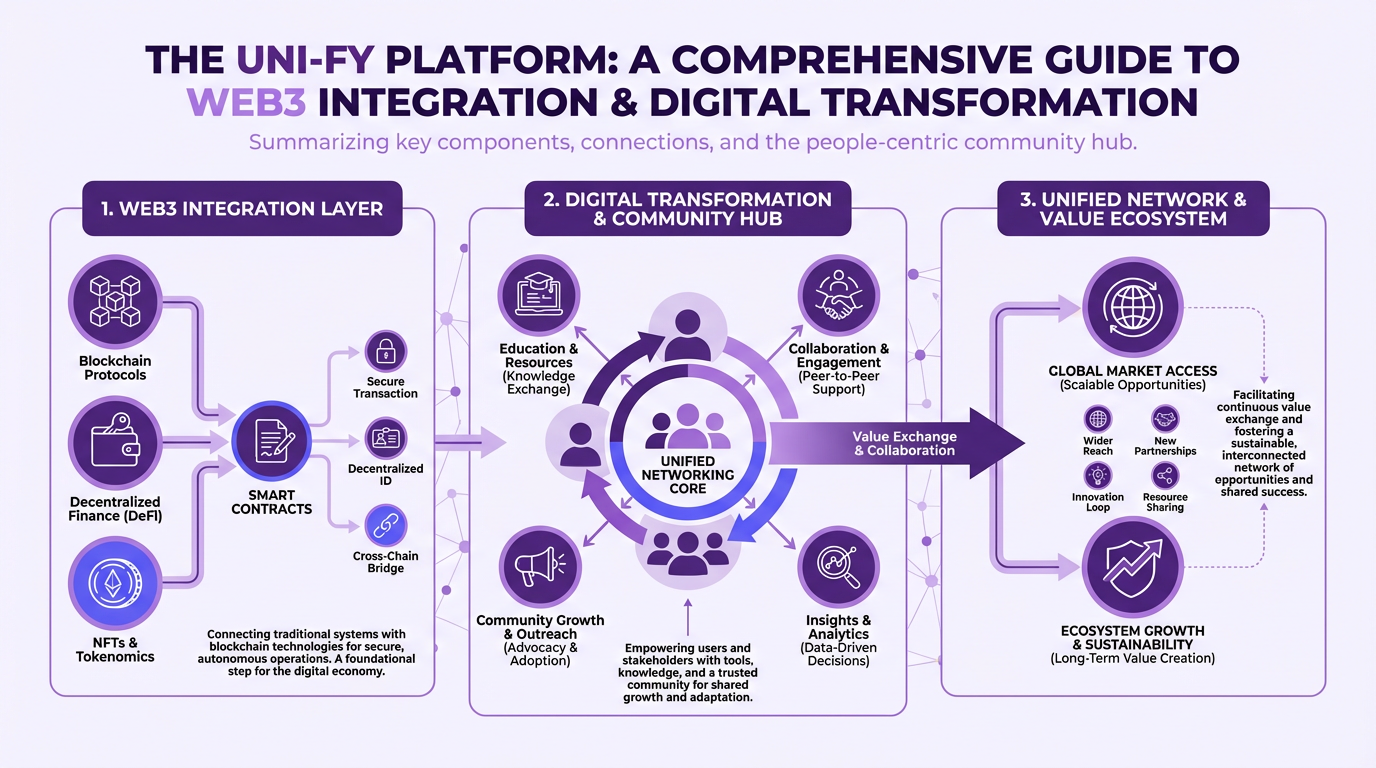
The Uni-fy Platform: A Comprehensive Guide to Web3 Integration and Digital Transformation
The Uni-fy Platform: A Comprehensive Guide to Web3 Integration and Digital Transformation
Table of Contents
- Introduction to the Uni-fy Platform
- Core Uni-fy Platform Features and Capabilities
- Strategic Advantages of Adopting the Uni-fy Platform
- Implementing the Uni-fy Platform: A Step-by-Step Approach
- Advanced Strategies for Maximizing Uni-fy Platform Value
- Industry Analysis: Uni-fy's Position in the Web3 Landscape
- Frequently Asked Questions
- Related Guides
Introduction to the Uni-fy Platform
The digital economy is undergoing a profound transformation, driven by the emergence of Web3 technologies. At the forefront of this evolution is the uni-fy platform, a robust and versatile ecosystem designed to bridge the gap between traditional enterprise systems and the decentralized future. This comprehensive guide serves as the definitive resource for understanding the uni-fy platform, its core functionalities, and its strategic implications for businesses seeking to innovate and secure their digital assets and operations. We will delve into the intricacies of its architecture, explore its diverse applications, and provide insights into how organizations can leverage its power to achieve unparalleled efficiency and transparency.Unlike conventional platforms, the uni-fy platform is engineered with a focus on interoperability, security, and user empowerment, embodying the core tenets of Web3. It offers a suite of tools and services that enable seamless integration of blockchain, AI, and IoT, creating a unified digital experience. This article will meticulously detail the uni-fy platform features, offering a deep dive into what makes it a critical infrastructure for the next generation of digital services. From its foundational architecture to its advanced capabilities, we aim to provide a holistic perspective that clarifies its value proposition and addresses common inquiries, including those often found in a uni-fy platform review.
Understanding the uni-fy platform is not merely about grasping a new technology; it's about recognizing a paradigm shift in how digital interactions, transactions, and data management are conducted. This guide will equip you with the knowledge to navigate this new landscape, offering a clear path for evaluating its potential impact on your operations. We will also touch upon aspects like uni-fy pricing models and the broader implications of uni-fy web3 integration, ensuring a well-rounded understanding of this transformative technology.
Key Web3 Adoption Statistics • The global Web3 market size is projected to reach over $81.5 billion by 2030, growing at a CAGR of 44.9% from 2023 to 2030 (Source: Grand View Research). • Over 50% of enterprises are exploring or implementing blockchain technology for various use cases (Source: IBM Institute for Business Value). • Decentralized applications (dApps) saw a 200% increase in active users in 2022 compared to the previous year (Source: DappRadar). • 75% of businesses believe that Web3 will significantly impact their industry within the next five years (Source: Deloitte).
Core Uni-fy Platform Features and Capabilities
The uni-fy platform is not a monolithic solution but a comprehensive ecosystem comprising several interconnected modules, each designed to address specific challenges in the digital domain. These uni-fy platform features are engineered for scalability, security, and ease of integration, making it an attractive option for diverse industries. At its heart lies a robust blockchain infrastructure that ensures data integrity and transparency, a cornerstone of any effective Web3 solution.Decentralized Identity Management
One of the most critical aspects of the uni-fy platform is its approach to decentralized identity. This feature empowers users and organizations with sovereign control over their digital identities, moving away from centralized authentication systems prone to data breaches. Through verifiable credentials and self-sovereign identity (SSI) principles, the platform facilitates secure and private interactions across various applications. This capability is frequently highlighted in positive uni-fy reviews, emphasizing its role in enhancing user privacy and security.- Self-Sovereign Identity (SSI): Users own and control their digital identities, issuing verifiable credentials without relying on central authorities.
- Secure Credential Exchange: Encrypted and authenticated exchange of digital credentials, reducing fraud and improving trust.
- Interoperable Standards: Adherence to open standards for identity, ensuring compatibility across different Web3 ecosystems.
Smart Contract Automation
The uni-fy platform leverages smart contracts to automate complex business logic and agreements on the blockchain. This eliminates the need for intermediaries, reduces operational costs, and accelerates transaction processing. From supply chain management to financial services, smart contracts on uni-fy provide an immutable and transparent record of all operations. This automation is a key differentiator when considering a uni-fy platform review against traditional enterprise software.Data Interoperability and Integration
Recognizing that no single platform operates in isolation, uni-fy prioritizes data interoperability. It offers a suite of APIs and SDKs that allow seamless integration with existing enterprise systems, IoT devices, and other blockchain networks. This capability ensures that organizations can transition to Web3 without disrupting their current infrastructure, making the uni-fy platform a practical choice for digital transformation.Expert Insight: "Many platforms claim Web3 readiness, but uni-fy's true strength lies in its pragmatic approach to integration. It doesn't demand a rip-and-replace strategy; instead, it provides the tools to incrementally decentralize and enhance existing systems, making the transition less daunting and more impactful for established enterprises."
Strategic Advantages of Adopting the Uni-fy Platform
Adopting the uni-fy platform offers a multitude of strategic advantages that extend beyond mere technological upgrade. It represents a fundamental shift in how businesses operate, interact with customers, and manage their data. These benefits are often central to any comprehensive uni-fy platform review, highlighting its competitive edge.Enhanced Security and Transparency
By leveraging blockchain technology, the uni-fy platform inherently provides a higher level of security and transparency compared to centralized systems. Data immutability, cryptographic encryption, and decentralized consensus mechanisms significantly reduce the risk of data breaches, fraud, and manipulation. This transparency builds trust among stakeholders, from customers to partners, and is a critical component of the uni-fy web3 vision.Operational Efficiency and Cost Reduction
Automation through smart contracts and streamlined data flows leads to significant operational efficiencies. Manual processes are minimized, reducing human error and accelerating transaction speeds. This directly translates to cost savings in administration, auditing, and dispute resolution, making the uni-fy platform a compelling investment.Future-Proofing with Web3 Capabilities
The digital landscape is constantly evolving. By integrating Web3 capabilities, the uni-fy platform future-proofs businesses, preparing them for the next generation of internet services. This includes readiness for tokenized economies, decentralized autonomous organizations (DAOs), and new forms of digital ownership, ensuring long-term relevance and adaptability.| Strategic Advantage | Best For | Difficulty | ROI Potential |
|---|---|---|---|
| Enhanced Security | Critical data, regulated industries | Medium | High |
| Operational Efficiency | High-volume transactions, complex workflows | Medium | Very High |
| Web3 Readiness | Innovative businesses, future-focused | Hard | Very High |
| Data Interoperability | Diverse tech stacks, ecosystem building | Medium | High |
Implementing the Uni-fy Platform: A Step-by-Step Approach
Successfully integrating the uni-fy platform into an existing business infrastructure requires a structured approach. This framework outlines the key steps to ensure a smooth transition and maximize the benefits of the uni-fy platform features.5-Step Uni-fy Platform Implementation Framework
Advanced Strategies for Maximizing Uni-fy Platform Value
Beyond basic implementation, organizations can employ advanced strategies to unlock the full potential of the uni-fy platform. These approaches leverage the platform's inherent flexibility and Web3 capabilities to create new business models and competitive advantages.Tokenization of Assets and Services
The uni-fy platform provides the infrastructure to tokenize various assets, both tangible and intangible. This can include real estate, intellectual property, loyalty points, or even digital services. Tokenization enables fractional ownership, increased liquidity, and new avenues for fundraising and value exchange. Exploring this capability can significantly enhance the value proposition of your offerings, a topic often discussed in advanced uni-fy platform review analyses.Building Decentralized Autonomous Organizations (DAOs)
For organizations seeking truly decentralized governance, the uni-fy platform can facilitate the creation and management of DAOs. This allows for community-driven decision-making, transparent treasury management, and automated execution of proposals through smart contracts. This represents a cutting-edge application of uni-fy web3 principles.Leveraging AI and Machine Learning with Blockchain Data
By combining the immutable and transparent data records on the uni-fy blockchain with advanced AI and machine learning algorithms, businesses can derive deeper insights and build more intelligent applications. This synergy allows for predictive analytics, enhanced fraud detection, and personalized user experiences, pushing the boundaries of what's possible with uni-fy platform features.Diagram: Uni-fy Platform Value Flow [Traditional Enterprise Systems] → [Uni-fy Integration Layer (APIs/SDKs)] → [Uni-fy Blockchain Core (Smart Contracts, Identity)] → [Decentralized Applications (dApps)] → [End-Users/Partners] → [Feedback Loop to Traditional Enterprise Systems]
Industry Analysis: Uni-fy's Position in the Web3 Landscape
The Web3 landscape is dynamic and competitive, with numerous platforms vying for market share. The uni-fy platform distinguishes itself through its comprehensive approach, focusing on enterprise-grade solutions that prioritize security, scalability, and seamless integration. While many platforms focus solely on specific blockchain protocols or niche applications, uni-fy aims to provide a holistic ecosystem that supports a wide range of industries, from finance and supply chain to healthcare and entertainment.Competitive uni-fy reviews often highlight its emphasis on developer-friendliness and robust documentation, which lowers the barrier to entry for businesses looking to experiment with or fully adopt Web3 technologies. Its commitment to open standards and interoperability ensures that solutions built on uni-fy are not siloed but can interact with the broader decentralized web. Furthermore, the transparent uni-fy pricing structure and dedicated support differentiate it from platforms with opaque cost models or limited enterprise-level assistance. The platform's strategic partnerships and ongoing development roadmap underscore its ambition to be a foundational layer for the decentralized internet, making uni-fy web3 a significant player in the evolving digital economy.
Frequently Asked Questions
What is the primary purpose of the uni-fy platform?
The uni-fy platform's primary purpose is to provide an enterprise-grade ecosystem for businesses to seamlessly integrate Web3 technologies, such as blockchain and decentralized identity, into their existing operations. It aims to enhance security, transparency, and efficiency while future-proofing digital infrastructure.How does uni-fy ensure data security and privacy?
Uni-fy ensures data security and privacy through its foundational blockchain infrastructure, which provides immutability and cryptographic encryption. It also implements decentralized identity management (SSI) to give users sovereign control over their data, minimizing reliance on centralized data stores.What are the key uni-fy platform features for developers?
Key uni-fy platform features for developers include comprehensive APIs and SDKs for easy integration, robust smart contract development tools, and support for various blockchain protocols. These tools enable rapid development of decentralized applications (dApps) and custom Web3 solutions.Can the uni-fy platform integrate with existing enterprise systems?
Yes, the uni-fy platform is designed for seamless integration with existing enterprise systems. It offers a suite of APIs, connectors, and SDKs that allow businesses to connect their legacy applications and databases with uni-fy's Web3 capabilities without a complete overhaul.What is the typical uni-fy pricing model?
While specific uni-fy pricing details can vary based on usage and enterprise requirements, the model typically involves a combination of subscription tiers, transaction-based fees for blockchain operations, and custom solutions for large-scale deployments. It's designed to be transparent and scalable to different business needs.Related Guides
- Uni-fy Platform Features - Comprehensive guide to uni-fy platform features
- Uni-fy Platform Review - Comprehensive guide to uni-fy platform review
- Uni-fy Reviews - Comprehensive guide to uni-fy reviews
- Uni-fy Pricing - Comprehensive guide to uni-fy pricing
- Uni-fy Web3 - Comprehensive guide to uni-fy web3