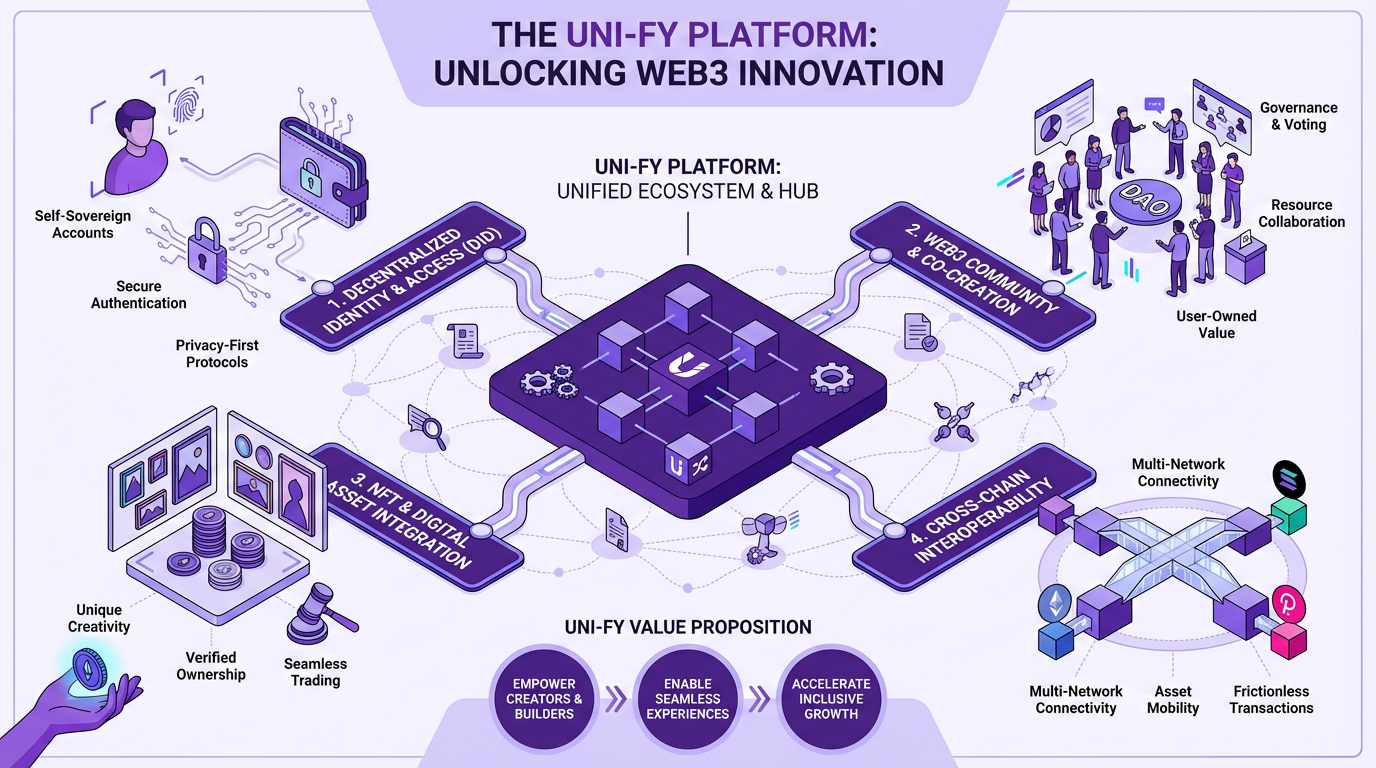
The Definitive Guide to the Uni-fy Platform: Unlocking Web3 Innovation
The Definitive Guide to the Uni-fy Platform: Unlocking Web3 Innovation
Table of Contents
- Introduction: The Uni-fy Platform Explained
- Core Components of the Uni-fy Platform Architecture
- Key Uni-fy Platform Features and Their Impact
- Implementing Uni-fy: A Strategic Onboarding Framework
- Advanced Strategies for Maximizing Your Uni-fy Investment
- The Uni-fy Platform in the Web3 Ecosystem
- Frequently Asked Questions
- Related Guides
Introduction: The Uni-fy Platform Explained
In an increasingly interconnected digital world, organizations demand robust, scalable, and secure solutions to manage their operations, data, and interactions. The uni-fy platform emerges as a pivotal technology, designed to streamline complex processes and foster seamless collaboration across diverse environments. This comprehensive guide delves into the intricacies of the uni-fy platform, offering an authoritative overview for decision-makers, technical architects, and curious innovators alike. We'll explore its foundational architecture, dissect its powerful features, and outline strategic approaches to leverage its full potential. By the end of this article, you will possess a deep understanding of how the uni-fy platform stands as a cornerstone for modern digital transformation, particularly within the burgeoning Web3 landscape.This guide is engineered to be the definitive resource for understanding the uni-fy platform, moving beyond superficial descriptions to provide actionable insights and expert perspectives. We aim to equip you with the knowledge necessary to evaluate, implement, and optimize your engagement with this transformative technology, ensuring you can harness its capabilities to drive efficiency, innovation, and competitive advantage.
Core Components of the Uni-fy Platform Architecture
The uni-fy platform is not merely a collection of tools; it's an intricately designed ecosystem built on a modular and scalable architecture. At its heart, the platform integrates various services and functionalities, ensuring a cohesive and unified experience. Understanding these core components is crucial for appreciating the platform's power and flexibility.Foundational Layers and Interoperability
The platform's architecture is typically segmented into several layers, each responsible for specific functionalities. This layered approach enhances security, simplifies maintenance, and allows for independent scaling of different services. Interoperability is a key design principle, enabling the uni-fy platform to connect with existing legacy systems and emerging technologies, including those within the Web3 space.- Data Abstraction Layer: This layer standardizes data inputs and outputs, ensuring consistency and facilitating seamless data exchange across different modules and external integrations.
- Service Orchestration Layer: Responsible for managing and coordinating the various microservices that comprise the uni-fy platform, ensuring efficient resource allocation and process flow.
- Security & Identity Layer: A robust framework for authentication, authorization, and data encryption, critical for protecting sensitive information and maintaining compliance.
- API Gateway: Provides a single entry point for external systems and applications to interact with the uni-fy platform, simplifying integration and enhancing security.
Key Platform Adoption Statistics • 72% of enterprises report increased operational efficiency after adopting integrated platforms, according to a 2023 Gartner study. • Platforms offering robust API capabilities see 1.5x faster integration times compared to those with limited interfaces. • Companies leveraging unified platforms experience a 20-30% reduction in IT overhead costs within the first two years. • The global platform-as-a-service (PaaS) market is projected to grow at a CAGR of 21.3% from 2023 to 2030, highlighting increasing demand for integrated solutions like the uni-fy platform.
Key Uni-fy Platform Features and Their Impact
The true value of the uni-fy platform lies in its comprehensive suite of features, each meticulously designed to address specific business challenges and unlock new opportunities. From advanced analytics to seamless collaboration tools, the uni-fy platform features are engineered for performance and user-centricity.Feature Deep Dive: Driving Efficiency and Innovation
Let's examine some of the standout features and their practical implications:- Unified Data Management: Centralizes disparate data sources, providing a single source of truth. This eliminates data silos, improves data quality, and enables more informed decision-making.
- Automated Workflows: Streamlines repetitive tasks and complex processes through intelligent automation, reducing manual effort and minimizing errors.
- Real-time Analytics & Reporting: Offers dynamic dashboards and customizable reports, providing immediate insights into key performance indicators and operational health.
- Secure Collaboration Tools: Facilitates secure communication and document sharing among teams, partners, and stakeholders, fostering a more connected and productive environment.
- Scalable Infrastructure: Built to handle fluctuating workloads and growing data volumes, ensuring consistent performance as your organization expands.
Expert Insight: "Many platforms promise integration, but the uni-fy platform delivers true unification. Its strength isn't just connecting systems; it's about creating a coherent operational narrative from fragmented data. This shift from 'connected' to 'unified' is where real competitive advantage is forged, especially when considering the complexities of decentralized data in Web3."
Implementing Uni-fy: A Strategic Onboarding Framework
Successful adoption of the uni-fy platform requires more than just technical deployment; it demands a strategic approach to planning, implementation, and ongoing optimization. This framework outlines the critical steps to ensure a smooth transition and maximize your return on investment.5-Step Uni-fy Implementation Framework
Advanced Strategies for Maximizing Your Uni-fy Investment
Beyond basic implementation, unlocking the full potential of the uni-fy platform involves strategic thinking and leveraging its advanced capabilities. This section explores how organizations can push the boundaries of what's possible with uni-fy.Leveraging AI and Machine Learning within Uni-fy
The uni-fy platform is increasingly integrating AI and machine learning capabilities to enhance its core functionalities. This allows for predictive analytics, intelligent automation, and personalized user experiences. For instance, AI-driven insights can optimize resource allocation, predict potential system failures, or even personalize content delivery based on user behavior. Organizations should explore how these embedded AI features can elevate their operations.The Role of Uni-fy in a Decentralized Future
As the digital landscape shifts towards decentralization, the uni-fy platform is strategically positioned to support and integrate with Web3 technologies. The concept of uni-fy web3 is not just a theoretical aspiration but a practical evolution. By providing secure, interoperable bridges between traditional enterprise systems and decentralized applications (dApps), uni-fy can facilitate the adoption of blockchain, smart contracts, and decentralized identity solutions. This positions the platform as a crucial enabler for businesses looking to navigate and thrive in the Web3 era.| Strategy | Best For | Difficulty | ROI Potential |
|---|---|---|---|
| AI-driven Process Optimization | Large-scale operations, predictive maintenance | Medium | Very High |
| Web3 Integration (e.g., DIDs) | Enhanced security, verifiable credentials | Hard | High |
| Custom API Development | Unique business logic, niche integrations | Medium | Medium |
| User Experience Personalization | Customer engagement, internal productivity | Easy | High |
The Uni-fy Platform in the Web3 Ecosystem
The emergence of Web3 represents a paradigm shift in how we interact with digital assets, data, and applications. The uni-fy platform is not just keeping pace with this evolution; it's actively shaping it. Its architectural flexibility and emphasis on secure, verifiable data flows make it an ideal candidate for bridging the gap between existing enterprise infrastructure and the decentralized future.Bridging Centralized and Decentralized Worlds
One of the most significant challenges in Web3 adoption for enterprises is the integration of decentralized technologies with their established, often centralized, systems. The uni-fy platform acts as a crucial intermediary, providing the necessary abstraction layers and API connectors to facilitate this integration. This allows businesses to experiment with blockchain-based solutions, manage digital assets, and leverage decentralized identity (DID) systems without a complete overhaul of their IT stack. The platform's ability to handle diverse data types and protocols is paramount in this context.Diagram: Uni-fy's Role in Web3 Integration
[Legacy Enterprise Systems] → [Uni-fy Platform (API Gateway & Data Abstraction)] → [Web3 Protocols (e.g., Blockchain, DIDs, Smart Contracts)] → [Decentralized Applications (dApps)] → [Feedback Loop to Uni-fy Platform for Data Synchronization]
Future-Proofing with Uni-fy
As the Web3 landscape continues to mature, the uni-fy platform's commitment to open standards and modular design ensures that it remains adaptable. Organizations leveraging uni-fy can confidently explore new Web3 opportunities, knowing that their core platform can evolve alongside the technology. This forward-thinking approach is critical for long-term digital resilience and innovation. For more insights into how users perceive the platform, exploring uni-fy reviews can offer valuable perspectives on its real-world impact and capabilities.For ongoing updates and deeper dives into specific features and industry trends, the uni-fy blog serves as an excellent resource, providing expert analysis and practical guidance on maximizing the platform's value.
Frequently Asked Questions
What is the primary purpose of the uni-fy platform?
The uni-fy platform is designed to provide a comprehensive, integrated solution for managing diverse business operations, data, and digital interactions. Its primary purpose is to unify disparate systems and processes, enhancing efficiency, security, and collaboration across an organization.How does the uni-fy platform support Web3 initiatives?
The uni-fy platform supports Web3 initiatives by offering robust integration capabilities, secure data management, and interoperability layers that can connect traditional enterprise systems with decentralized applications (dApps) and blockchain protocols. It acts as a bridge, enabling businesses to explore and adopt decentralized technologies effectively.What are the key benefits of adopting the uni-fy platform?
Adopting the uni-fy platform offers several key benefits, including increased operational efficiency through automation, improved data quality and insights from centralized management, enhanced security and compliance, and greater agility in adapting to new technologies and market demands.Is the uni-fy platform suitable for small businesses or primarily large enterprises?
The uni-fy platform is designed with scalability and flexibility in mind, making it suitable for a range of organizations from growing small businesses to large enterprises. Its modular architecture allows for tailored implementations that can scale up or down based on specific needs and budget constraints.Where can I find more information and user experiences about the uni-fy platform?
For more information, you can explore the official uni-fy website, read detailed uni-fy reviews from current users, and consult the uni-fy blog for articles and updates. These resources provide insights into features, use cases, and real-world applications of the platform.Related Guides
- Uni-fy Platform Features - Comprehensive guide to uni-fy platform features
- Uni-fy Reviews - Comprehensive guide to uni-fy reviews
- Uni-fy Blog - Comprehensive guide to uni-fy blog
- Uni-fy Web3 - Comprehensive guide to uni-fy web3