Website Builder for E-commerce: Crafting Your Online Store with Ease
Website Builder for E-commerce: Crafting Your Online Store with Ease
In today's digital-first economy, establishing an online presence is no longer optional for businesses looking to thrive. For many entrepreneurs and small to medium-sized businesses, the idea of building an e-commerce website can seem daunting, conjuring images of complex coding and expensive development teams. However, the advent of sophisticated website builder for e-commerce platforms has democratized the process, making it easier than ever to create a professional, functional online store and effectively sell products online.These platforms offer intuitive drag-and-drop interfaces, pre-designed templates, and integrated e-commerce functionalities, allowing users with little to no technical expertise to launch their digital storefronts quickly. This article will explore the benefits of using a website builder for your e-commerce venture, key features to look for, and how to leverage these tools to maximize your online sales potential.
Key E-commerce Website Builder Statistics • Over 30% of all e-commerce websites globally are powered by a single website builder platform (BuiltWith, 2023). • Businesses using website builders can launch their online stores up to 70% faster than those opting for custom development (Forbes, 2022). • The average conversion rate for e-commerce sites built with user-friendly platforms is 2-3%, with well-designed sites often exceeding this (Statista, 2023). • 85% of consumers expect a seamless experience across all devices, underscoring the importance of mobile-responsive designs offered by most builders (Google, 2023).
The Appeal of E-commerce Website Builders
The primary allure of a website builder for e-commerce lies in its simplicity and speed. Gone are the days when you needed to hire a web developer to build a website to sell products. These platforms empower business owners to take control of their online presence, from design to product management, without a steep learning curve.Accessibility and Cost-Effectiveness
Website builders are inherently designed for accessibility. Their visual editors and pre-built components significantly reduce the technical barriers to entry. This means less time spent on development and more time focused on your products and customers. Furthermore, they are typically subscription-based, offering predictable monthly costs that are often significantly lower than custom development or managing open-source platforms, especially for startups and small businesses.| Feature | Website Builder | Custom Development | Open-Source Platform |
|---|---|---|---|
| Setup Speed | Fast | Slow | Medium |
| Technical Skill | Low | High | Medium/High |
| Initial Cost | Low | High | Medium |
| Maintenance | Managed by platform | Your responsibility | Your responsibility |
| Customization | Limited by templates | Unlimited | High |
Essential Features to Look for in an E-commerce Website Builder
While ease of use is a major draw, a robust website builder for e-commerce must also offer a comprehensive suite of features to support your online business operations. When evaluating options, consider the following:Core E-commerce Functionality
4-Step Framework for Choosing Your E-commerce Website Builder
Selecting the right builder is a critical decision. Follow this framework to ensure you pick a platform that aligns with your business goals.Expert Insight: "Don't get bogged down by the sheer number of features. Focus on the core functionalities that directly impact your ability to sell and serve customers. A clean, fast, and mobile-friendly store with excellent product presentation will always outperform a feature-rich but clunky site."
Optimizing Your E-commerce Store Built with a Website Builder
Once your store is live, the work isn't over. Continuous optimization is key to driving sales and improving customer experience. Website builders often provide tools to help with this.Leveraging Built-in Marketing and Analytics
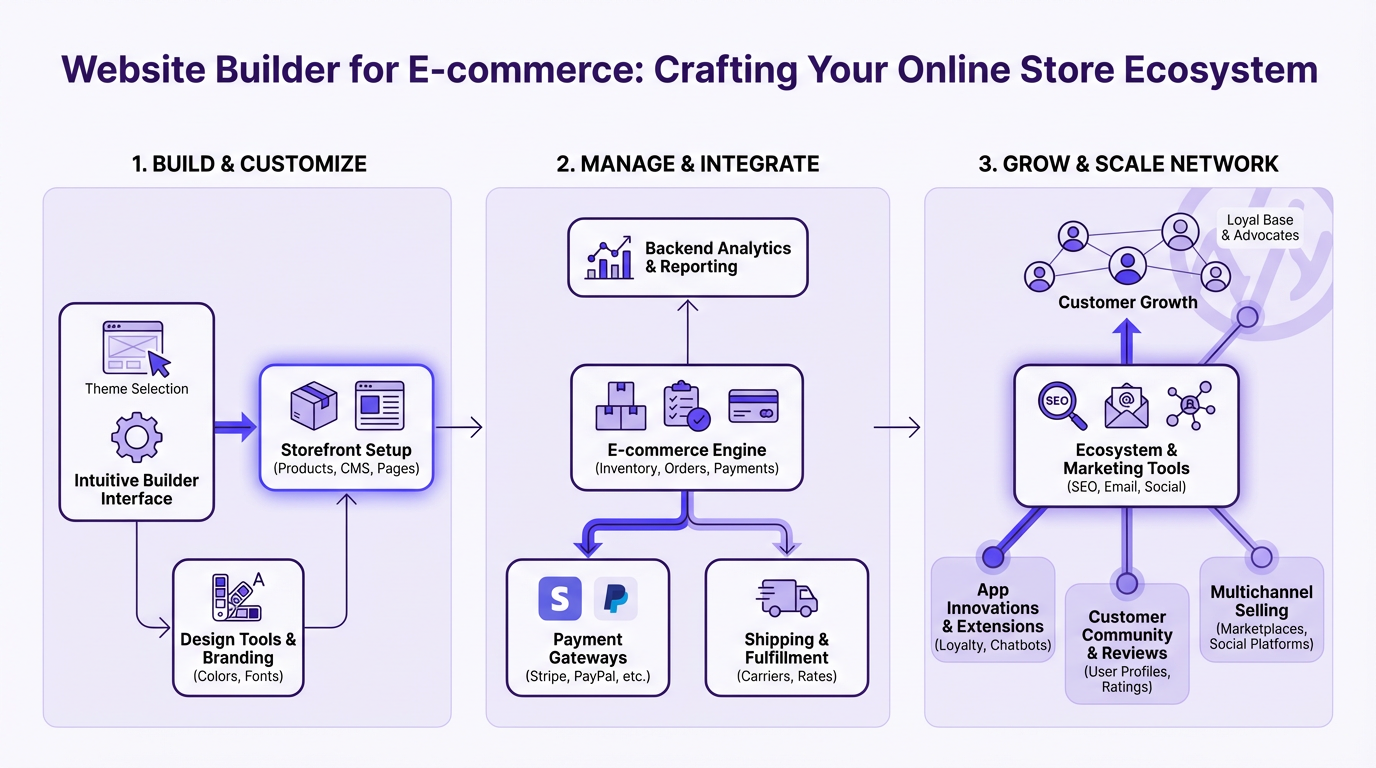
Most e-commerce website builders come with integrated marketing tools and analytics dashboards. Utilize these to track sales, identify popular products, understand customer behavior, and run promotional campaigns. Connect your store with Google Analytics for deeper insights. Explore options for integrating with affiliate marketing platforms if that's part of your strategy.Diagram: E-commerce Website Builder Workflow [Choose Template] → [Add Products & Content] → [Configure Payments & Shipping] → [Launch Store] → [Analyze & Optimize]
Scalability and Growth with Website Builders
While website builders are excellent for getting started, it's important to consider their scalability. Most leading platforms offer tiered plans that accommodate growing businesses, providing more features, higher bandwidth, and advanced reporting as your needs evolve. This allows you to start small and upgrade as your business expands, ensuring your platform can keep pace with your success in selling products online.For businesses with very specific, complex requirements or extremely high traffic volumes, there might come a point where a website builder's limitations become apparent. However, for the vast majority of small to medium businesses, these platforms offer more than enough power and flexibility to achieve significant growth.
Frequently Asked Questions
Is a website builder good for SEO?
Yes, most reputable e-commerce website builders include built-in SEO tools that allow you to optimize product pages, blog posts, and other content for search engines. They typically support custom meta titles, descriptions, clean URLs, and often integrate with SEO apps to help improve your rankings.Can I sell digital products using an e-commerce website builder?
Absolutely. Many e-commerce website builders, such as Shopify, BigCommerce, and Gumroad, offer robust support for selling digital products like e-books, software, music, and online courses. They handle secure file delivery and often integrate with email marketing for follow-ups.What is the typical cost of an e-commerce website builder?
The cost varies widely depending on the platform and the features you need. Basic plans can start from around $20-$30 per month, while more advanced plans for growing businesses might range from $70-$300+ per month. Always factor in potential transaction fees and app costs.Do I need a custom domain name with a website builder?
While most website builders offer a free subdomain (e.g., yourstore.shopify.com), it is highly recommended to purchase and connect a custom domain name (e.g., yourstore.com). A custom domain enhances your brand's professionalism, credibility, and memorability, and is better for SEO.Key Takeaways
- Ease of Use: E-commerce website builders simplify the process of creating an online store, making it accessible to non-technical users.
- Comprehensive Features: Look for platforms that offer robust product management, secure payment processing, and integrated marketing tools.
- Scalability: Choose a builder that can grow with your business, offering tiered plans and sufficient flexibility for future expansion.
- Design & UX: Prioritize platforms with attractive, mobile-responsive templates and customization options to create a professional and user-friendly store.
- Cost-Effective: Website builders provide a more affordable entry point into e-commerce compared to custom development, with predictable monthly expenses.