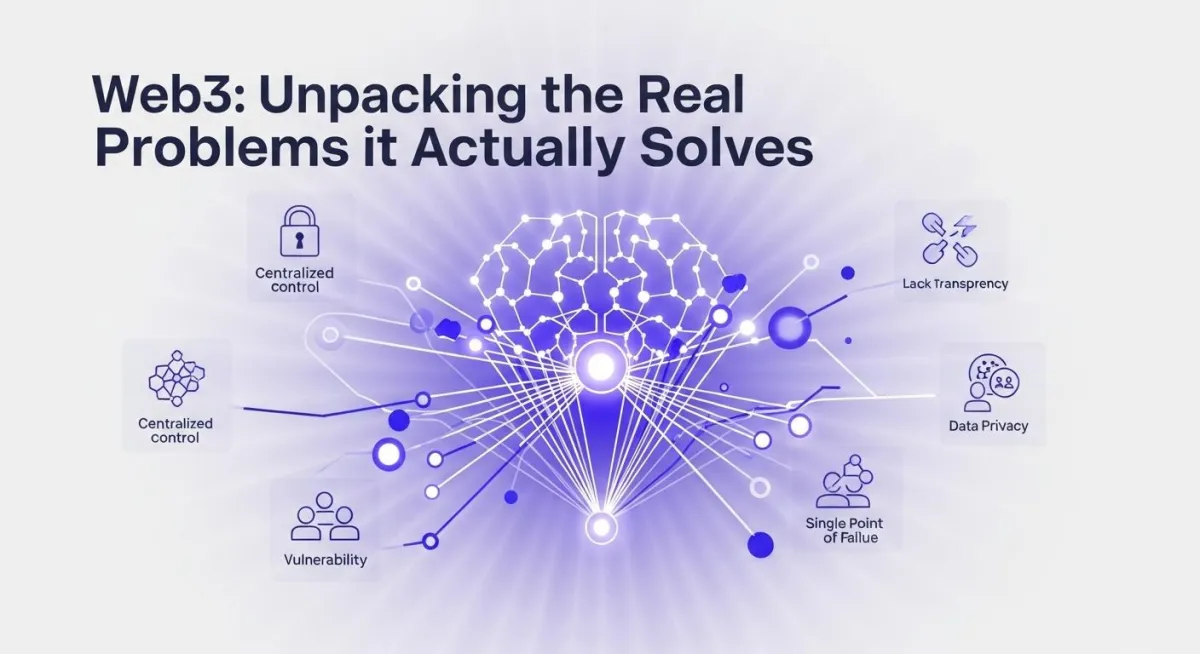
The Problems Web3 Was Built to Solve (Most People Don’t Realize This)

Introduction
Let’s cut through the noise. For every hype-filled tweet promising that Web3 will change everything, there’s someone muttering, Cool story. But what does it actually fix? And honestly, that’s fair. The internet, as it exists today, has some glaring problems. Web3 isn’t just a shiny new toy, it’s trying to address those cracks that have been ignored for far too long.
You feel it, don’t you? That creeping unease every time you think about your online life. Every click tracked. Every search recorded. Every like feeding someone else’s algorithms. It’s not paranoia, it’s the system working exactly as designed. The internet wasn’t built for us to own our digital selves. It was built for information sharing, ad revenue, and corporate control. And we’ve been living with that imbalance ever since.
Centralization: The Iron Cage of the Modern Web

Remember when the internet felt free? A little chaotic? Wild? Now, it’s more like a carefully manicured theme park owned by a handful of tech giants. Google, Meta, Amazon, they don’t just host your data. They own it, monetize it, and decide what you see, hear, and say.
That’s not just annoying. It’s dangerous. A single failure, a sudden policy change, or an account ban can lock you out, censor you, or worse, leave your data at risk. Web3 flips this by giving power back to the individual. It’s a decentralized blueprint designed to break the grip of central gatekeepers.
Your Data: From Asset to Ownership

We’ve all seen the horror stories: personal data leaked, stolen, sold. And most of us shrug and move on because what choice do we have? Web3 gives you that choice back. Through self-sovereign identity, your data isn’t a product, it’s yours. You control who sees it, how it’s used, and even how it generates value for you. Imagine being able to selectively share your info, or even monetize it, without a middleman. That’s ownership, plain and simple.
Censorship: Fighting Back Against the Gatekeepers

Ever had an account suspended for no reason? Seen a post removed without explanation? Web2 hands the megaphone to a few companies, which can silence you at will. Web3 dApps change that. Control is distributed. Governance is collective. Removing a voice isn’t easy, and decisions aren’t arbitrary. It’s messy, yes, but it’s far more fair.
Creator Economy: Reclaiming Value

Content creators have been shortchanged forever. YouTube takes 45% of ad revenue. App stores skim 15–30%. Streaming pays pennies. Web3 offers an alternative. NFTs and tokenized assets allow creators to own, sell, and monetize their work directly. Limited-edition tracks, in-game assets, digital art, value can flow straight from creator to audience. The middleman? Optional. That’s empowerment, not permission.
DAOs: Collective Decision-Making

Web3 isn’t just about money or ownership. It’s about how communities run themselves. DAOs put decision-making in the hands of those who contribute. Token holders vote. Players influence game updates. Users shape platforms. It’s stakeholder capitalism for the digital age: you build, you benefit, you steer the ship.
Fragmentation: Solving the Digital Puzzle

Right now, your digital life is fragmented. Loyalty points on one platform. Gaming items on another. Your identity scattered everywhere. It’s frustrating. Web3 aims to unify this with interoperability. Cross-chain solutions let assets, identities, and data move freely across apps. One day, loyalty points earned in one ecosystem could be used in another. That’s not just convenience, it’s unlocking real, tangible value.
Why It Matters
Web3 isn’t a magic bullet. It doesn’t erase every flaw. But it addresses core issues Web2 can’t, or won’t. Trust. Ownership. Fair value distribution. It’s rebuilding the internet with users, creators, and communities in mind.
And here’s the kicker: this isn’t some abstract promise. Real projects are already making it happen. Uni-fy, for example, is creating ways for brands and users to connect, transact, and engage securely and equitably, building practical, usable systems around these principles.
Web3 is messy. It’s complex. And it’s not perfect. But for the first time in decades, it gives us a chance to reclaim control. To own our data. To participate directly in digital economies. To make our voices matter.
Moving Forward

Stop waiting for the internet to fix itself. Start using tools that put you in charge. Uni-fy is one of those platforms, simplifying engagement, protecting users, and creating value where it’s deserved.
Your digital life deserves clarity, security, and control. Web3 offers the architecture. Uni-fy provides the rails.
Explore Uni-fy today: here