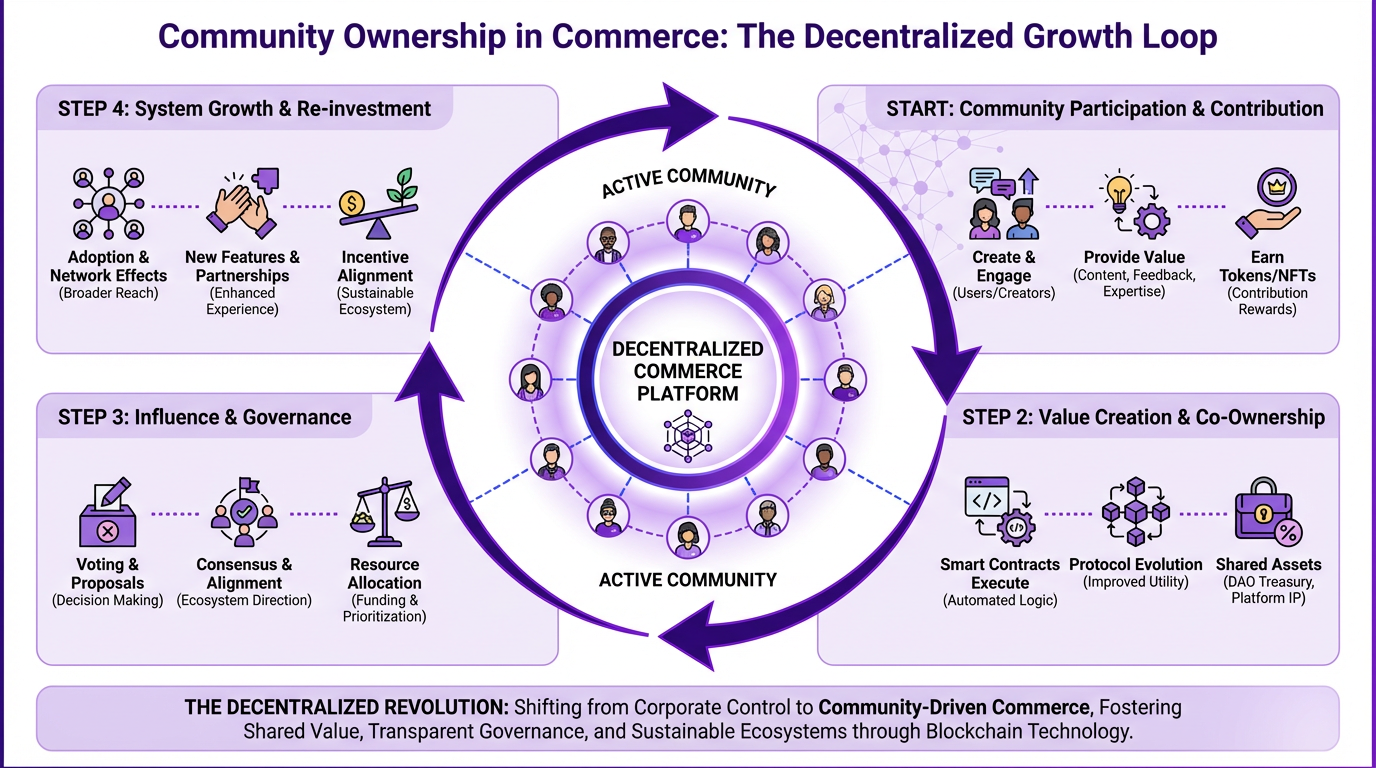
Community Ownership in Commerce: The Decentralized Revolution
Community Ownership in Commerce: The Decentralized Revolution
Community ownership in commerce represents a profound shift from traditional corporate structures, where power and profits are concentrated, to models where the users, creators, and stakeholders collectively own and govern the commercial enterprise. This decentralized revolution is gaining significant traction, particularly within the burgeoning Dcommerce sector, offering a more equitable and resilient alternative to conventional e-commerce. For businesses exploring innovative Dcommerce Business Models, embracing community ownership is not just a philosophical choice but a strategic imperative for fostering deep loyalty and sustainable growth.At its core, community ownership empowers participants with a direct stake in the platform's success. This can manifest through various mechanisms, including governance tokens, shared revenue models, or direct equity in a decentralized autonomous organization (DAO). The result is a highly engaged ecosystem where every member is incentivized to contribute to the platform's growth, knowing that their efforts directly translate into shared value and influence over its direction. This model contrasts sharply with the extractive nature of many Web2 platforms, where users generate value but receive little in return.
Key Community Ownership Statistics • Platforms with strong community ownership models report up to 4x higher user retention rates compared to traditional platforms. • Over 60% of consumers express a preference for brands that demonstrate transparent and equitable ownership structures. • Projects leveraging community ownership have seen a 25% faster rate of product development due to collective input and contribution. • The market capitalization of community-owned protocols and platforms has grown by over 150% year-over-year in the last two years.
The Mechanics of Shared Ownership
Community ownership in commerce is typically facilitated by blockchain technology and smart contracts, which enable transparent and immutable records of ownership and governance. Unlike traditional co-ops, which often have geographical limitations or complex legal structures, decentralized community ownership can scale globally and operate with unprecedented efficiency.Models of Community Ownership
Various models exist for implementing community ownership, each with its own advantages and suitability for different types of commercial ventures. The choice of model often depends on the desired level of decentralization, the nature of the product or service, and the target community.| Ownership Model | Best For | Governance Mechanism | Value Distribution |
|---|---|---|---|
| DAO-based | Digital platforms, services | Governance tokens | Treasury allocation, token rewards |
| Fractional Ownership | High-value assets (art, real estate) | Tokenized shares | Rental income, asset appreciation |
| Revenue Sharing | Content platforms, marketplaces | Smart contract automation | Direct payouts to contributors |
| Co-operative (Web3) | Local services, niche products | Member voting | Patronage refunds, dividends |
Empowering Participants through Governance
A fundamental aspect of community ownership is the ability for participants to influence the direction of the commercial entity. This is often achieved through the use of Governance tokens in commerce, which grant voting rights on key decisions. These decisions can range from setting platform fees and approving new features to allocating treasury funds and forming strategic partnerships. This democratic approach ensures that the platform evolves in a way that best serves the collective interests of its owners.5-Step Framework for Building Community-Owned Commerce
Establishing a thriving community-owned commerce platform requires a strategic approach that prioritizes engagement and transparent governance.The Impact on Value Creation and Distribution
Community ownership fundamentally alters how value is created and distributed. Instead of value flowing primarily to a few shareholders, it is shared among the many who contribute to the platform's success. This can lead to more equitable Revenue sharing in Dcommerce models, where creators, curators, and even active users receive a direct share of the profits they help generate. This creates a powerful incentive for continuous engagement and innovation, as participants are directly rewarded for their efforts.Expert Insight: "The biggest mistake in building community-owned commerce is treating the community as just another marketing channel. True community ownership means relinquishing control, trusting the collective intelligence, and designing systems where the community's success is directly tied to their financial well-being. It's a shift from 'our users' to 'our owners.'"
Beyond Financial Incentives: Building Loyalty and Trust
While financial incentives are a strong driver, community ownership also cultivates deeper levels of loyalty and trust. When users feel they genuinely own a part of the platform, they become advocates, contributing to its growth not just for monetary gain, but out of a sense of belonging and shared purpose. This organic growth and strong community bond are invaluable assets that traditional commerce models struggle to replicate.Diagram: Community Ownership Feedback Loop [Community Member Contribution] → [Platform Value Increase] → [Shared Revenue/Token Appreciation] → [Increased Community Engagement] → [Enhanced Platform Value] → [Feedback Loop]This virtuous cycle illustrates how community ownership can lead to exponential growth and a highly resilient commercial ecosystem, a key characteristic of advanced Dcommerce Business Models.
Frequently Asked Questions
What does community ownership mean in the context of commerce?
Community ownership in commerce means that the users, creators, and stakeholders of a commercial platform collectively own and govern it, rather than a centralized entity. This typically involves holding governance tokens or fractional shares that grant voting rights and a share in the platform's success.How does blockchain enable community ownership?
Blockchain technology provides the transparent, immutable, and trustless infrastructure necessary for community ownership. Smart contracts automate governance rules and value distribution, while tokens represent verifiable ownership stakes and voting power, all recorded on a public ledger.What are the benefits of community ownership for consumers?
For consumers, community ownership offers benefits such as a voice in platform development, potential financial upside from platform growth, more transparent operations, and a stronger sense of belonging and trust in the brands they interact with.How does community ownership impact value distribution?
Community ownership fundamentally shifts value distribution from being concentrated among a few shareholders to being shared among the many contributors and users. This often leads to more equitable revenue sharing, token rewards, and direct participation in the platform's economic success.Is community ownership suitable for all types of commerce?
While highly beneficial for many, community ownership models are particularly well-suited for digital platforms, creator economies, and marketplaces where community engagement and decentralized governance can add significant value. Adapting it to highly regulated or capital-intensive physical goods commerce might require hybrid models.Key Takeaways
- Community ownership in commerce decentralizes power and profits, empowering users and stakeholders.
- Blockchain and smart contracts facilitate transparent and scalable shared ownership models.
- Governance tokens are crucial for enabling collective decision-making and fostering engagement.
- This model leads to more equitable value distribution and stronger loyalty than traditional commerce.
- Implementing community ownership requires a clear vision, inclusive mechanisms, and a culture of collaboration.
Secure Your Spot in the Next Generation of Dcommerce
Join the future of decentralized commerce and explore a new way to interact with your favorite digital brands.