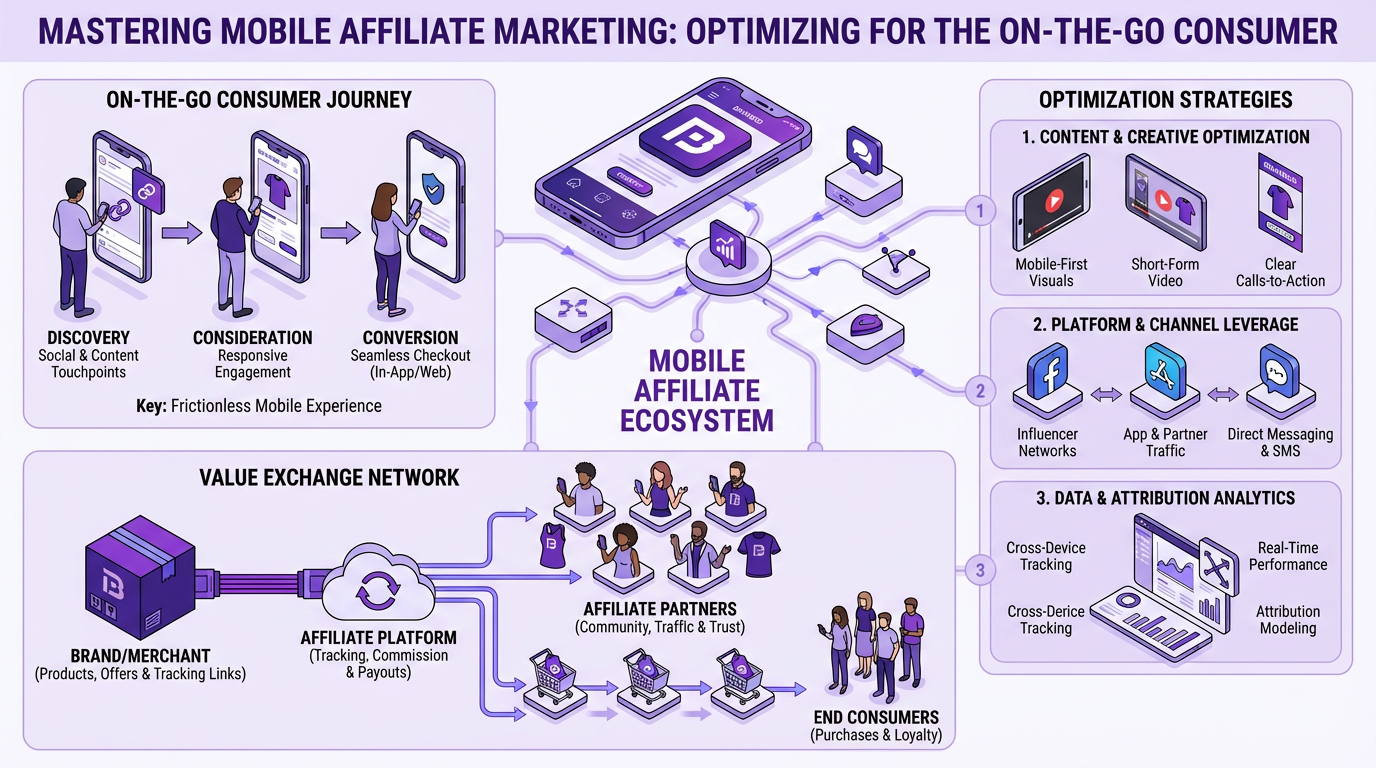
Mastering Mobile Affiliate Marketing: Optimizing for the On-the-Go Consumer
Mastering Mobile Affiliate Marketing: Optimizing for the On-the-Go Consumer
The smartphone has become an indispensable extension of modern life, transforming how we communicate, consume content, and make purchasing decisions. For affiliate marketers, this pervasive mobile usage presents both a significant opportunity and a unique set of challenges. Mastering mobile affiliate marketing is no longer optional; it's a critical component of any successful strategy, especially when considering the broader Affiliate Marketing Trends that emphasize user experience and accessibility. Optimizing for the on-the-go consumer means understanding their habits, preferences, and the technical demands of mobile devices to deliver seamless, high-converting experiences.The shift to mobile-first consumption has accelerated, with a majority of internet traffic now originating from smartphones and tablets. This necessitates a fundamental re-evaluation of how affiliate content is created, distributed, and monetized. From responsive website designs to mobile-specific ad formats and app-based promotions, every element must be tailored to the mobile user to capture their attention and drive conversions effectively.
Key Mobile Affiliate Marketing Statistics • Mobile devices account for over 55% of global website traffic, a figure that continues to grow annually. • 79% of smartphone users have made a purchase using their mobile device in the last six months. • Mobile ad spending is projected to reach over $400 billion by 2024, highlighting the massive investment in this channel. • Slow-loading mobile pages lead to 53% of users abandoning a site if it takes longer than 3 seconds to load.
Mobile-First Design and User Experience (UX)
The foundation of successful mobile affiliate marketing lies in a mobile-first design philosophy. This means designing your websites, landing pages, and content specifically for smaller screens and touch-based interactions, rather than adapting a desktop version. A truly mobile-first approach prioritizes speed, readability, and ease of navigation, ensuring that the user journey is intuitive and frictionless.Key elements include responsive design, which automatically adjusts layouts to fit any screen size; large, tappable buttons; concise content; and optimized images and videos for faster loading times. A poor mobile experience – slow loading, difficult navigation, or non-responsive elements – will quickly deter users and lead to lost conversions. This focus on user experience is a crucial aspect of understanding modern Affiliate Marketing Trends.
Optimizing for Mobile UX
Ensuring a smooth mobile experience is paramount. Every click, scroll, and interaction should be effortless for the user.| Strategy | Best For | Difficulty | ROI Potential |
|---|---|---|---|
| Responsive Design | Universal device compatibility | Medium | Very High |
| Page Speed Optimization | Reducing bounce rates | Medium | High |
| Simplified Navigation | Enhancing user flow | Easy | Medium |
| Mobile-Specific CTAs | Improving conversion rates | Easy | High |
| Thumb-Friendly Layouts | Natural interaction on small screens | Medium | High |
Mobile Ad Formats and Channels
Mobile advertising offers a diverse range of formats and channels that affiliates can leverage. Beyond traditional display ads, mobile-specific options like in-app ads, interstitial ads, native ads, and video ads provide unique opportunities to engage users. Understanding which formats perform best for different offers and audience segments is key to maximizing campaign effectiveness. For instance, in-app ads can be highly effective for promoting mobile apps or games, while native ads blend seamlessly into content feeds, offering a less intrusive experience.Furthermore, channels like SMS marketing, push notifications, and messaging apps (e.g., WhatsApp, Telegram) are gaining traction for direct, personalized communication. These channels allow for immediate engagement and can be highly effective for time-sensitive offers or exclusive promotions. This diversification of channels is a key element of effective Affiliate Marketing Strategies.
5-Step Mobile Ad Strategy Framework
App-Based Affiliate Marketing: A Growing Frontier
Mobile apps represent a significant and growing frontier for affiliate marketing. With billions of app downloads annually, promoting apps themselves or leveraging in-app advertising offers substantial revenue potential. This includes promoting app installs (CPI campaigns), in-app purchases, or subscriptions. Affiliates can partner with app developers or networks specializing in mobile app promotion.Beyond promoting apps, many brands now have their own mobile apps that affiliates can drive traffic to, offering a streamlined and often more engaging user experience than a mobile website. Deep linking, which directs users to specific content within an app rather than just the app store, is crucial for optimizing these campaigns and enhancing the user journey. This is a critical area for the Future of Affiliate Marketing.
Expert Insight: "Don't underestimate the power of deep linking in app-based affiliate marketing. Sending a user to a generic app store page when they've clicked on a specific product recommendation is a huge conversion killer. Invest in technology that allows you to deep link directly to the product page or relevant section within the app. It's a small technical detail that makes a monumental difference in user experience and, ultimately, your conversion rates."
Leveraging App Ecosystems
Affiliates can also explore partnerships with popular apps that offer in-app advertising opportunities, placing their offers within relevant contexts. This allows for highly targeted exposure to an engaged user base.Diagram: Mobile Affiliate Conversion Funnel [Mobile Ad Exposure (In-App/Social)] → [Click-Through to Mobile Landing Page/App Store] → [App Download/Website Engagement] → [In-App Purchase/Mobile Conversion] → [Affiliate Commission]
Tracking and Analytics for Mobile Performance
Accurate tracking and analytics are paramount for understanding mobile campaign performance. Mobile attribution models can be more complex due to factors like app installs, cross-device journeys, and varying cookie policies. Affiliates need robust tracking solutions that can accurately attribute conversions across different mobile channels and devices.Key metrics to monitor include mobile traffic, bounce rate, conversion rate on mobile, app installs, in-app purchases, and average session duration. Utilizing mobile-specific analytics tools and integrating them with your affiliate platform provides a comprehensive view of performance, allowing for data-driven optimization. This detailed tracking is essential for understanding current Affiliate Marketing Trends and adapting strategies accordingly.
Related: Decentralized Commerce Business Models: Innovating in the Dcommerce Era
Challenges in Mobile Attribution
Challenges like ad blockers, privacy changes (e.g., Apple's ATT), and the fragmented mobile ecosystem require sophisticated attribution solutions to ensure accurate reporting and fair commission payouts.Frequently Asked Questions
Why is mobile-first design so important for affiliate marketing?
Mobile-first design is crucial because the majority of internet users access content via mobile devices. A website or landing page not optimized for mobile will load slowly, be difficult to navigate, and provide a poor user experience, leading to high bounce rates and lost conversions.What are the best mobile ad formats for affiliates?
The best mobile ad formats depend on the offer and target audience. Common effective formats include native ads (blending into content), in-app ads (for app-related offers), video ads (for engaging storytelling), and interstitial ads (full-screen, high impact). A/B testing is essential to find what works best.How can I track mobile conversions accurately?
Accurate mobile conversion tracking often involves using mobile-specific tracking solutions, unique affiliate links, deep linking for app-based promotions, and potentially server-to-server (S2S) tracking. It's important to account for cross-device journeys and app installs, which traditional cookie-based tracking might miss.What is deep linking in mobile affiliate marketing?
Deep linking is the process of creating a link that directs users to a specific piece of content within a mobile app, rather than just opening the app or taking them to the app's homepage. For affiliates, it's vital for sending users directly to a product page or specific offer within an app, significantly improving conversion rates.How do mobile privacy changes (like Apple's ATT) affect mobile affiliate marketing?
Mobile privacy changes, such as Apple's App Tracking Transparency (ATT) framework, limit the ability to track users across apps and websites without explicit consent. This makes traditional attribution more challenging and emphasizes the need for first-party data, contextual targeting, and alternative tracking methods like SKAdNetwork for iOS campaigns.Key Takeaways
- Mobile affiliate marketing is essential due to the dominance of mobile internet usage and purchasing behavior.
- Mobile-first design and an optimized user experience (UX) are foundational for reducing bounce rates and increasing conversions.
- Leveraging diverse mobile ad formats and channels, including in-app ads and messaging apps, is key to effective audience engagement.
- App-based affiliate marketing, including promoting app installs and utilizing deep linking, represents a significant growth area.
- Robust mobile-specific tracking and analytics are crucial for accurately measuring performance and optimizing campaigns in a complex mobile ecosystem.