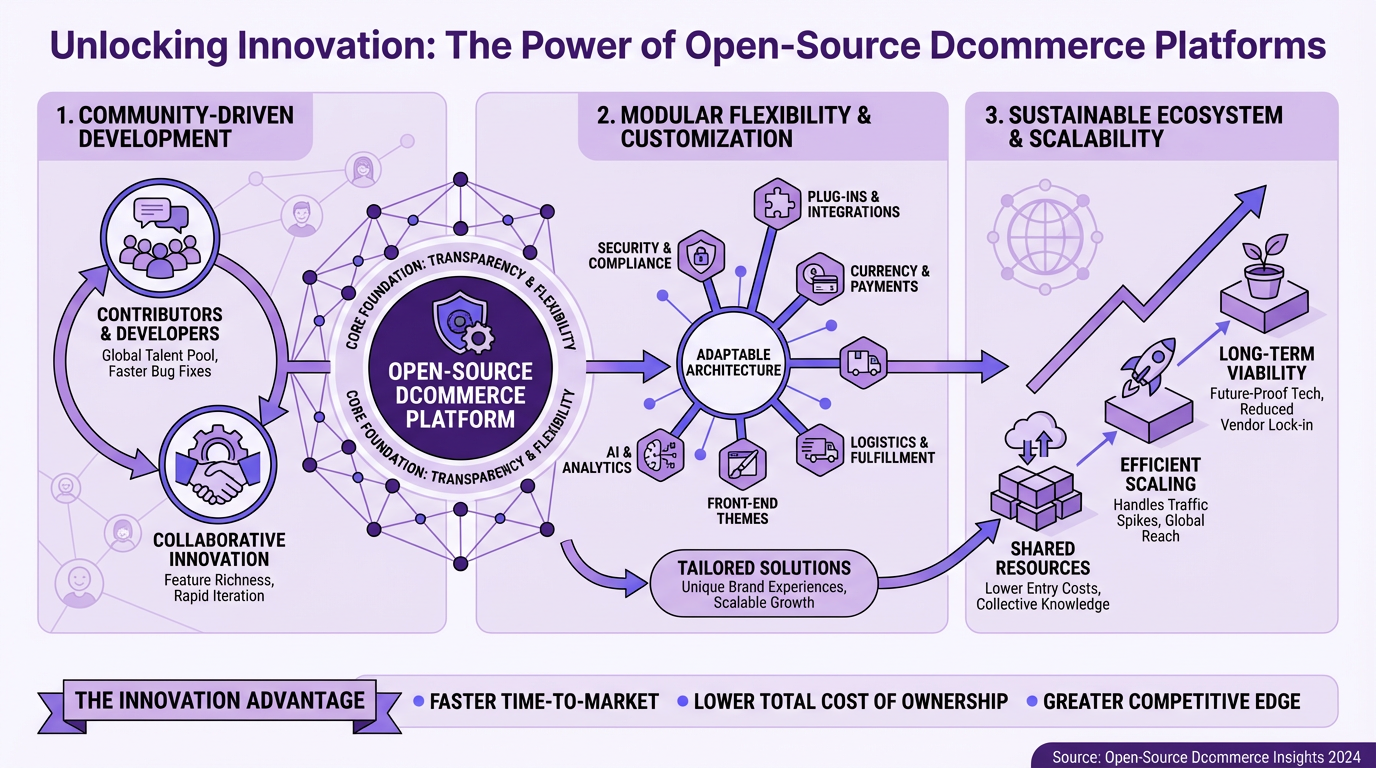
Unlocking Innovation: The Power of Open-Source Dcommerce Platforms
Unlocking Innovation: The Power of Open-Source Dcommerce Platforms
Open-source Dcommerce platforms represent a paradigm shift in online retail, offering unparalleled transparency, flexibility, and community-driven development. Unlike proprietary systems, these platforms make their source code publicly available, allowing anyone to inspect, modify, and distribute it. This fundamental difference fosters an environment of continuous innovation and robust security, as a global community of developers can contribute to and audit the codebase. For businesses looking to build resilient and adaptable online stores, embracing open-source principles within the broader landscape of Decentralized Commerce Platforms offers a distinct competitive advantage.This approach not only democratizes access to powerful e-commerce tools but also aligns perfectly with the core tenets of decentralization: empowering users and reducing reliance on single points of control. The collaborative nature of open-source development means that these platforms often evolve faster and are more responsive to user needs than their closed-source counterparts, making them a compelling choice for the future of digital trade.
Key Open-Source Dcommerce Statistics • Over 70% of all websites globally use open-source technologies in some capacity, highlighting widespread adoption. • Open-source software development has seen a 20% year-over-year growth in contributions, indicating a vibrant and active community. • Companies utilizing open-source solutions report an average of 15% lower operational costs compared to those relying solely on proprietary software. • A recent survey found that 65% of developers believe open-source projects offer higher quality code due to community review.
The Core Advantages of Open-Source in Decentralized Commerce
The appeal of open-source Dcommerce platforms stems from several critical advantages that resonate deeply with the ethos of decentralization. Foremost among these is transparency. With the code openly accessible, there's no hidden logic or potential for backdoors, fostering trust among users and developers alike. This transparency is crucial for building confidence in systems that handle sensitive transactional data and digital assets.Another significant benefit is flexibility. Businesses are not locked into a vendor's roadmap or limited by their feature set. They can customize the platform to their exact specifications, integrate with a myriad of other services, and adapt to evolving market demands without seeking permission or paying exorbitant licensing fees. This level of control is a cornerstone of effective Decentralized Commerce Platforms.
Community-Driven Innovation and Security
The collaborative nature of open-source projects means that development is often accelerated by a global community of contributors. Bugs are identified and patched quickly, and new features are often proposed and implemented based on real-world user needs. This collective intelligence leads to more robust and secure platforms. Furthermore, the peer-review process inherent in open-source development acts as a continuous audit, enhancing security far beyond what a single company could achieve.| Feature | Open-Source Dcommerce | Proprietary Dcommerce |
|---|---|---|
| Code Access | Publicly available | Closed, proprietary |
| Customization | Unlimited, full control | Limited by vendor, API |
| Cost | Typically free core, paid services/hosting | Licensing fees, subscriptions |
| Security Audits | Community-driven, continuous | Vendor-controlled, periodic |
| Vendor Lock-in | Minimal to none | High |
Building on Open-Source: A Strategic Approach
Adopting an open-source Dcommerce platform requires a strategic approach that leverages its strengths while mitigating potential challenges. It's not just about downloading code; it's about engaging with the community, understanding the ecosystem, and planning for long-term maintenance and scaling. For businesses venturing into this space, understanding the nuances of Dcommerce marketplace development within an open-source context is paramount.5-Step Open-Source Dcommerce Adoption Framework
The Role of Open-Source in Decentralized Ecosystems
Open-source is intrinsically linked to the vision of decentralized ecosystems. It provides the foundational infrastructure for trustless interactions and permissionless innovation. Without open-source components, many of the core technologies underpinning Decentralized Commerce Platforms, such as blockchain protocols and smart contracts, would struggle to gain widespread adoption and trust. The transparency it offers is a non-negotiable requirement for systems where users are expected to verify transactions and data integrity themselves.Expert Insight: "The true power of open-source in Dcommerce isn't just about cost savings; it's about collective ownership and resilience. When a platform's core is open, it becomes a public good, less susceptible to single-point failures or the whims of a corporate entity. This fosters a level of trust and adaptability that proprietary systems simply cannot match, especially as we move towards more community-governed commerce platforms."This synergy extends to areas like self-sovereign identity in Dcommerce, where open protocols ensure that individuals retain control over their digital personas without relying on centralized intermediaries. The ability to audit the code that manages identity data is crucial for privacy and security.
Diagram: Open-Source Dcommerce Ecosystem Flow Community Developers → Code Contributions → Public Repository (Transparency) → Audit & Review → Platform Enhancements → User Adoption → Feedback Loop to Community Developers
Future Outlook: Open-Source and the Evolution of Dcommerce
The trajectory of open-source Dcommerce platforms is one of continuous growth and increasing sophistication. As the underlying blockchain technology matures, we can expect even more robust and scalable open-source solutions to emerge, catering to a wider array of business models and consumer needs. The emphasis on privacy-preserving Dcommerce will also drive further innovation in open-source encryption and data handling protocols.The collaborative spirit of open-source development is perfectly suited to address the complex challenges and opportunities presented by decentralized commerce. It ensures that the tools and infrastructure for a more equitable and transparent internet economy are built by the many, for the many.
Frequently Asked Questions
What makes an open-source Dcommerce platform different from a traditional open-source e-commerce platform?
Open-source Dcommerce platforms specifically integrate blockchain technology and decentralized principles, enabling features like cryptocurrency payments, tokenized assets, and smart contract-based transactions, which are typically absent in traditional open-source e-commerce solutions.Is open-source Dcommerce more secure than proprietary solutions?
While security depends on implementation, open-source Dcommerce platforms benefit from community-driven auditing and transparency, allowing a global network of developers to identify and fix vulnerabilities quickly. This collective scrutiny can often lead to a more robust security posture than closed-source systems.What technical expertise is required to use open-source Dcommerce platforms?
While basic usage might be straightforward, significant customization or self-hosting of open-source Dcommerce platforms often requires technical expertise in areas like blockchain development, smart contracts, web development, and server management. Many businesses opt for specialized developers or managed service providers.Can open-source Dcommerce platforms scale for large businesses?
Yes, many open-source Dcommerce platforms are designed with scalability in mind, leveraging modular architectures and distributed ledger technologies. With proper infrastructure planning and optimization, they can support high transaction volumes and large user bases, competing effectively with proprietary enterprise solutions.Key Takeaways
- Open-source Dcommerce platforms offer unparalleled transparency, flexibility, and community-driven innovation, aligning with decentralized principles.
- They provide significant advantages in terms of customization, cost-effectiveness, and resilience against vendor lock-in compared to proprietary solutions.
- Strategic adoption requires evaluating project maturity, defining customization needs, planning infrastructure, engaging with the community, and establishing a robust maintenance strategy.
- Open-source is fundamental to building trust and enabling permissionless innovation within the broader decentralized ecosystem.
- The future of Dcommerce will increasingly rely on open-source foundations to drive privacy, security, and community governance.
Join a Global Community of Decentralized Shoppers and Creators
Experience a shopping ecosystem built on transparency and decentralization today.