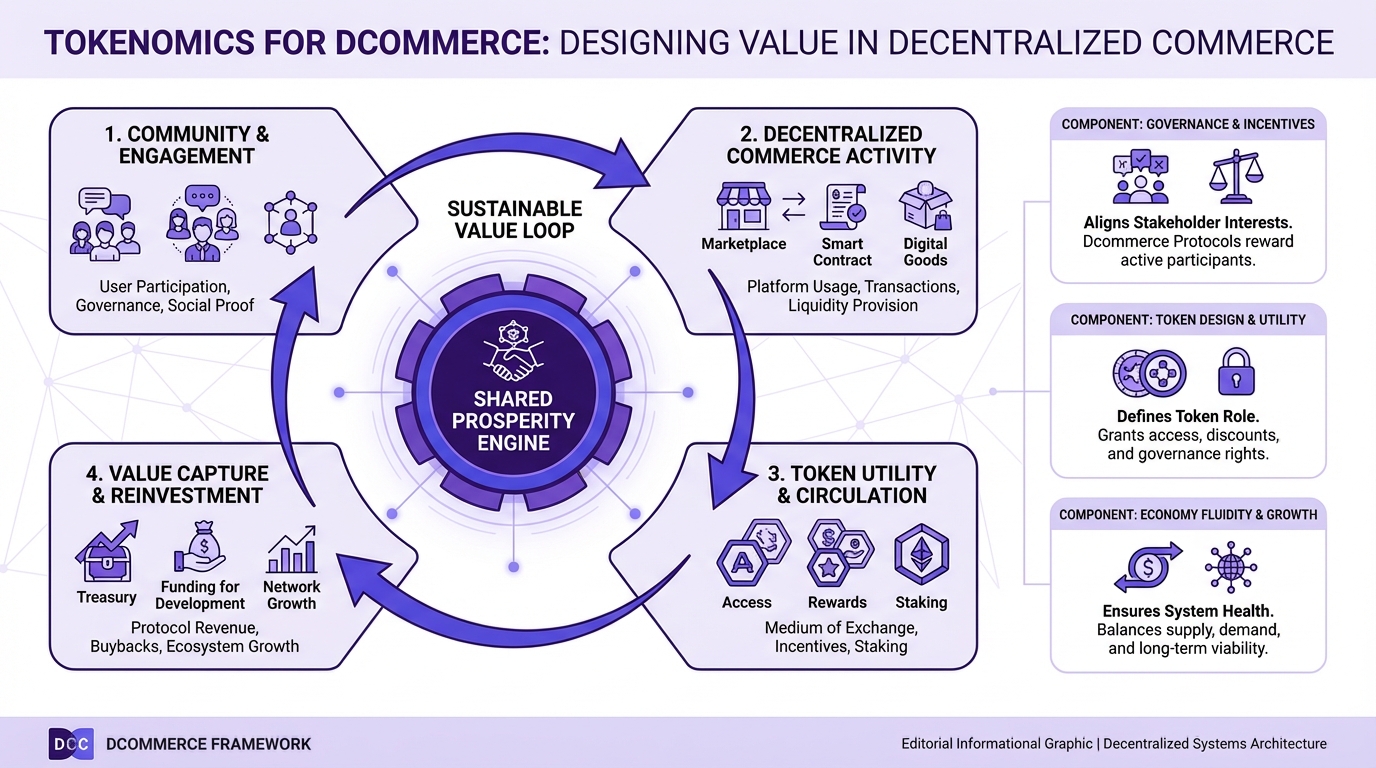
Tokenomics for Dcommerce: Designing Value in Decentralized Commerce
Tokenomics for Dcommerce: Designing Value in Decentralized Commerce
Tokenomics, the study of a cryptocurrency's economic model, is not merely a technical detail but the very backbone of any successful decentralized commerce (Dcommerce) platform. For businesses venturing into the realm of decentralized commerce, understanding and meticulously designing their tokenomics is paramount. It dictates how value is created, distributed, and sustained within the ecosystem, directly influencing user adoption, developer engagement, and overall network health. As uni-fy.us explores the diverse landscape of Dcommerce Business Models, the role of well-crafted tokenomics emerges as a critical differentiator, enabling novel incentive structures and community-driven growth.Effective tokenomics for Dcommerce go beyond simple currency creation; they involve a complex interplay of incentives, governance mechanisms, and value accrual strategies. This ensures that all participants – from creators and consumers to platform developers and validators – are aligned towards the common goal of a thriving, decentralized marketplace. Without a robust tokenomic framework, even the most innovative Dcommerce concept risks failing to achieve widespread adoption or long-term sustainability.
Key Tokenomics Statistics • Projects with well-defined token utility and clear value accrual mechanisms show 2.5x higher user retention rates compared to those without. • Over 70% of successful Dcommerce platforms attribute their growth significantly to their token's incentive structures. • The average market capitalization of Dcommerce tokens with active governance and staking features is 4x higher than those without. • Token-based loyalty programs in Dcommerce have demonstrated up to a 30% increase in repeat purchases.
The Pillars of Dcommerce Tokenomics
Designing effective tokenomics for a Dcommerce platform involves balancing several key elements to create a self-sustaining and growing ecosystem. These pillars ensure that the token serves multiple functions, from a medium of exchange to a governance tool and a store of value.Utility and Value Accrual
The utility of a token is its primary driver of demand. In Dcommerce, this can range from paying for goods and services, accessing premium features, or staking to earn rewards. Value accrual mechanisms ensure that as the platform grows, the token's value increases, benefiting holders. This could involve burning tokens from transaction fees, distributing a portion of platform revenue to stakers, or using tokens for collateral in lending protocols.| Token Utility | Best For | Impact on Demand | Risk Factor |
|---|---|---|---|
| Payment Currency | Transaction efficiency | Direct, immediate | Volatility, competition |
| Governance Rights | Community ownership | Long-term, strategic | Voter apathy, centralization |
| Staking/Farming | Network security, liquidity | Consistent, passive | Impermanent loss, slashing |
| Access/Membership | Exclusive features | Niche, high value | Limited audience |
Governance Tokens and Community Engagement
Governance tokens are a cornerstone of decentralized commerce, empowering users to participate in the decision-making processes of the platform. This directly relates to the broader concept of Community ownership in commerce, where token holders can vote on proposals, protocol upgrades, fee structures, and even treasury allocations. This democratic approach fosters a strong sense of ownership and alignment, as the community directly shapes the future of the platform.6-Step Tokenomics Design Framework for Dcommerce
Developing a robust tokenomics model requires a structured approach, considering both economic principles and community incentives.Incentivizing Participation and Growth
Beyond governance, tokenomics play a crucial role in incentivizing active participation and fostering growth within the Dcommerce ecosystem. This includes mechanisms for rewarding liquidity providers, content creators, and even early adopters. For instance, platforms might use tokens to reward users for providing valuable reviews, referring new customers, or contributing to the platform's open-source development. This aligns with the principles of the Creator economy Dcommerce, where creators are directly rewarded for their contributions.Expert Insight: "Many Dcommerce projects focus too heavily on the 'decentralized' aspect and too little on the 'commerce.' Your tokenomics must directly facilitate commercial activity and create tangible value for users engaging in transactions. If your token isn't actively used in buying, selling, or enhancing the commerce experience, it's just a speculative asset, not a foundational element of a Dcommerce business model."
The Role of Staking and Liquidity Provision
Staking and liquidity provision are vital tokenomic mechanisms that secure the network and ensure efficient market operations. Users can stake their tokens to secure the network, validate transactions, or provide liquidity to decentralized exchanges, earning rewards in return. These mechanisms not only lock up supply, potentially increasing token value, but also foster a more robust and resilient Dcommerce infrastructure.Diagram: Dcommerce Token Value Loop [User Activity (e.g., Purchase, Create)] → [Platform Fees Generated] → [Token Burn/Revenue Share] → [Token Value Increase] → [Incentivizes More User Activity] → [Feedback Loop]This continuous loop demonstrates how well-designed tokenomics can create a virtuous cycle of growth and value appreciation within a decentralized commerce ecosystem. It is a fundamental aspect of many successful Dcommerce Business Models.
Frequently Asked Questions
What is tokenomics in the context of Dcommerce?
Tokenomics refers to the economic model of a decentralized commerce platform's native token. It encompasses how the token is created, distributed, used, and how its value is sustained and accrues over time, influencing user behavior and platform growth.Why are well-designed tokenomics crucial for Dcommerce?
Well-designed tokenomics are crucial because they align incentives for all participants, drive user adoption, fund development, and ensure the long-term sustainability and decentralization of the platform. They create a self-reinforcing economic system that rewards contributions and usage.How do governance tokens contribute to Dcommerce?
Governance tokens empower users to participate in the decision-making processes of the Dcommerce platform, allowing them to vote on proposals, protocol changes, and treasury allocations. This fosters community ownership and ensures the platform evolves in a decentralized and democratic manner.What are some common value accrual mechanisms for Dcommerce tokens?
Common value accrual mechanisms include token burning (reducing supply from transaction fees), revenue sharing (distributing a portion of platform profits to token holders), staking rewards (incentivizing locking up tokens), and providing access to exclusive features or discounts.How does tokenomics incentivize user participation in Dcommerce?
Tokenomics incentivizes participation through various rewards, such as earning tokens for providing liquidity, creating content, making purchases, referring new users, or actively participating in governance. These incentives encourage desired behaviors that contribute to the platform's growth and success.Key Takeaways
- Tokenomics are fundamental to Dcommerce, dictating value creation, distribution, and sustainability.
- Effective tokenomics balance utility, governance, and incentive mechanisms for all stakeholders.
- Governance tokens empower community ownership and decentralized decision-making.
- A structured approach to tokenomics design is essential for long-term success and growth.
- Value accrual mechanisms and incentives drive user participation and network effects in Dcommerce.
Access Exclusive Dcommerce Brands and Digital Specialized Products
From Solana Deads to Blockchain Bobbles, discover the products defining the decentralized era.