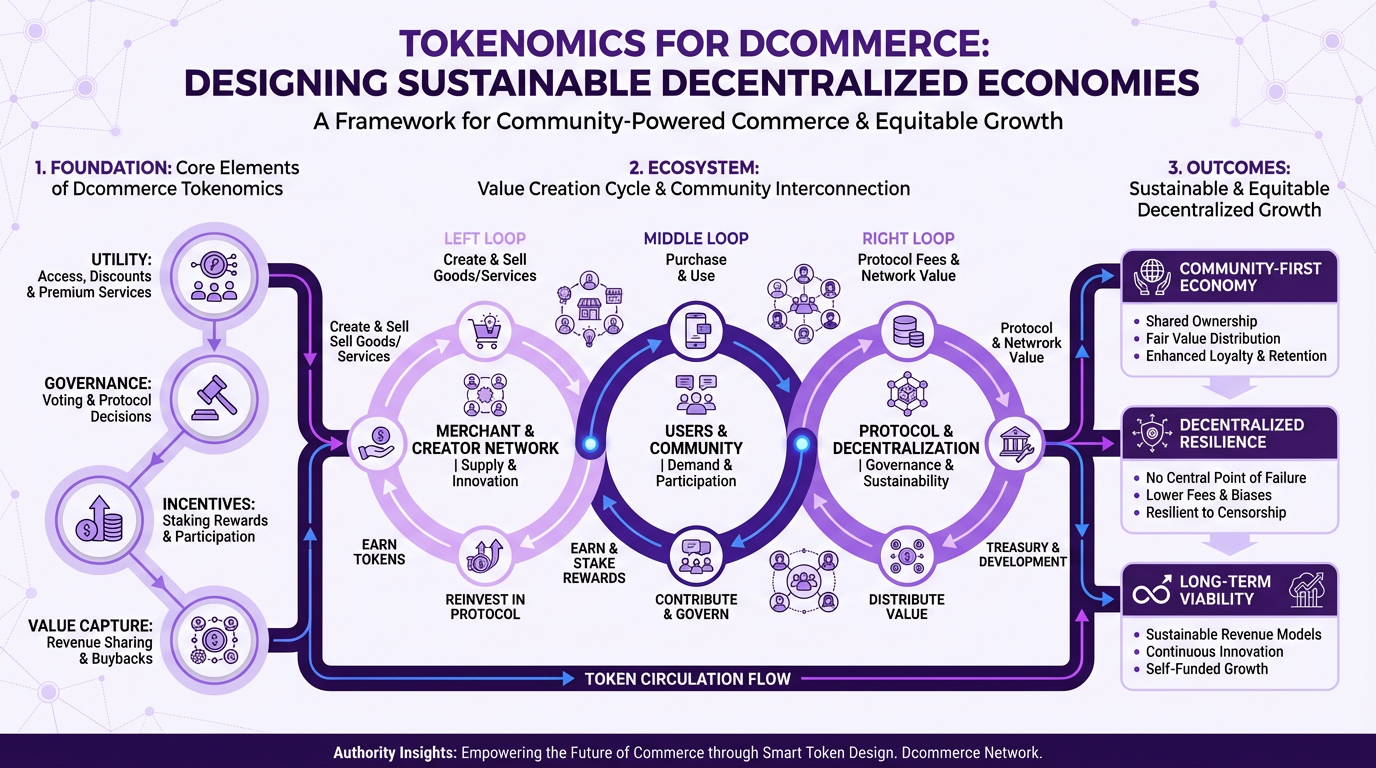
Tokenomics for Dcommerce: Designing Sustainable Decentralized Economies
Tokenomics for Dcommerce: Designing Sustainable Decentralized Economies
Tokenomics, the economics of tokens, is the foundational science behind creating sustainable and thriving decentralized commerce (Dcommerce) ecosystems. It encompasses the design, distribution, and utility of digital tokens within a blockchain-based platform, directly influencing user behavior, network security, and value accrual. For businesses venturing into decentralized commerce, a well-crafted tokenomics model is not merely an afterthought but a critical component that determines the long-term success and viability of their chosen Dcommerce Business Models. It's about aligning incentives, fostering participation, and ensuring the equitable distribution of value.Key Tokenomics & Dcommerce Statistics • Over 85% of successful Dcommerce projects attribute their growth to robust tokenomics that incentivize participation. • Projects with clear token utility and transparent distribution models experience 2x higher user retention rates. • The average lifespan of a Dcommerce project without a well-defined tokenomics model is less than 18 months. • Governance tokens, a key element of tokenomics, have seen an average annual appreciation of 45% in projects with active communities.
The Pillars of Effective Dcommerce Tokenomics
Effective tokenomics for Dcommerce rests on several fundamental pillars: utility, distribution, governance, and value accrual. Each pillar must be meticulously designed to create a balanced and resilient economic system. Tokens can serve various purposes, from facilitating transactions and rewarding contributions to granting governance rights and representing fractional ownership. The interplay between these elements dictates the health and growth potential of the decentralized commerce platform.Understanding Token Utility and Value Accrual
Token utility defines what a token does within the ecosystem. Is it a medium of exchange, a store of value, a governance right, or a combination? Value accrual refers to how the token's price is expected to increase over time, often tied to the growth and success of the Dcommerce platform itself. Without clear utility, a token lacks fundamental demand, making its long-term value proposition questionable.| Token Utility Type | Best For | Difficulty | ROI Potential |
|---|---|---|---|
| Governance Token | Community-driven platforms, DAOs | Medium | High |
| Utility Token | Accessing services, paying fees | Easy | Medium |
| Security Token | Representing equity, revenue share | Hard | Very High |
| Reward Token | Incentivizing user actions, loyalty | Easy | Medium |
Designing Token Distribution and Incentive Mechanisms
The initial distribution of tokens is a pivotal moment that can either foster decentralization or lead to concentration of power. Fair launch mechanisms, airdrops, and liquidity mining are common strategies. Beyond initial distribution, ongoing incentive mechanisms are crucial for encouraging desired behaviors, such as providing liquidity, contributing content, or participating in governance. These mechanisms are often programmed into smart contracts, ensuring transparency and automation.6-Step Dcommerce Tokenomics Design Framework
Tokenomics and Community Ownership
Tokenomics plays a direct role in fostering community ownership in commerce. By distributing tokens that grant voting rights or a share of platform revenue, Dcommerce projects can empower their user base to become true stakeholders. This alignment of incentives transforms users from mere consumers into active participants who are invested in the platform's success. This model is particularly powerful for creator economy Dcommerce platforms, where creators can directly benefit from the growth of the ecosystem they contribute to.Expert Insight: "Many Dcommerce projects fail because they treat tokenomics as a fundraising tool rather than a fundamental economic design. The most successful models prioritize long-term utility and community alignment over short-term speculative gains, building genuine value from the ground up."This sense of ownership can lead to increased loyalty, organic growth, and a more resilient community that actively contributes to the platform's development and marketing. It's a powerful feedback loop where value creation is shared, not hoarded.
Diagram: Tokenomics Value Flow in Dcommerce [User Contribution] → [Token Rewards] → [Governance Participation / Access to Services] → [Platform Growth] → [Token Value Accrual] → [Increased User Contribution]
Challenges and Evolving Tokenomics Models
Despite its potential, designing effective tokenomics presents challenges. These include managing inflation, preventing whale manipulation, ensuring regulatory compliance, and adapting to market dynamics. Early Dcommerce models often struggled with overly complex or unsustainable token designs. However, the field is rapidly evolving, with new models emerging that incorporate dynamic supply adjustments, innovative staking mechanisms, and more sophisticated revenue sharing in Dcommerce.The future of tokenomics for Dcommerce will likely see a greater emphasis on interoperability, allowing tokens to function across multiple platforms, and on creating more intuitive user experiences for token management and participation. As decentralized autonomous organizations for retail become more prevalent, the sophistication of their underlying tokenomics will be key to their competitive advantage and long-term sustainability within the broader landscape of Dcommerce Business Models.
Frequently Asked Questions
What is tokenomics in the context of Dcommerce?
Tokenomics refers to the economic design of a digital token within a decentralized commerce ecosystem, including its creation, distribution, utility, and governance mechanisms. It's crucial for aligning incentives, fostering participation, and ensuring the long-term sustainability of the platform.Why is a strong tokenomics model important for Dcommerce?
A strong tokenomics model is vital because it dictates how value is created, distributed, and accrued within the Dcommerce platform. It incentivizes desired behaviors, attracts participants, and ensures the economic viability and decentralization necessary for a thriving community-driven business.How do tokenomics influence user behavior in Dcommerce?
Tokenomics influences user behavior by providing clear incentives for actions like providing liquidity, making purchases, creating content, or participating in governance. Well-designed tokenomics can encourage loyalty, foster community engagement, and drive network effects that benefit all stakeholders.Key Takeaways
- Tokenomics is the economic blueprint for sustainable Dcommerce, defining token utility, distribution, and governance.
- Effective tokenomics aligns incentives, fostering active participation and ensuring value accrual for the ecosystem.
- Key pillars include clear utility, fair distribution, robust governance, and mechanisms for value accrual.
- Tokenomics directly enables community ownership, transforming users into invested stakeholders.
- The field is continuously evolving, addressing challenges and developing more sophisticated models for decentralized commerce.
Secure Your Spot in the Next Generation of Dcommerce
Join the future of decentralized commerce and explore a new way to interact with your favorite digital brands.