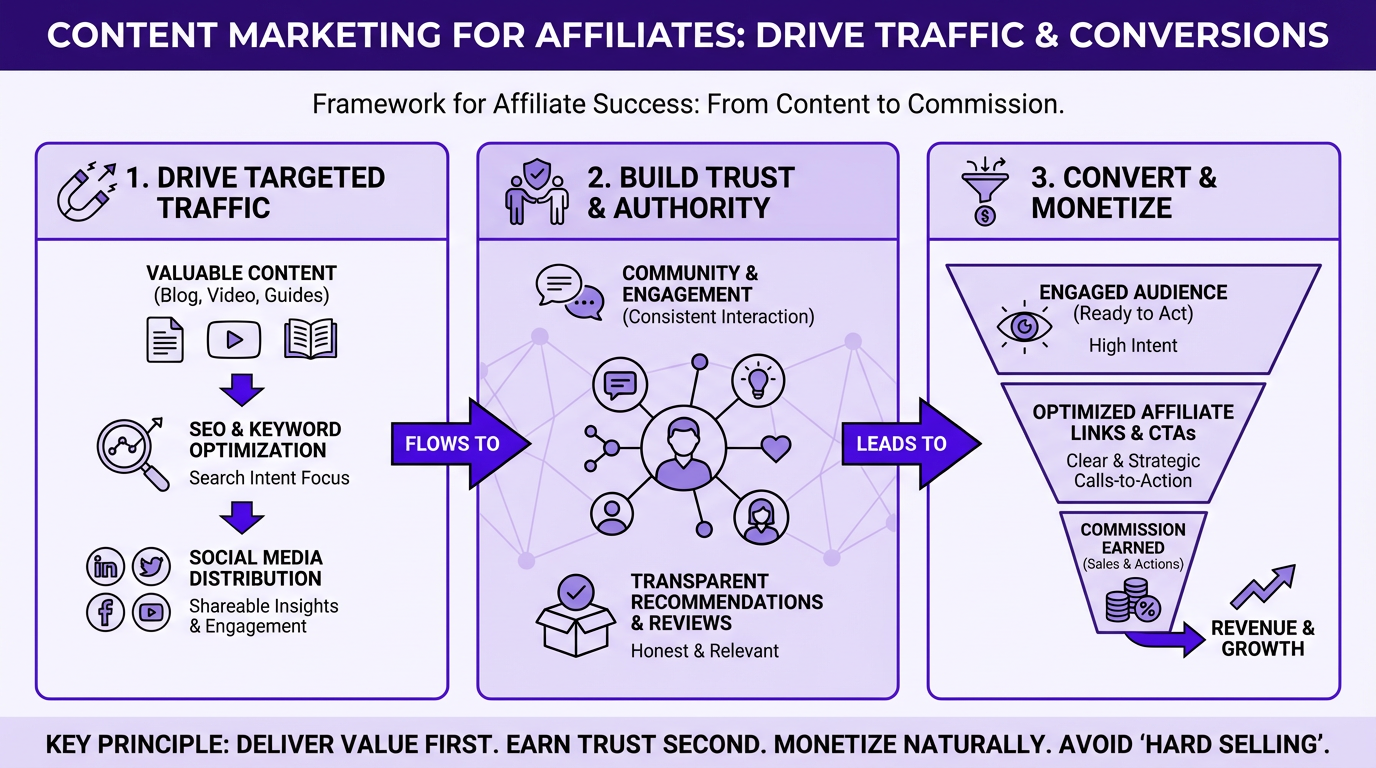
Content Marketing for Affiliates: Drive Traffic & Conversions
Content Marketing for Affiliates: Drive Traffic & Conversions
In the competitive landscape of affiliate marketing, simply placing links is no longer sufficient. To truly stand out and capture a significant audience, affiliate marketers must embrace robust content marketing strategies. This involves creating valuable, engaging, and informative content that attracts potential customers, builds trust, and naturally guides them toward affiliate offers. A well-executed content strategy is a cornerstone of effective Affiliate Marketing Strategies, transforming passive visitors into active, engaged leads.Content marketing for affiliates isn't just about generating traffic; it's about cultivating an audience that trusts your recommendations. By providing solutions, insights, and entertainment, you establish authority and credibility, making your affiliate links far more impactful than those found on generic review sites. This approach fosters long-term relationships and sustainable revenue streams.
Key Content Marketing Statistics • 70% of marketers are actively investing in content marketing, highlighting its perceived value across industries (HubSpot). • Companies that blog receive 97% more links to their websites, demonstrating the SEO benefits of content creation (DemandMetric). • Content marketing costs 62% less than traditional marketing and generates approximately 3 times as many leads (DemandMetric). • 77% of internet users read blogs, making it a powerful channel for reaching potential customers (Statista).
Crafting a Compelling Content Strategy for Affiliate Success
Developing a content strategy for affiliate marketing begins with understanding your target audience and their pain points. What questions are they asking? What problems are they trying to solve? Your content should directly address these needs, positioning your recommended products or services as the ideal solution. This often involves a mix of educational, inspirational, and review-based content.Types of Content for Affiliate Marketers
Affiliate marketers have a diverse toolkit of content formats at their disposal. The key is to choose formats that resonate with your audience and effectively showcase the value of the products you're promoting. Diversifying your content types can also help you reach a broader audience and cater to different learning styles.| Strategy | Best For | Difficulty | ROI Potential |
|---|---|---|---|
| Blog Posts/Articles | In-depth reviews, guides, comparisons, educational content | Medium | High |
| Video Reviews/Tutorials | Demonstrating product use, building personal connection, visual learners | Medium/Hard | Very High |
| Infographics | Explaining complex topics simply, shareability, visual appeal | Medium | Medium |
| Case Studies | Showcasing real-world results, building trust, B2B affiliates | Hard | High |
| Email Newsletters | Nurturing leads, exclusive offers, direct communication | Easy/Medium | High |
SEO-Driven Content: The Engine of Affiliate Traffic
While creating great content is essential, it's equally important that your target audience can find it. This is where search engine optimization (SEO) plays a critical role. By optimizing your content for relevant keywords, you can attract organic traffic from search engines, which is often highly qualified and more likely to convert. Integrating strong SEO for affiliate websites practices into your content creation process is non-negotiable for long-term success.5-Step SEO Content Framework for Affiliates
Building Trust and Authority Through Content
Beyond direct conversions, content marketing serves a vital function in building trust and authority. When you consistently provide valuable, unbiased information, your audience begins to see you as an expert in your niche. This trust is invaluable for affiliate marketers, as it directly influences purchasing decisions. Consider how a well-researched product comparison or an honest review can sway a hesitant buyer.Expert Insight: "Many affiliates focus solely on transactional content like 'best product' lists. While these are important, don't neglect foundational educational content. Explaining why a certain product category exists, or how to solve a common problem, builds a much deeper connection with your audience. This positions you as a guide, not just a salesperson, and makes your eventual product recommendations far more potent."
Leveraging Different Content Formats for Trust
Different content formats excel at building trust in unique ways. Video content, for instance, allows for a more personal connection, as viewers can see and hear the reviewer. Detailed guides and tutorials demonstrate expertise and a willingness to help, rather than just sell. Even a well-structured FAQ section can build trust by proactively addressing common concerns.Diagram: Affiliate Content Trust Funnel Awareness (Blog Posts, Infographics) → Engagement (Videos, Guides) → Consideration (Reviews, Comparisons) → Conversion (Direct Offers, Email) → Loyalty (Community, Exclusive Content)
Integrating Content with Other Affiliate Strategies
Content marketing doesn't operate in a vacuum; it's a powerful component that enhances other Affiliate Marketing Strategies. For example, your content can feed your email list, providing valuable material for Email marketing for affiliates. Similarly, well-crafted content can be repurposed for Social media affiliate marketing campaigns, extending its reach and impact. The synergy between these elements creates a more robust and effective overall strategy.By consistently producing high-quality, SEO-optimized content, affiliate marketers can establish themselves as authoritative figures in their niches, attract a loyal audience, and drive sustainable conversions. It's an investment that pays dividends in both traffic and trust.
Frequently Asked Questions
What is the primary goal of content marketing for affiliates?
The primary goal is to attract, engage, and educate a target audience, building trust and authority, which then naturally leads to conversions on affiliate offers. It's about providing value before asking for a sale.How often should affiliates publish new content?
The ideal publishing frequency depends on your niche, resources, and audience expectations. Consistency is more important than sheer volume; aim for a schedule you can realistically maintain, whether that's weekly, bi-weekly, or monthly.Can content marketing help with niche selection for affiliate marketing?
Yes, content marketing can indirectly aid in Niche selection for affiliate marketing by revealing what topics resonate most with your audience and where there's a gap in existing content. Analyzing content performance can highlight profitable sub-niches.Key Takeaways
- Content marketing is crucial for building trust and authority, moving beyond simple link placement.
- A diverse content strategy, including blogs, videos, and guides, caters to different audience needs.
- SEO integration is vital for content discoverability and attracting qualified organic traffic.
- Content marketing enhances other affiliate strategies like email and social media marketing.
- Focus on providing genuine value to your audience to foster long-term engagement and conversions.