The Definitive Guide to Decentralized Commerce Platforms: Building the Future of Web3 Retail
The Definitive Guide to Decentralized Commerce Platforms: Building the Future of Web3 Retail
Table of Contents
- The Genesis of Decentralized Commerce
- Architectural Pillars of Dcommerce
- Building Your Decentralized Storefront: A Strategic Framework
- Advanced Strategies for Dcommerce Success
- The Evolving Landscape of Decentralized Commerce
- Frequently Asked Questions
- Related Guides
The Genesis of Decentralized Commerce
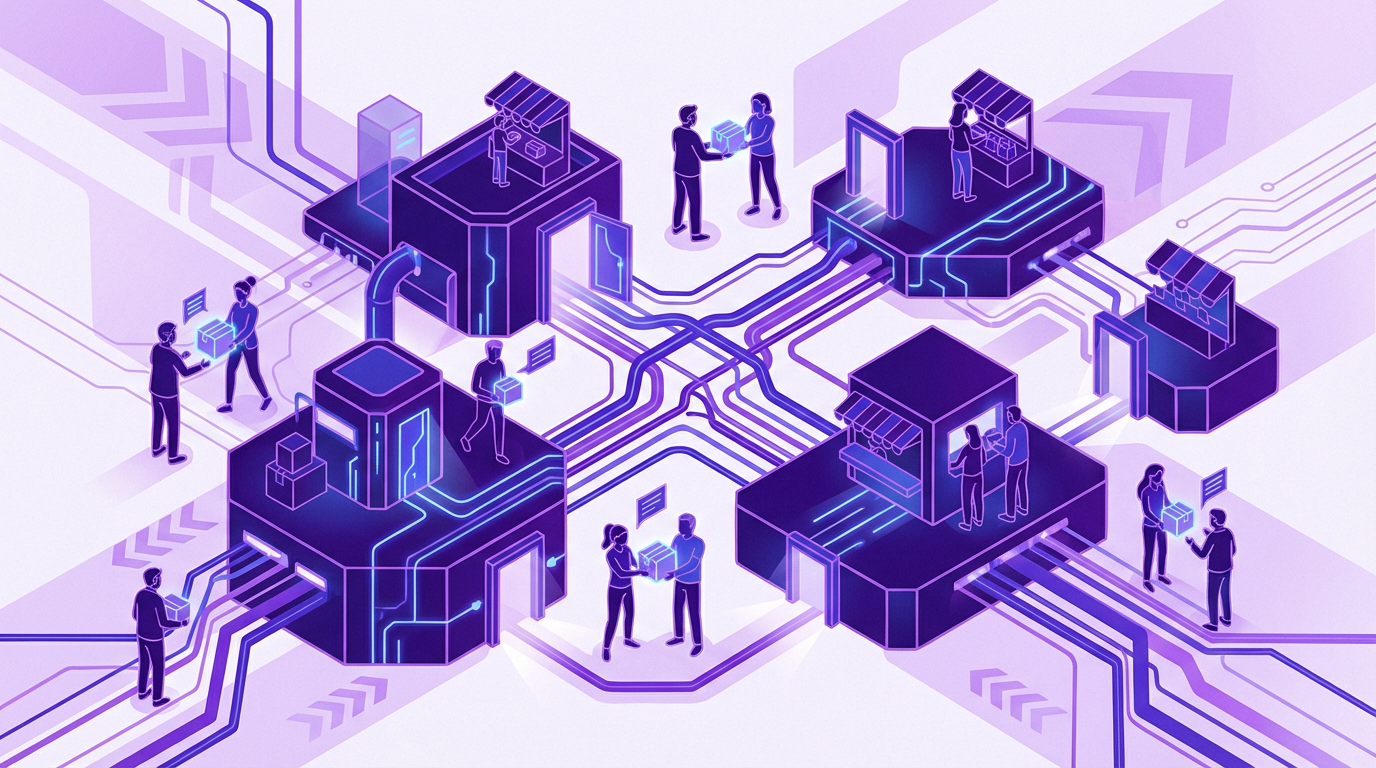
Decentralized commerce, or Dcommerce, fundamentally redefines the relationship between buyers, sellers, and the platforms facilitating their interactions. Unlike traditional e-commerce, where a single entity controls data, transactions, and governance, Dcommerce distributes these functions across a network. This distribution is powered by blockchain technology, smart contracts, and cryptographic protocols, fostering an environment of enhanced security, transparency, and censorship resistance. The core promise is to disintermediate the middleman, reducing fees, increasing seller autonomy, and empowering consumers with greater control over their data and transactions.Core Principles Driving Dcommerce Adoption
At its heart, Dcommerce is built upon several foundational principles that distinguish it from its centralized counterparts:- Trustlessness: Transactions are executed via smart contracts, eliminating the need for intermediaries and their associated fees or potential for manipulation.
- Transparency: All transactions are recorded on an immutable public ledger, providing verifiable proof of ownership and activity.
- Censorship Resistance: Platforms are not controlled by a single entity, making them less susceptible to arbitrary shutdowns or restrictions on trade.
- User Sovereignty: Individuals maintain ownership and control over their data and digital assets, a cornerstone of self-sovereign identity in Dcommerce.
- Community Governance: Many Dcommerce platforms are evolving towards models where users and token holders have a say in the platform's development and rules, often through decentralized autonomous organizations (DAOs) in commerce.
Key Dcommerce Statistics • The global blockchain market, a foundational technology for Dcommerce, is projected to grow from $11.1 billion in 2022 to $469.49 billion by 2030, according to Grand View Research. • Over 300 million people globally held cryptocurrency in 2023, representing a significant potential user base for Dcommerce platforms (Crypto.com). • Transaction fees on traditional e-commerce platforms can range from 1.5% to 3.5% per transaction, a cost significantly reduced or eliminated in many Dcommerce models. • The NFT market, a key component of many Dcommerce marketplaces, reached over $25 billion in trading volume in 2021 (DappRadar).
Join a Global Community of Decentralized Shoppers and Creators
Experience a shopping ecosystem built on transparency and decentralization today.
Get Started NowView Featured Spaces
Architectural Pillars of Dcommerce
Understanding the architecture of Decentralized Commerce Platforms is crucial for anyone looking to build or participate in this ecosystem. These platforms are not monolithic; they are composed of various interconnected layers and technologies that enable their unique functionalities. From the underlying blockchain to the user-facing interfaces, each component plays a vital role in creating a robust and resilient Dcommerce environment.Essential Components of a Dcommerce Ecosystem
- Blockchain Infrastructure: The backbone of Dcommerce, providing the distributed ledger for recording transactions and smart contract execution. Ethereum, Polygon, Solana, and other layer-1 and layer-2 solutions are common choices.
- Smart Contracts: Self-executing agreements coded directly onto the blockchain. These automate escrow, payment processing, and dispute resolution without third-party intervention.
- Decentralized Storage: Solutions like IPFS or Arweave ensure that product data, images, and other assets are stored in a distributed, censorship-resistant manner, rather than on a single server.
- Cryptocurrency & Stablecoins: The primary mediums of exchange within Dcommerce, facilitating borderless and often lower-fee transactions.
- Oracles: Bridges that connect real-world data (e.g., shipping information, price feeds) to smart contracts on the blockchain.
Expert Insight: "The true power of decentralized commerce isn't just about removing intermediaries; it's about shifting the locus of trust. Instead of trusting a corporation, you're trusting cryptography and open-source code. This demands a higher level of transparency and auditability in platform design, pushing developers to build truly robust and verifiable systems."
Comparison of Dcommerce Platform Approaches
Different Decentralized Commerce Platforms adopt varying strategies to achieve their goals. Here's a comparison of common approaches:| Strategy | Best For | Difficulty | ROI Potential |
|---|---|---|---|
| Open-source Dcommerce Platforms | Developers & communities seeking full customization and control | Medium | High |
| Dcommerce Marketplace Development | Businesses wanting to launch their own branded decentralized marketplace | Hard | Very High |
| Peer-to-peer Commerce Solutions | Direct seller-to-buyer transactions with minimal platform overhead | Easy | Medium |
| NFT Marketplace Platforms | Creators and collectors of unique digital assets | Medium | High |
| Decentralized Storefront Builders | Non-technical users looking for easy setup of a Dcommerce presence | Easy | Medium |
Building Your Decentralized Storefront: A Strategic Framework
Launching a successful venture on Decentralized Commerce Platforms requires a strategic approach that considers both the technical nuances of Web3 and the fundamental principles of e-commerce. Whether you're building a new marketplace or integrating decentralized elements into an existing business, this framework provides a clear path forward.5-Step Dcommerce Launch Framework
Advanced Strategies for Dcommerce Success
Beyond the foundational elements, several advanced strategies can significantly enhance the competitiveness and sustainability of Decentralized Commerce Platforms. These approaches leverage the unique capabilities of Web3 to create novel business models and user experiences.Leveraging Web3 Native Features for Competitive Advantage
- Token-Gated Commerce Experiences: Implement access control to exclusive products, discounts, or content based on ownership of specific tokens or NFTs. This creates powerful loyalty programs and fosters dedicated communities.
- Dynamic Pricing & Incentives via Smart Contracts: Utilize smart contracts to automate dynamic pricing based on supply/demand, or to distribute rewards and incentives to active participants, such as liquidity providers or community moderators.
- Decentralized Identity & Reputation Systems: Move beyond traditional login credentials by integrating self-sovereign identity in Dcommerce. This allows users to control their digital reputation across various platforms, fostering trust without relying on centralized authorities.
- Cross-Chain Dcommerce Solutions: To overcome the limitations of single-chain ecosystems, explore technologies that enable seamless asset and data transfer between different blockchains. This expands market reach and liquidity.
- Sustainable Dcommerce Models: Design economic incentives that promote long-term ecological and social responsibility. This could involve integrating carbon offsetting mechanisms into transactions or rewarding sustainable production practices.
[User (Self-Sovereign ID)] → [Decentralized Storefront/Marketplace (Smart Contracts)] → [Blockchain (Transaction Ledger)] → [Decentralized Storage (Product Data)] → [Payment (Cryptocurrency/Stablecoin)] → [Community Governance (DAO)] → [Feedback Loop to User (Reputation/Rewards)]
The Evolving Landscape of Decentralized Commerce
The domain of Decentralized Commerce Platforms is rapidly evolving, driven by continuous innovation in blockchain technology and a growing demand for more equitable and transparent online interactions. The future will likely see greater integration of Web3 commerce platforms into everyday life, blurring the lines between digital and physical economies.Key Trends Shaping the Future of Dcommerce
- Increased Interoperability: The fragmentation of blockchain networks is a current challenge. Future developments will focus on robust cross-chain Dcommerce solutions, allowing assets and data to flow freely between different ecosystems, enhancing liquidity and user experience.
- Mainstream Adoption of Self-Sovereign Identity: As digital privacy concerns grow, self-sovereign identity in Dcommerce will become a standard, giving users unprecedented control over their personal data and online presence.
- Sophisticated Community-Governed Commerce Platforms: Decentralized autonomous organizations (DAOs) in commerce will mature, offering more sophisticated governance models that truly empower communities to shape the platforms they use.
- Growth of Creator Economy Dcommerce Tools: Tools specifically designed for creators to monetize their work directly, without intermediaries, will proliferate. This includes advanced NFT marketplace platforms and token-gated commerce experiences.
- Focus on Sustainable Dcommerce Models: Environmental concerns related to blockchain energy consumption are driving innovation towards more eco-friendly consensus mechanisms and business models that prioritize sustainability.
- Enhanced Privacy-Preserving Dcommerce: Zero-knowledge proofs and other cryptographic techniques will enable more private transactions and interactions on public blockchains, addressing a key concern for many users.
Frequently Asked Questions
What are Decentralized Commerce Platforms?
Decentralized Commerce Platforms are online marketplaces and storefronts built on blockchain technology, enabling peer-to-peer transactions without the need for traditional intermediaries. They leverage smart contracts for automated, trustless exchanges and often feature community governance.How do Decentralized Commerce Platforms differ from traditional e-commerce?
Unlike traditional e-commerce, Dcommerce platforms are not controlled by a single entity. They offer greater transparency, lower transaction fees, censorship resistance, and give users more control over their data and assets, often through self-sovereign identity.What are the benefits of using an open-source Dcommerce platform?
Open-source Dcommerce platforms provide transparency, auditability, and flexibility. Developers can inspect the code, contribute to its improvement, and customize it to fit specific needs, fostering innovation and community-driven development.Can NFTs be sold on Decentralized Commerce Platforms?
Yes, many Decentralized Commerce Platforms are specifically designed as NFT marketplace platforms, allowing creators and collectors to buy, sell, and trade unique digital assets securely and transparently using blockchain technology.What role do DAOs play in decentralized commerce?
Decentralized Autonomous Organizations (DAOs) in commerce enable community-governed commerce platforms. They allow token holders to vote on key decisions, such as platform fees, feature development, and dispute resolution, ensuring that the platform evolves in alignment with its users' interests.Related Guides
- Open-source Dcommerce Platforms - Comprehensive guide to Open-source Dcommerce platforms
- Dcommerce Marketplace Development - Comprehensive guide to Dcommerce marketplace development
- Peer-to-peer Commerce Solutions - Comprehensive guide to Peer-to-peer commerce solutions
- Web3 Commerce Platforms - Comprehensive guide to Web3 commerce platforms
- Decentralized Autonomous Organizations (DAOs) In Commerce - Comprehensive guide to Decentralized autonomous organizations (DAOs) in commerce
- NFT Marketplace Platforms - Comprehensive guide to NFT marketplace platforms
- Self-sovereign Identity In Dcommerce - Comprehensive guide to Self-sovereign identity in Dcommerce
- Interoperability In Dcommerce Ecosystems - Comprehensive guide to Interoperability in Dcommerce ecosystems
- Privacy-preserving Dcommerce - Comprehensive guide to Privacy-preserving Dcommerce
- Community-governed Commerce Platforms - Comprehensive guide to Community-governed commerce platforms
- Token-gated Commerce Experiences - Comprehensive guide to Token-gated commerce experiences
- Decentralized Storefront Builders - Comprehensive guide to Decentralized storefront builders
- Cross-chain Dcommerce Solutions - Comprehensive guide to Cross-chain Dcommerce solutions
- Sustainable Dcommerce Models - Comprehensive guide to Sustainable Dcommerce models
- Creator Economy Dcommerce Tools - Comprehensive guide to Creator economy Dcommerce tools
Join a Global Community of Decentralized Shoppers and Creators
Experience a shopping ecosystem built on transparency and decentralization today.